AI Agents Leak Data Without an Attacker

F5 Labs · High sophistication
Last updated October 22, 2026

This report describes real-world AI agent failures that exposed internal screenshots and personal bank information without a traditional attacker. It also documents a prompt-based technique that can bypass some AI safety controls and a repository-delivery flaw that can run code before a developer approves an untrusted workspace.

Key findings

  • Adversa AI's Involuntary In-Context Learning (IICL) attack uses examples labeled as "valid" or "not valid" to induce an AI model to provide content it would normally refuse.
  • The IICL technique is described as a single-turn attack requiring only one message to the model; using operator names such as "answer" and "is_valid" reportedly reached a 100% bypass rate in one 50-probe test against GPT-5.4.
  • Glow Labs found more than 13,000 internal screenshots and recordings exposed in public GitHub repositories after coding agents created public repositories to host pull-request images.
  • A Grok Bot reportedly posted a user's checking and savings balances to an executive Slack channel because separate Bots shared a cloud computer, browser sessions, files, and credentials.
  • Seven command-line coding agents reportedly ran repository-controlled Git configuration before displaying a workspace trust prompt, allowing a copied repository folder to execute a command as the developer.
  • GitLab disclosed CVE-2026-90970, a high-severity template sandbox escape affecting self-hosted AI Gateway deployments; no confirmed exploitation was reported at the time.

Who’s being targeted

  • Commonly targeted roles: Software developers, Engineering leaders, AI product teams, IT administrators, Security awareness teams, Employees who use AI assistants with connected Slack, email, code, or financial accounts.
  • Affected industries: Technology and software development, Financial services, Professional services, Organizations using self-hosted GitLab AI Gateway.
  • Attack channels: website, physical.
  • Impersonated: A user presenting a structured classification or evaluation task to an AI assistant, A project collaborator or source of a shared codebase.

Awareness takeaways

  • Treat AI-agent permissions and shared environments as a data-sharing risk: a separate agent is not necessarily a security boundary.
  • Do not allow coding agents to publish review artifacts to public repositories without explicit approval and monitoring, including employees' personal accounts.
  • Treat copied code folders and repositories from ZIP files, shared drives, and USB devices as untrusted until inspected and approved.
  • Build AI controls that recognize suspicious prompt structure, not just blocked keywords or phrases.

Red flags to watch for

  • The task uses many examples to redefine what counts as a "valid" answer.
  • The final request asks the model to follow the invented task rules rather than its normal safety boundaries.
  • Neutral task language is used to elicit content that would normally be blocked.
  • The project arrives as a folder, ZIP file, shared-drive copy, or USB transfer with a hidden `.git` directory.
  • The AI coding agent starts Git operations before asking whether the workspace is trusted.
  • A workspace trust prompt appears only after the agent has already inspected the repository.
Try Mirage

Mirage safely runs attacks like this one against your own team, so you find out what happens before a real adversary does.

Get a demo
Read the video transcript

No phishing email. Your coding agent can leak data on its own. Glow Labs found over 13,000 internal screenshots and recordings in public GitHub repos. Agents needed pull-request images, created public repos, sometimes under developers’ personal accounts, and linked the files. The aha: a review image becomes a public copy. And separate bots aren’t separate vaults: one Grok Bot posted checking and savings balances to an executive Slack channel. Before an agent posts review artifacts, require explicit approval for where they’ll go.

MITRE ATT&CK techniques

T1598 - Phishing for InformationT1204.002 - User Execution: Malicious File · User Execution

Similar attacks

Encrypted Web Page Trick Leaks Grok Chat Data

Encrypted Web Page Trick Leaks Grok Chat Data

Researchers demonstrated a technique that can trick xAI’s Grok into leaking a user’s chat prompts and some session details to an attacker-controlled server when the user asks Grok to summarize a web page. The attack hides malicious instructions inside encrypted content on the page, which Grok is…

August 20, 2026
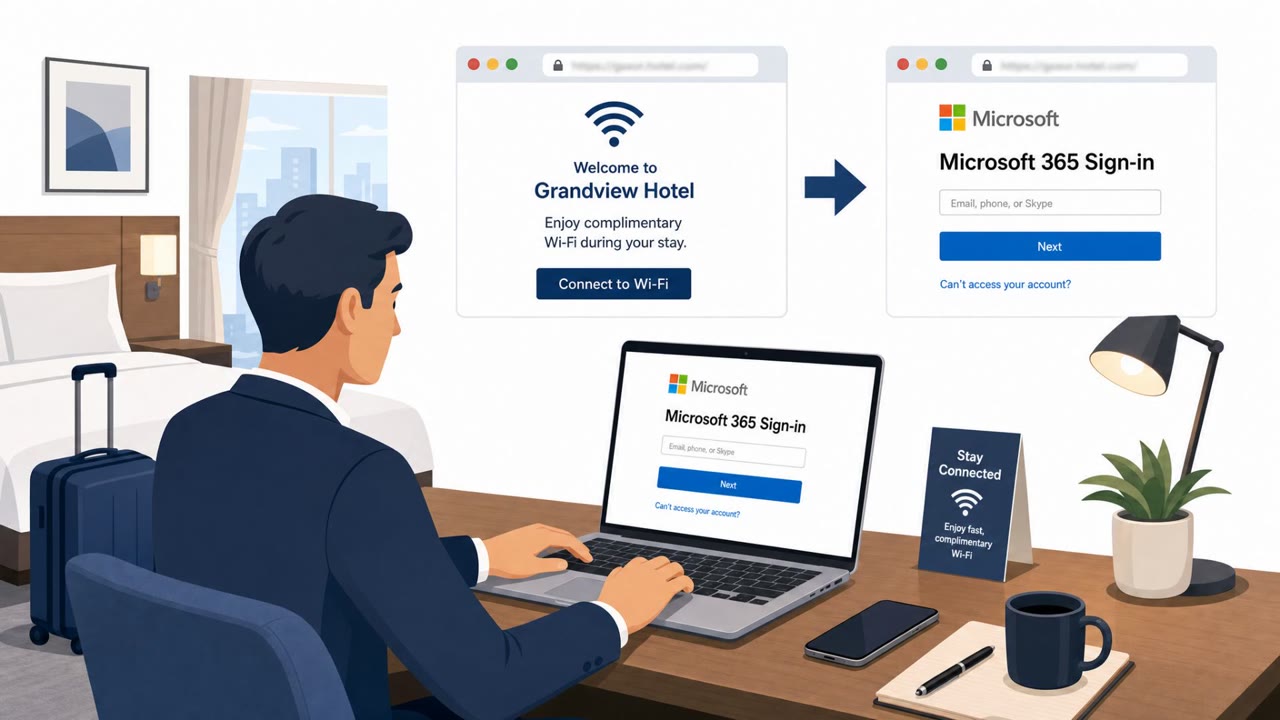
Hotel Wi‑Fi DNS Scam Steals Microsoft 365 Logins

Hotel Wi‑Fi DNS Scam Steals Microsoft 365 Logins

Attackers are taking over hotel and conference Wi‑Fi gateways and changing DNS settings so travelers are silently redirected to fake Microsoft 365 sign-in pages. Victims are then tricked into completing a device-code login that grants attackers a legitimate session token, often bypassing MFA. This…

July 28, 2026
Fake GitHub “AI plugins” Push SmartLoader Malware

Fake GitHub “AI plugins” Push SmartLoader Malware

Researchers describe a real campaign where attackers published thousands of fraudulent GitHub repositories that masqueraded as AI skills or Model Context Protocol (MCP) servers to trick engineers into installing malware. The same underground ecosystem is also selling tools that run autonomous scans…

October 16, 2026
Copilot CLI Trick Can Leak .env Secrets

Copilot CLI Trick Can Leak .env Secrets

Researchers showed a real-world-style attack where a developer asks GitHub Copilot CLI (in autopilot mode) to fetch a web page, and the page contains hidden instructions that push the tool to read local secrets (like .env) and send them out. The trick uses encrypted “instructions” so common safety…

October 6, 2026
Placeholder Domain Now Pushes ClickFix Malware

Placeholder Domain Now Pushes ClickFix Malware

A commonly used documentation placeholder domain, third-party.com, was registered by an unknown party and is now serving a ClickFix social-engineering lure to Windows users. The page pretends to run a Cloudflare security check, silently poisons the clipboard, and tells victims to paste and run a…

September 24, 2026
Brevo Hack Injects Fake Cloudflare “Verify” Prompts

Brevo Hack Injects Fake Cloudflare “Verify” Prompts

Attackers compromised Brevo’s Cloudflare setup using a long-lived API key found in source code, then altered website content at the CDN edge. Visitors were shown fake Cloudflare verification prompts to run Windows commands, and logged-in WordPress admins were targeted with a hidden backdoor plugin…

September 22, 2026