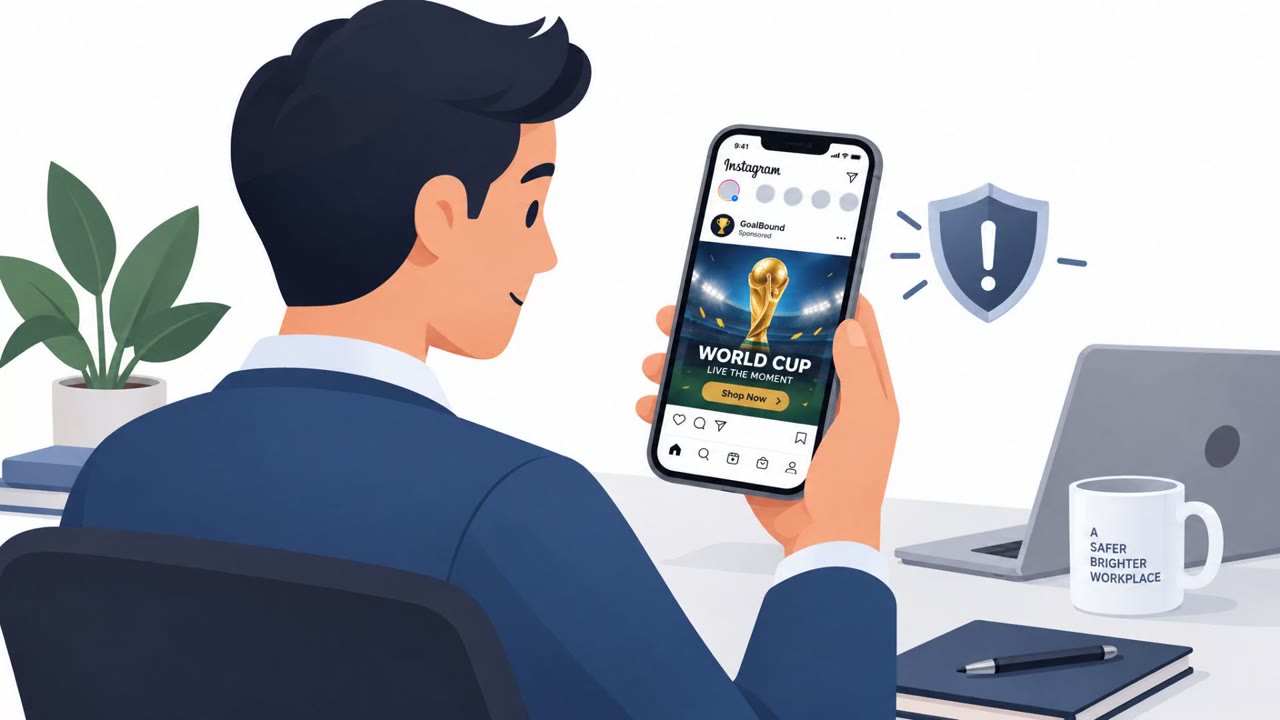
APT29-linked operators compromised trusted websites and a web-analytics supplier to silently target visitors’ mobile devices. Related campaigns also used World Cup-themed ads, fake prize pages, and instructions to open pages in Safari to steer iPhone users toward browser exploits. The practical awareness lesson is that a familiar site, ad, or “you won” message can still lead to a compromised page.
Key findings
- APT29-linked activity dubbed Poisoned Source injected malicious JavaScript into legitimate websites, lookalike domains, and the Plerdy SEO Tracker service.
- The malicious code identified visitors’ devices and browsers before delivering an iOS- or Android-specific exploit chain.
- The campaign affected sites likely to attract strategically important visitors, including army, special-forces, military-equipment, chemical-industry, and political sites.
- Related DarkSword and Coruna distribution campaigns used a World Cup-themed Instagram ad, fake surveys, prize pages, and other web lures.
- Some lure sites explicitly told visitors to leave an in-app or alternative browser and reopen the link in Safari, where an iPhone exploit could be triggered.
- The article warns that some exploit kits can compromise a vulnerable device merely when a page is opened; users may not need to download an app or interact with a prompt.
Who’s being targeted
- Commonly targeted roles: All mobile-device users, Government and defense personnel, Military and special-forces personnel, Executives and other high-value personnel, Employees who use social media or in-app browsers on work devices, Web and marketing teams that manage third-party website analytics.
- Affected industries: Government and defense, Military and special forces, Chemical manufacturing, Political organizations, Mobile and web users.
- Attack channels: website.
- Impersonated: World Cup promotional advertiser, Prize promotion or online survey provider.
Awareness takeaways
- Treat unexpected prize claims, surveys, and promotional redirects as suspicious, especially when they appear after visiting an unrelated site.
- Do not follow a webpage’s instruction to switch from an in-app browser to Safari or another browser unless there is a clear business reason and the destination has been independently verified.
- Keep work mobile devices and browsers promptly updated, because simply opening a malicious page may be enough to compromise an unpatched device.
- Do not assume a familiar or legitimate-looking website is safe; compromised websites and third-party web services can deliver malicious code.
Red flags to watch for
- An advertisement or promotion asks the visitor to switch browsers.
- The page gives unusual browser-specific instructions rather than showing normal content.
- The destination is an unfamiliar domain, such as ad-track[.]live.
- An unexpected “you’ve won” claim.
- A prize or survey is presented after an unrelated web visit.
- The page redirects the visitor or pushes them to change browsers.
Read the video transcript
A World Cup ad says, “Open this link in Safari.” That’s the trap. The ad leads to ad-track[.]live. Switching browsers can trigger an iPhone exploit. No download, no login, on a vulnerable phone, opening the page may be enough. Here’s the twist: even familiar sites aren’t guaranteed safe. Poisoned Source planted code in legitimate sites and Plerdy SEO Tracker to check visitors’ devices before serving mobile exploits. So if an ad or surprise prize page tells you to switch browsers, close the page.