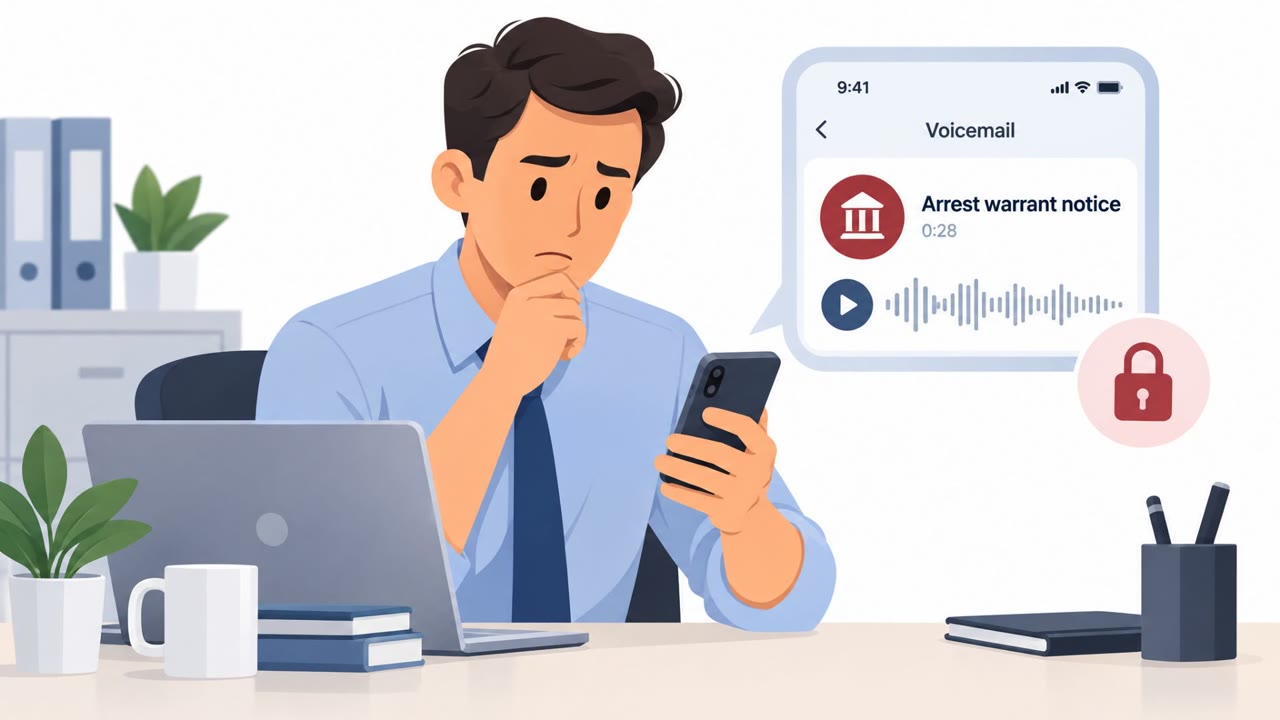
The article describes a real 2024 New Hampshire robocall that used an AI-generated voice impersonating President Biden. The call urged Democratic voters to stay home during the primary and wait until the November election, illustrating how voice deepfakes can be used to suppress turnout and undermine trust in elections.
How the Attack Worked
In the 2024 New Hampshire primary, an automated robocall used an AI-generated voice impersonating President Biden. The call told Democratic voters to stay home during the primary and wait until the November election, falsely implying their primary vote would not count. This is a vishing and disinformation technique that relies on impersonation rather than technical intrusion into election systems.
Why It Succeeded
The attack worked because it exploited trust in a recognizable voice rather than any technical vulnerability. Key factors include:
- The call used a voice closely resembling a known public figure, which gave the message instant credibility.
- It created confusion about when a vote actually counts, a subtle but effective form of urgency.
- Robocalls can reach large numbers of voters cheaply and quickly, making this approach scalable.
- The guidance conflicted with official election information, but recipients may not have had an easy way to verify this in the moment.
As AI tools make voice cloning more accessible, these kinds of targeted, personalized influence campaigns become easier to scale, shifting part of election security from protecting infrastructure to protecting public trust.
What to Watch For
Defenders, election staff, and voters should treat the following as warning signs:
- An unexpected automated call or text that offers specific voting instructions.
- Messaging that creates urgency or confusion about deadlines, eligibility, or when a vote "counts."
- Guidance that conflicts with information published by official state or local election authorities.
- Use of a well-known voice or identity to lend credibility to the message, especially in a political context.
Building Resistance
Organizations and individuals involved in election administration and communication can reduce the impact of this kind of attack by building habits and processes rather than relying on recognizing a voice as proof of identity:
- Treat all unsolicited voting guidance, regardless of channel, as unverified until confirmed through an official source.
- Train election workers and public-information teams to quickly identify, document, and counter false voting guidance.
- Establish fast, trusted channels for correcting misinformation before it spreads further among voters.
- Recognize that impersonation, fake websites, and AI-generated misinformation can erode confidence in elections without ever touching voting infrastructure directly.
This incident illustrates how impersonation-based social engineering can target an entire population of voters rather than a single individual or organization, making awareness and verification habits central to resisting this category of attack.
Key findings
- A 2024 New Hampshire robocall used a deepfake voice impersonating President Biden.
- The automated call urged Democrats not to vote in the primary and to preserve their vote for the November election.
- The message falsely claimed that a vote would matter only in November, not in the primary.
- The article characterizes the incident as a landmark example of how AI could enable more targeted election-influence campaigns.
- Election-related attackers can affect public trust through impersonation, fake websites, social-media manipulation, phishing, and AI-generated misinformation.
Who’s being targeted
- Commonly targeted roles: Election officials, Election workers, Public-information and communications teams, Political campaign staff, Voters.
- Affected industries: Election administration, Government, Political campaigns, Public-sector communications.
- Attack channels: vishing.
- Impersonated: President Joe Biden.
Red flags to watch for
- An unexpected automated call gives voting instructions or discourages voting.
- The caller creates urgency or confusion about when a vote counts.
- The instruction conflicts with official election information from state or local authorities.
Frequently asked questions
What happened in the deepfake Biden robocall incident?
An automated robocall used an AI-generated voice impersonating President Biden to urge New Hampshire Democrats to stay home during the primary and save their vote for November.
Why was this robocall effective?
It used a familiar, trusted voice to deliver false voting guidance, creating confusion about whether the primary vote mattered and exploiting the ease of reaching large numbers of voters through robocalls.
What should voters do if they receive unexpected voting instructions by phone?
Treat any unsolicited call, text, or post giving voting guidance as untrusted until confirmed through an official state or local election authority.
Who should be most alert to this kind of attack?
Election officials, election workers, public-information teams, political campaign staff, and voters themselves are all identified as target audiences for this type of impersonation.
Read the video transcript
In New Hampshire’s 2024 primary, voters heard what sounded like President Biden. The robocall said, ‘Stay home and preserve your vote until November.’ It claimed a primary vote wouldn’t matter. That was false. The aha? The voice was an AI deepfake. A familiar voice isn’t proof, and an unexpected call telling you not to vote is a red flag. If a call gives voting instructions, check your state or local election office’s official website.