U.S. authorities allege that three men used AI-generated CEO and lawyer impersonations to steal at least $129 million from businesses. The scheme targeted accounting staff with a confidential-transaction storyline, used an e-signature message to obtain an NDA, and then used a fake attorney to make a large wire transfer appear legitimate.
How the Attack Worked
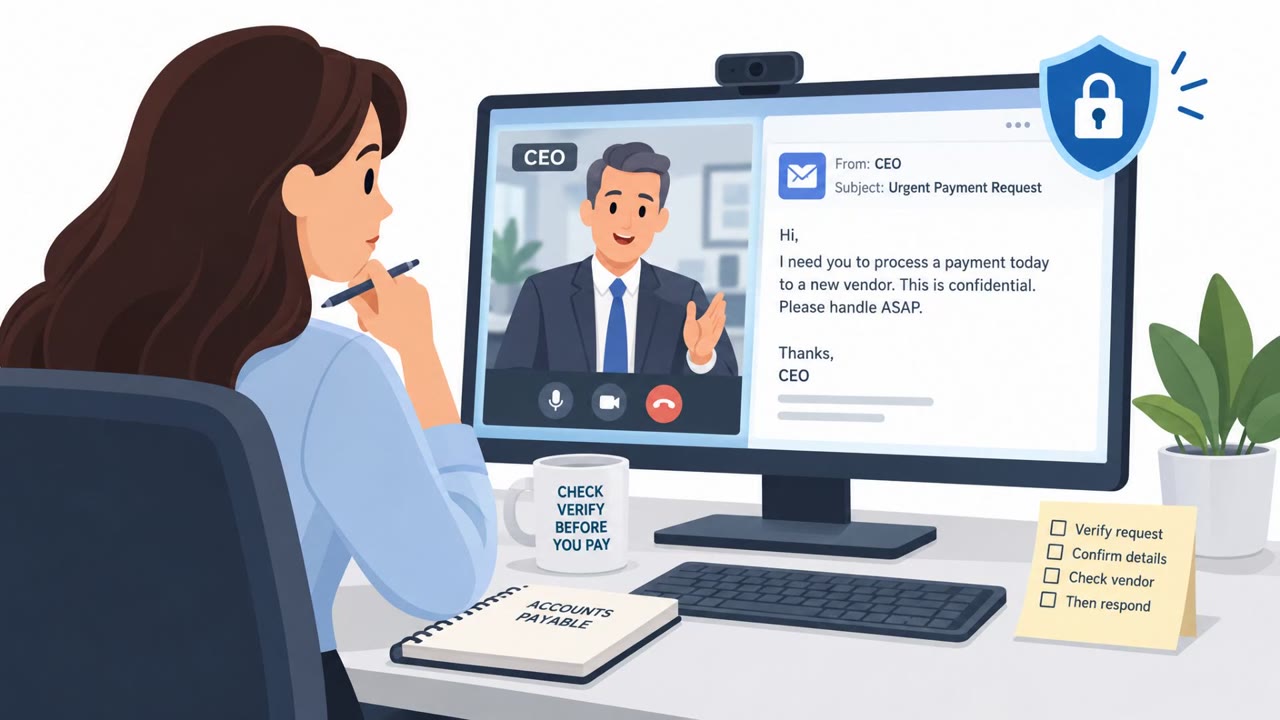
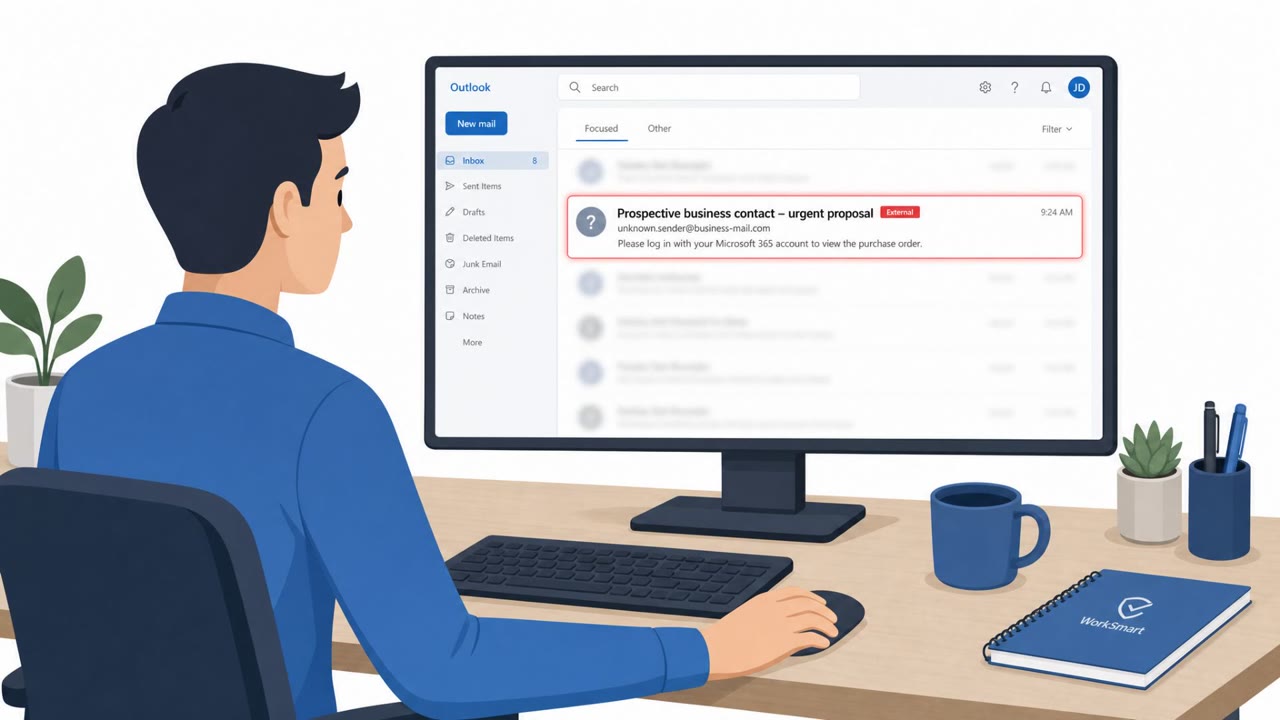
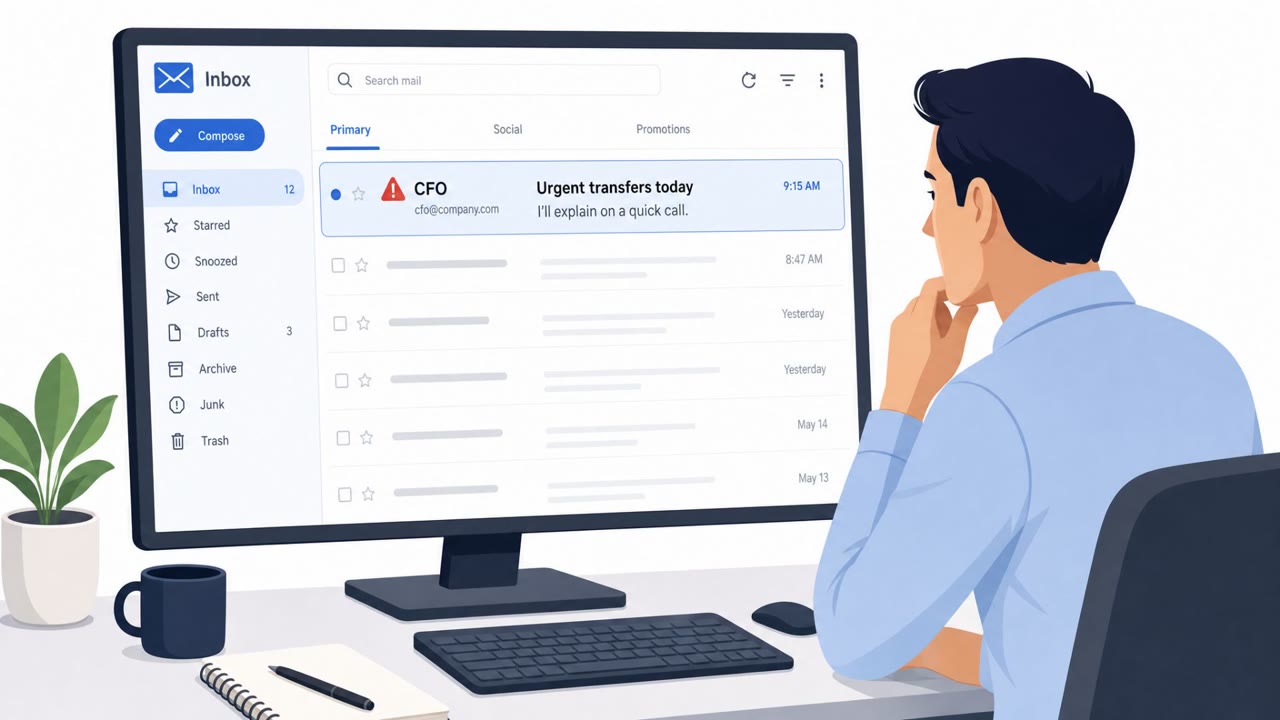
According to an unsealed indictment, the scheme allegedly defrauded companies of at least $129 million between July 2024 and February 2026. It typically began with an email from an e-signature company in which an impersonated CEO claimed to be handling a confidential financial transaction and asked the employee to sign an NDA before contacting outside legal counsel. The NDA request created a sense of urgency and secrecy, setting up the next step: a call or message with a fake attorney who reinforced the legitimacy of the deal.
Using AI, the alleged actors imitated the voices and images of CEOs and lawyers, including attorneys at some of the world's 50 largest law firms. This combination of deepfake audio and video with a plausible business pretext made the request difficult for employees to question in the moment.
Why It Succeeded
The operation specifically targeted accounting employees who had the authority to approve large wire transfers, rather than random staff. By routing the interaction through an NDA and a supposed attorney, the scheme inserted artificial legitimacy and confidentiality into the process, discouraging employees from checking with colleagues or following standard verification steps. The use of AI-generated voice and video added a further layer of apparent authenticity to what was otherwise a classic business email compromise pattern.
Reported victims spanned multiple sectors, including financial technology, healthcare, banking, investment, mutual fund, and food manufacturing organizations, showing the pretext worked across industries rather than targeting one specific type of business.
What to Watch For
- An unexpected, urgent, and confidential transaction request delivered through an e-signature workflow
- A request that bypasses normal payment approval and vendor verification procedures
- Instructions to contact an attorney or executive using contact information supplied by the requester instead of independently verified details
- Pressure to sign an NDA before any discussion of a financial transaction
Building Resistance
Organizations can reduce exposure to this kind of attack by treating unexpected CEO requests involving confidential deals and wire transfers as verification events rather than routine executive instructions. Employees should never rely on a voice, video image, or a supplied legal contact to validate a payment request. Instead, they should independently verify the request using known company contact information and established approval processes. Requiring out-of-band confirmation and multi-person approval for large or unusual wire transfers adds a critical check that can stop this style of fraud before funds are sent.
Key findings
- Authorities allege the operation defrauded companies of at least $129 million between July 2024 and February 2026.
- The group reportedly targeted accounting employees with authority to approve large wire transfers.
- The attack began with an e-signature-company email in which a fake CEO described a “confidential financial transaction” and requested an NDA.
- After the NDA step, employees were directed to contact an attorney who was also impersonated, making the transaction appear legitimate.
- The alleged actors used AI to imitate the voices and images of CEOs and lawyers, including attorneys at some of the world’s 50 largest law firms.
- Reported victims included financial technology, healthcare, banking, investment, mutual fund, and pet-food organizations.
Who’s being targeted
- Commonly targeted roles: Accounting, Finance, Accounts Payable, Treasury, Finance leadership, Wire-transfer approvers, Executive assistants, Legal department, Procurement.
- Affected industries: Finance and insurance, Financial technology, Healthcare, Banking, Investment management, Food manufacturing.
- Attack channels: email, vishing.
- Impersonated: The company CEO, followed by an attorney at a major international law firm..
Red flags to watch for
- An unexpected urgent and confidential transaction is sent through an e-signature workflow.
- The request bypasses normal payment approval and vendor-verification procedures.
- The employee is directed to use contact details for legal counsel supplied by the requester rather than independently verified details.
Frequently asked questions
How did the deepfake CEO scam work?
Attackers emailed accounting staff through an e-signature workflow, impersonating a CEO who described a confidential financial transaction and asked the employee to sign an NDA. Victims were then directed to a fake attorney who made the wire transfer request seem legitimate.
Who was targeted in this attack?
The scheme targeted employees with authority to approve large wire transfers, including accounting, finance, treasury, and accounts payable staff across industries like fintech, healthcare, banking, and investment management.
What are the red flags for this type of scam?
Warning signs include an unexpected urgent and confidential transaction request arriving via an e-signature workflow, bypassing of normal payment approval procedures, and being told to contact legal counsel using contact details supplied by the requester rather than independently verified information.
How can organizations defend against deepfake CEO fraud?
Require independent, out-of-band confirmation and multi-person approval for large or unusual wire transfers, and treat requests involving confidentiality and NDAs before a payment as verification events rather than routine instructions.
Read the video transcript
Your CEO needs a confidential wire transfer. Or do they? First comes an e-signature email: the CEO says a “confidential financial transaction” requires an NDA. Then you're told to call the lawyer whose number they supplied. Here's the trap: AI can fake the CEO's face and voice, and the lawyer's. The NDA makes secrecy feel official while the wire request skips normal approvals. Before any wire, call your CEO using the number in your company directory, not the one in the message.