Extortion Gang Plots Office Infiltration of Law Firms

The Record · High sophistication
Last updated October 8, 2026

Leaked chat logs linked to the Silent Ransom Group describe efforts to pressure U.S. law firms through extortion and, unusually, by sending in-person “agents” to physically enter offices and copy data. The FBI previously warned that people tied to the group were posing as IT staff to gain access, and one law firm said someone entered its New York office and copied files to a flash drive.

Key findings

  • Leaked chats describe tracking victims, negotiating multi-million-dollar extortion payments, and directing U.S.-based operatives called “agents.”
  • Chainalysis said crypto addresses in the leak could be tied to known extortions by the Silent Ransom Group (also tracked as Luna Moth/Chatty Spider).
  • The FBI warned the group used a physical-access tactic: “posing as IT personnel to gain physical access to computers.”
  • A law firm negotiator said “an individual had entered its New York office and copied files onto a flash drive.”
  • Chats proposed office-entry pretexts including a pizza delivery ruse and then switching to an IT-worker impersonation inside the office.
  • The group reportedly recruited “agents” using paid Telegram job ads disguised as normal work (courier, nightclub promotion, security).

Who’s being targeted

  • Commonly targeted roles: Reception/Front desk, Office administrators, Facilities/Security, IT/Helpdesk, Partners/Legal leadership, All employees (visitor challenge culture).
  • Affected industries: Legal services (law firms), Defense / military contractors (discussed as potential targets).
  • Attack channels: physical, telegram.
  • Impersonated: Pizza delivery worker, then internal IT personnel, Unspecified on-site visitor (described as someone who entered the office), Job advertiser offering legitimate work (nightclub promotion/courier/security).

Awareness takeaways

  • Treat unexpected on-site IT help or ‘urgent’ walk-ups as suspicious; verify identity via known internal channels before granting access.
  • Harden front-desk and visitor controls (sign-in, badging, escorting) to prevent ‘social’ entry methods like delivery pretexts from reaching work areas.
  • Limit and monitor removable media use (USB/flash drives) to reduce the risk of fast, on-site data theft.
  • Be aware that criminals may recruit local ‘agents’ through seemingly normal online job ads; encourage reporting of suspicious recruiting approaches.

Red flags to watch for

  • Unexpected visitor tries to move beyond reception into employee-only areas
  • Visitor switches roles (delivery person becomes “IT”) once inside
  • No pre-arranged ticket/appointment or verification with the firm’s IT team
  • Unescorted visitor or unknown person near workstations/files
  • Use of removable media (USB) on office computers
  • Lack of sign-in/badging and no clear business reason for accessing files
  • Vague job duties with unusually high pay and quick cash
  • Pressure to keep details secret or incomplete explanation of the real purpose
  • Paid “test assignments” that feel unrelated to the advertised job
Try Mirage

Mirage safely runs attacks like this one against your own team, so you find out what happens before a real adversary does.

Get a demo
Read the video transcript

Imagine this: an extortion gang sends a “pizza delivery” that ends with your client files on a USB drive. Leaked chats from the Silent Ransom Group describe buying uniforms and insulated bags so local “agents” can walk in with pizza, then flip: “Actually, I’m IT, need to check a workstation,” and copy data to a flash drive. The FBI’s already warned on this: they’re posing as IT to get physical access. One law firm caught someone who’d entered its New York office and copied files onto a flash drive, no appointment, no real ticket, just walked in and plugged in. Your move: if anyone shows up as IT or any other pretext without a known ticket or appointment, keep them at reception and call the real IT team or security to confirm before they go anywhere or touch a computer.

Similar attacks

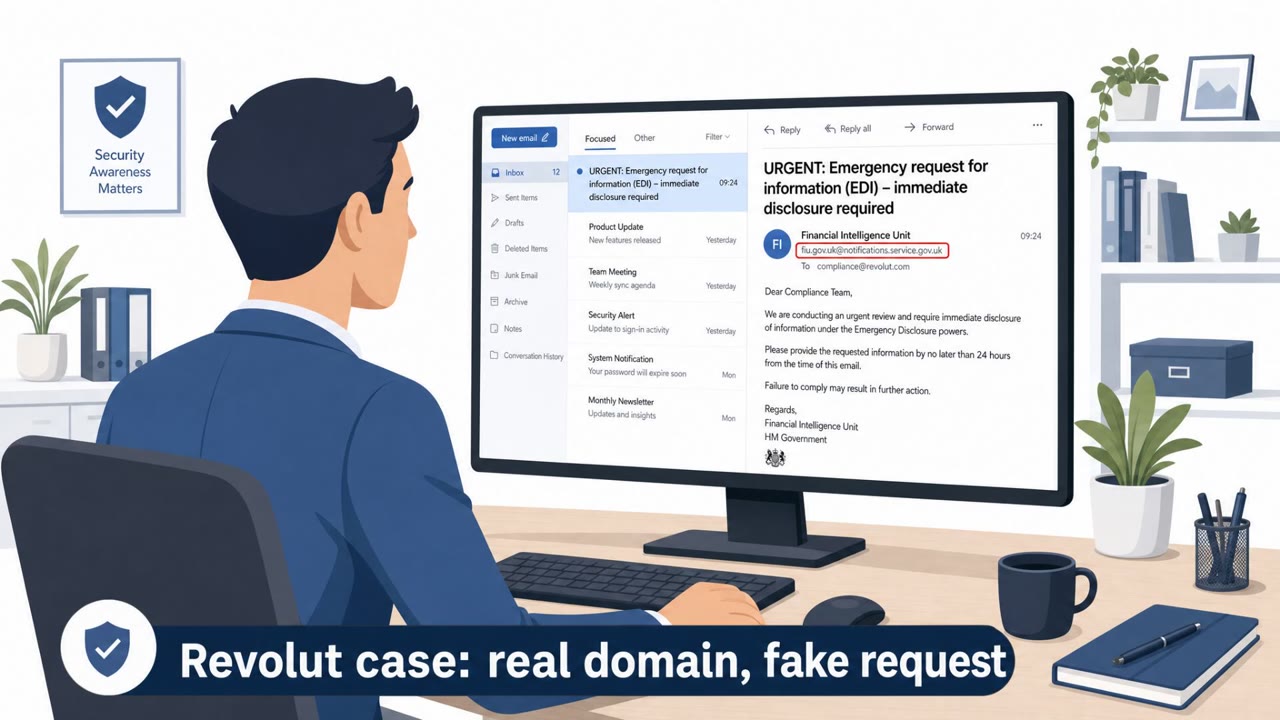
Revolut Tricked by Fake “Emergency” Data Requests

Revolut Tricked by Fake “Emergency” Data Requests

Revolut confirmed it disclosed sensitive customer information after fraudsters sent “emergency” information requests from a legitimate government email domain. The attackers appear to have targeted high-net-worth customers, including people involved in crypto, and attempted to extort Revolut to…

September 14, 2026
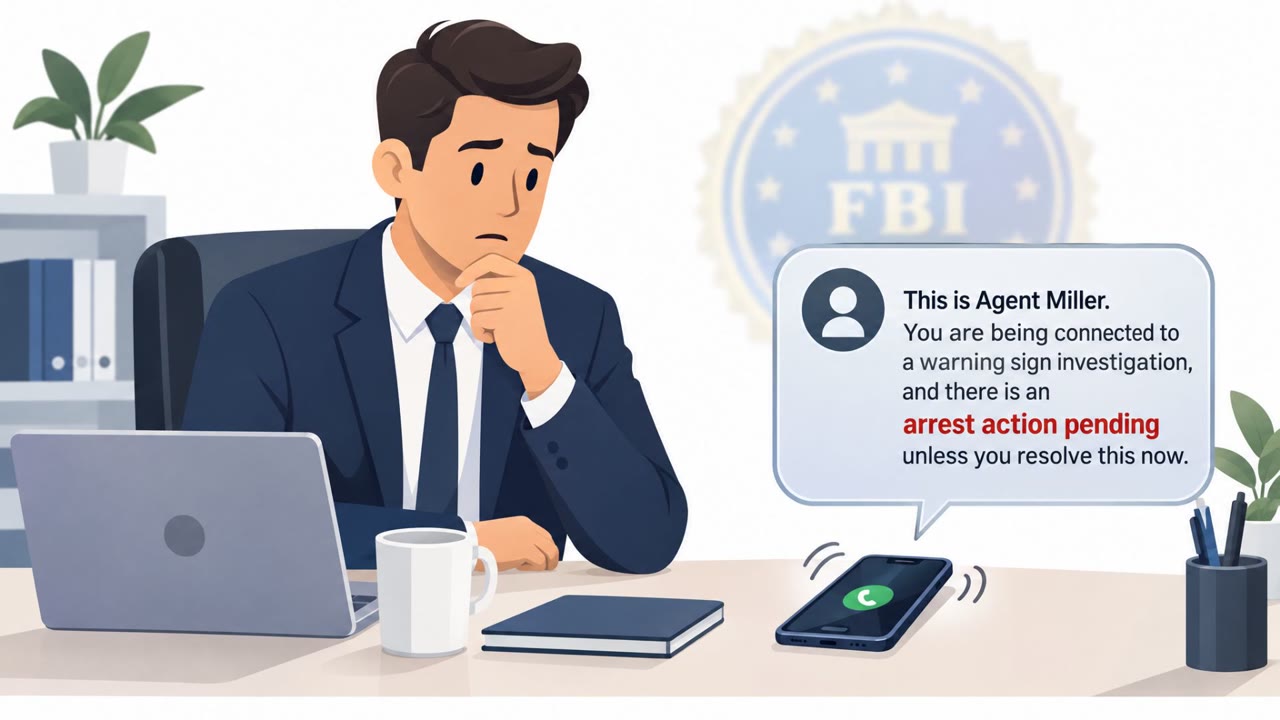
Fake Cops Threaten Arrest to Force Payments

Fake Cops Threaten Arrest to Force Payments

The FBI warns about phone scams where callers impersonate police or federal agents and threaten arrest unless the victim pays immediately. The scams use pressure tactics (keeping victims on the phone, urging secrecy) and push hard-to-trace payments like prepaid cards, crypto, wire transfers, or…

September 21, 2026
Fake Recruiters Hit Job Seekers With Malware Files

Fake Recruiters Hit Job Seekers With Malware Files

An alleged North Korean operation called “WaterPlum” targeted job seekers by posing as AI and blockchain companies and using the interview process to trick applicants into downloading malicious files. Authorities say the campaign infected tens of thousands of devices worldwide and led to theft from…

September 18, 2026
FBI: Fake Cops Swindle $1.6B via Threat Calls

FBI: Fake Cops Swindle $1.6B via Threat Calls

The FBI says scammers posing as law enforcement or government officials stole over $1.6B since January 2025, mainly by calling victims and threatening arrest, fines, or legal trouble unless they pay. Variants include jury-duty threats, targeted calls to medical professionals about license issues,…

September 18, 2026
ASOS App Push Alert Used for Extortion

ASOS App Push Alert Used for Extortion

Attackers used social engineering to access an ASOS employee account connected to Snowflake, then used ASOS’s own app notification system to broadcast an extortion message directly to customers. The incident also involved suspected large-scale customer data theft, which increases the risk of highly…

October 9, 2026
ASOS App Push Alert Claims ‘Snowflake’ Breach

ASOS App Push Alert Claims ‘Snowflake’ Breach

ASOS customers received an unexpected push notification inside the official ASOS app claiming the retailer had been hacked and demanding engagement to prevent data leaks. ASOS confirmed it was an “unauthorised customer notification” tied to third‑party messaging platforms and said it restricted…

October 6, 2026