Fake Diplomatic Files Deliver Spyware

Check Point Research · High sophistication
Last updated November 9, 2026

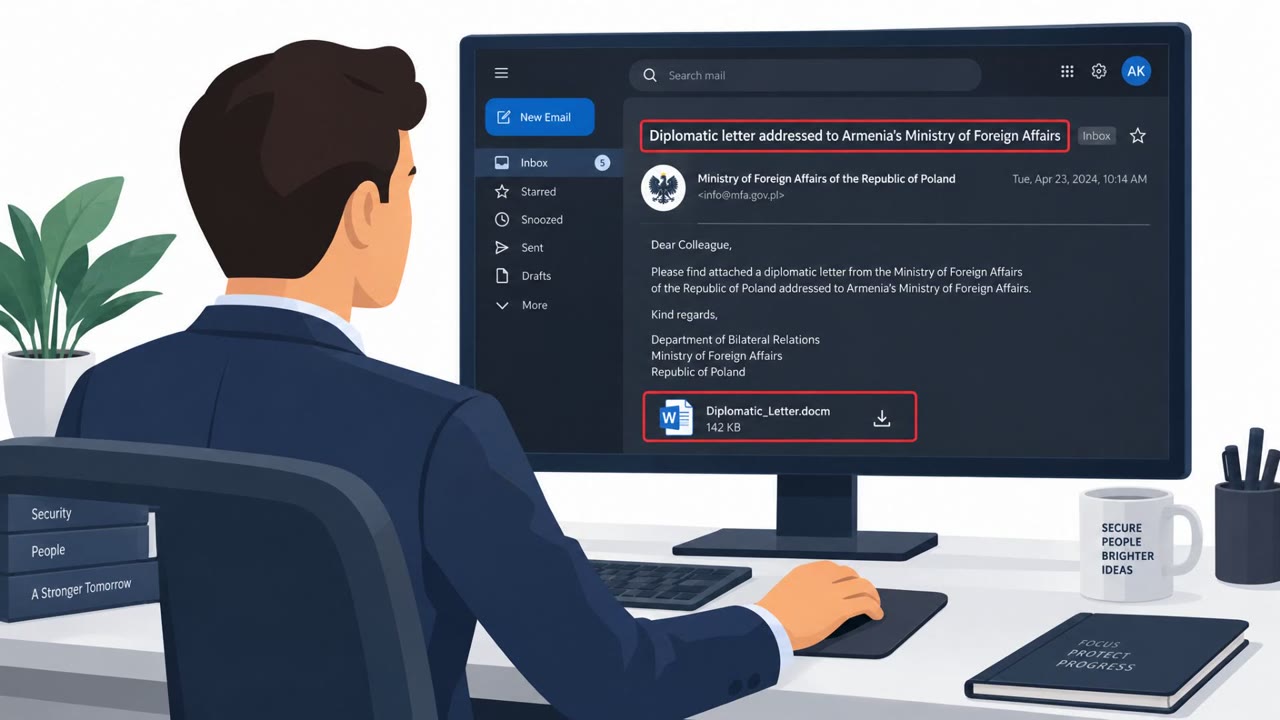
This roundup describes a real BITTER APT espionage campaign aimed at government, energy, and engineering organizations in South Asia. Attackers used files made to look like diplomatic or military documents to persuade recipients to open them, then installed spyware that could collect information and move files.

Key findings

  • BITTER APT targeted government, energy, and engineering organizations across South Asia.
  • The group used malicious files disguised as diplomatic and military documents.
  • Opening the files led to deployment of PapRAT spyware, which could collect system information, execute commands, and transfer files.
  • The roundup also reports APT29 campaigns using compromised and imitation websites to target mobile users, particularly in Ukraine.

Who’s being targeted

  • Commonly targeted roles: Government personnel, Energy-sector personnel, Engineering personnel, Executive assistants, Document reviewers, IT and security teams.
  • Affected industries: Government, Energy, Engineering, Financial services, Cryptocurrency businesses.
  • Attack channels: email.
  • Impersonated: Diplomatic or military contact.

Awareness takeaways

  • Treat unexpected diplomatic, military, or other sensitive-looking documents as suspicious, especially if they arrive without an expected business reason.
  • Verify an unexpected attachment with the sender using a known contact method before opening it.
  • Prioritize phishing awareness for government, energy, and engineering teams that routinely receive external documents.

Red flags to watch for

  • An unexpected document claims to contain sensitive diplomatic or military information.
  • The sender or reason for receiving the document cannot be verified through a known contact.
  • The attachment arrives without a normal business context or expected request.
Try Mirage

Mirage safely runs attacks like this one against your own team, so you find out what happens before a real adversary does.

Get a demo
Read the video transcript

“Please review the attached diplomatic briefing document.” Would you open it? BITTER APT sent files dressed as diplomatic and military documents to government, energy, and engineering teams in South Asia. Opening one could install PapRAT spyware. Here’s the tell: sensitive-looking doesn’t mean authentic. If you weren’t expecting the briefing, and can’t confirm the sender or why you got it, don’t trust the attachment. Before opening an unexpected briefing, confirm it with the sender using a contact method you already know.

Similar attacks

Gorbag Uses Fine-Themed Emails Against Ukraine

Gorbag Uses Fine-Themed Emails Against Ukraine

Russia-aligned group Gorbag targeted Ukrainian public-sector and defense organizations with spearphishing emails disguised as administrative fines and tax matters. The messages delivered malicious files that stole browser passwords, VPN settings, documents, and electronic-signature keys,…

November 3, 2026
GST-Themed Phishing Hits India With Remcos RAT

GST-Themed Phishing Hits India With Remcos RAT

A real phishing campaign targeted Indian businesses and individual taxpayers by impersonating government departments and sending emails that look like official GST tax notices. The goal was to trick recipients into opening convincing “refund/compliance” documents that install Remcos RAT to steal…

July 20, 2026
Gorbag Uses Fake Fines to Target Ukraine

Gorbag Uses Fake Fines to Target Ukraine

Russia-aligned Gorbag targeted Ukrainian government, law-enforcement, and defense organizations with spear-phishing emails disguised as official administrative fines or tax notices. The emails carried malicious attachments, including macro-enabled Excel files, that installed data-stealing malware…

November 3, 2026
Silent Lynx Phishes CIS Govs With Decoy Documents

Silent Lynx Phishes CIS Govs With Decoy Documents

Researchers report that the threat actor Silent Lynx ran multiple real-world spear‑phishing campaigns against government organizations across Central Asia and the wider CIS region. Victims were lured with official-looking documents (e.g., diplomatic letters, airspace applications, and oil refinery…

October 15, 2026
Star Blizzard Phishing Uses Fake Invites

Star Blizzard Phishing Uses Fake Invites

The recap describes a real phishing operation by the Russia-linked group Star Blizzard, which used email “invitations” to trick targets into engaging and then opening a password-protected archive. The approach is designed to reduce friction, only one click/open action is needed, making it easier…

October 5, 2026
SilkParasite Hits Central Asia via Phish Docs

SilkParasite Hits Central Asia via Phish Docs

Bitdefender reports a China-linked espionage campaign (“SilkParasite”) targeting government bodies in Central Asia using spearphishing emails carrying malicious Microsoft Office documents. The malware is designed to stay quiet and blend in, including using Google Drive as a communications channel…

August 20, 2026