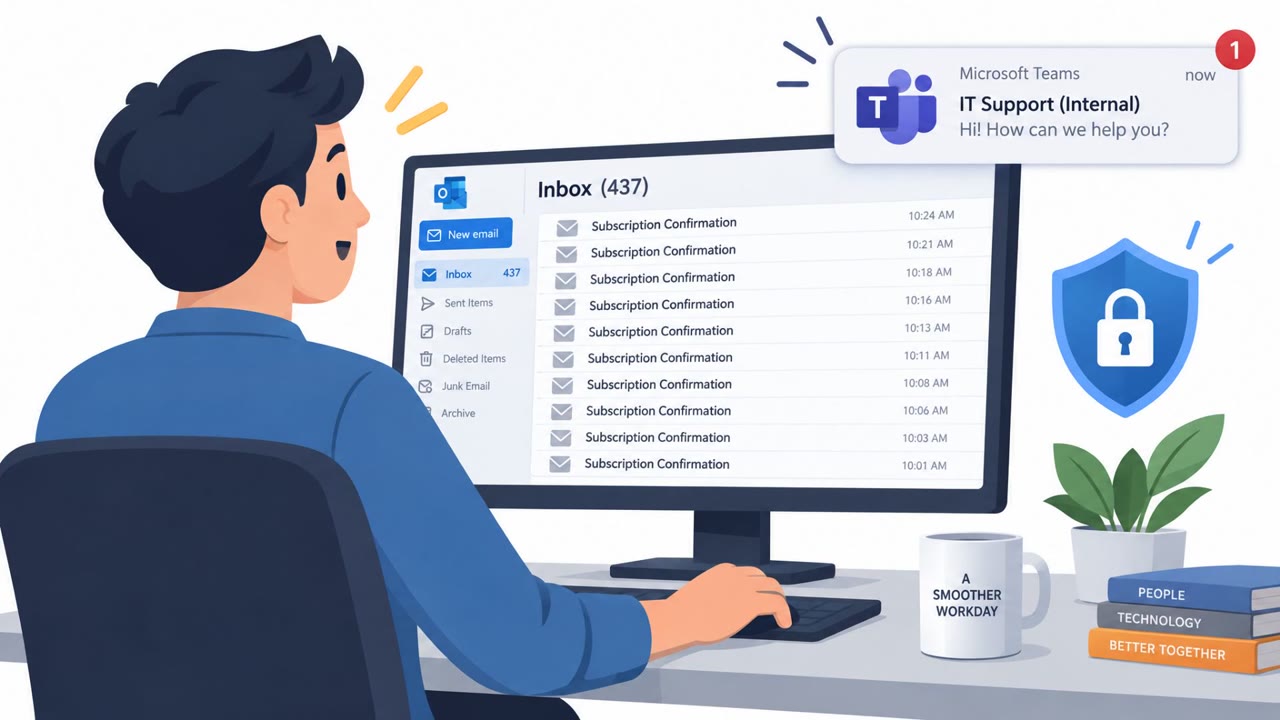
Fake IT Support Uses Spam and Teams to Trap Staff

Help Net Security · Medium sophistication
Last updated November 1, 2026

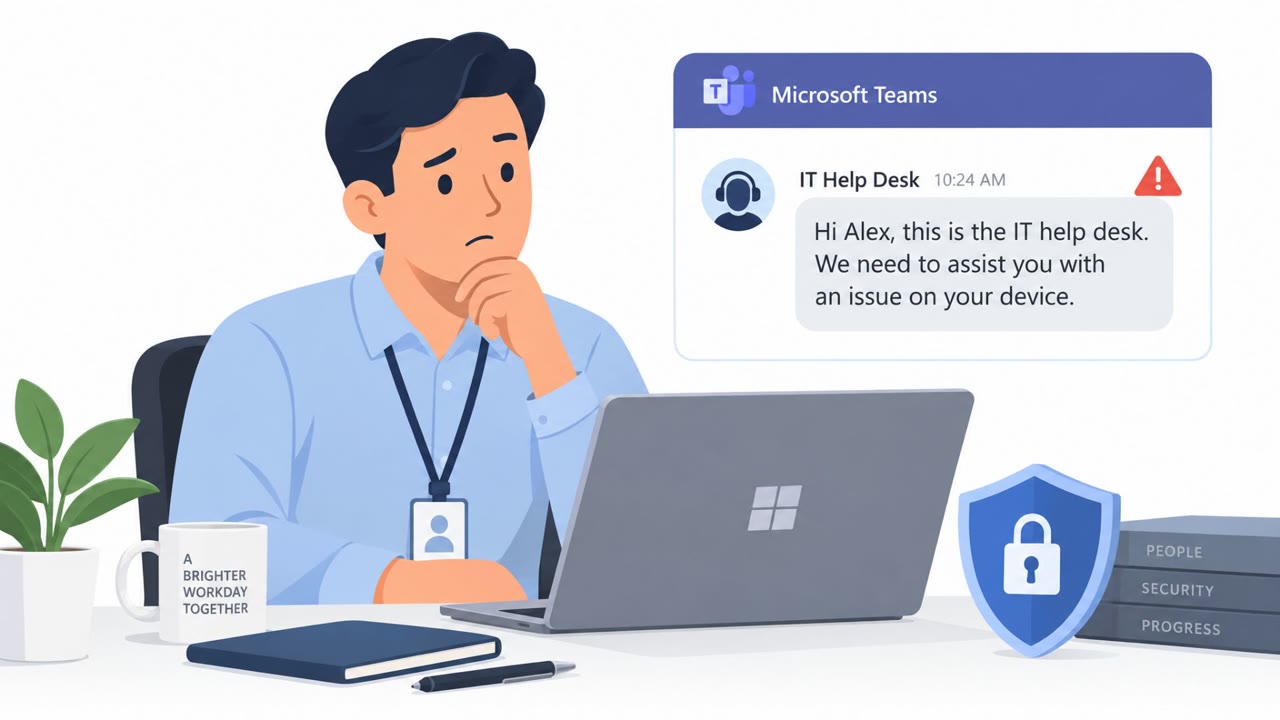
This weekly roundup describes real social-engineering operations in which attackers impersonated IT help desk staff. They used phone calls, email, and Microsoft Teams to persuade employees to open remote-access sessions; another campaign first overwhelmed inboxes with spam, then offered fake support through Teams.

Key findings

  • Cisco Talos Incident Response observed attackers posing as IT help desk staff across several real-world engagements in the third quarter of 2026.
  • The attackers contacted employees through phone calls, email, and Microsoft Teams and persuaded them to open remote-access sessions.
  • In one Talos case, the remote access obtained through the help desk impersonation led to ransomware.
  • Arctic Wolf documented more than 400 incidents involving abuse of Microsoft Teams' external chat feature.
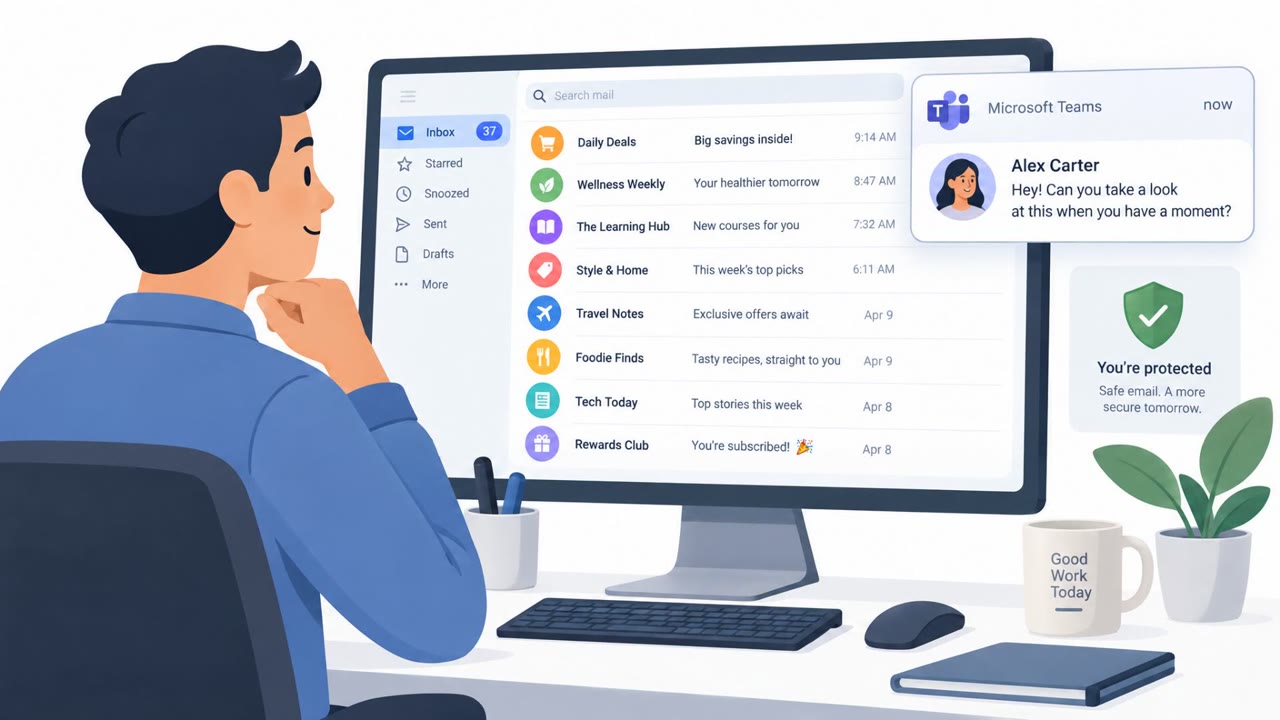
  • In the Teams campaign, attackers flooded inboxes with spam and then posed as IT support offering to resolve the disruption they had caused.

Who’s being targeted

  • Commonly targeted roles: All employees, Microsoft Teams users, Remote workers, IT help desk staff, Employees authorized to use remote-access tools.
  • Affected industries: Cross-industry organizations using Microsoft Teams, Organizations with employee help desk and remote-access workflows.
  • Attack channels: vishing, email, teams.
  • Impersonated: Internal IT help desk staff, IT support.

Awareness takeaways

  • Do not open a remote-access session because of an unsolicited call, email, or chat. End the interaction and contact IT through the organization’s known support portal or published phone number.
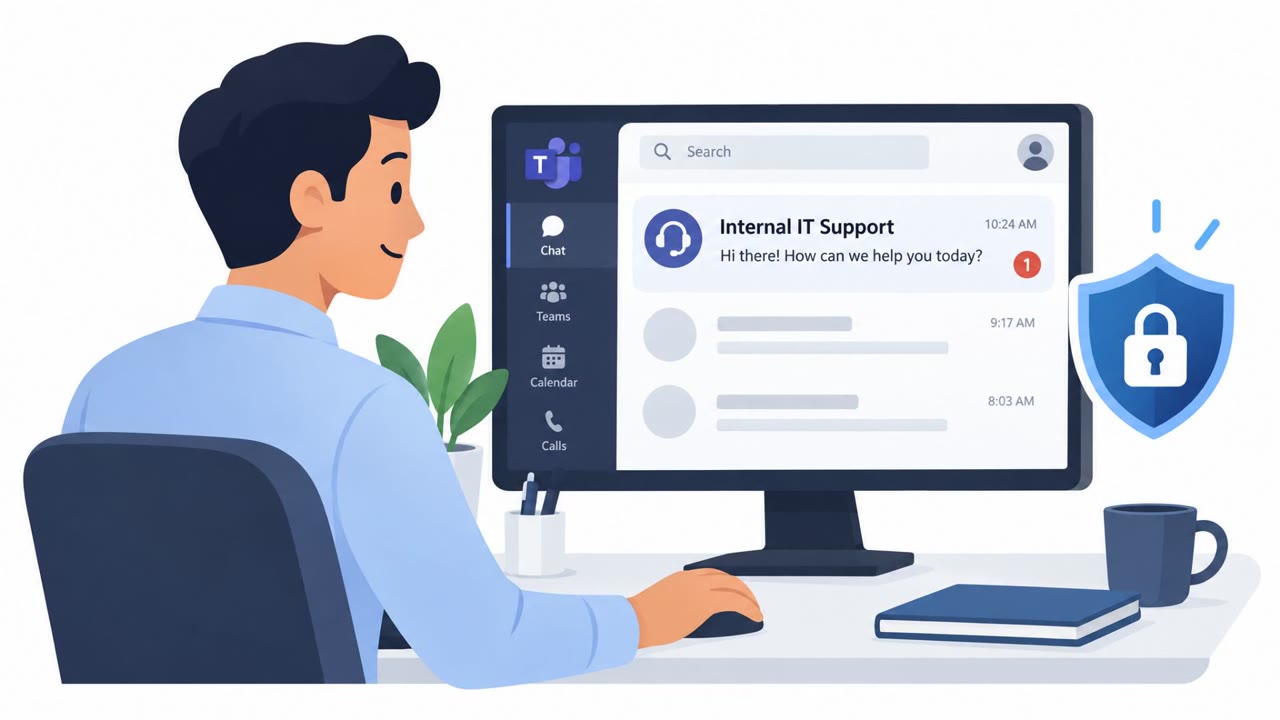
  • Treat unsolicited external Microsoft Teams chats claiming to be IT support as suspicious, especially after an unusual spam surge.
  • Teach employees that attackers can use a disruption they created, such as a spam flood, as proof that their fake support offer is legitimate.

Red flags to watch for

  • The caller asks the employee to initiate a remote-access session.
  • The request was not made through a known internal support channel.
  • The caller relies on basic employee information, such as a name and email address, to appear legitimate.
  • A sudden flood of spam is followed by an unsolicited support contact.
  • The supposed support worker contacts the employee through an external Teams chat.
  • The sender offers help for a problem that they may have deliberately created.
Try Mirage

Mirage safely runs attacks like this one against your own team, so you find out what happens before a real adversary does.

Get a demo
Read the video transcript

Inbox suddenly buried in spam? Then IT messages you on Teams? The Teams chat says, ‘IT support here, we can fix your spam problem.’ But it’s an external contact. They may have caused the flood themselves. Next comes the ask: open a remote-access session. Fake help desks also call and email. Cisco Talos saw one such case end in ransomware. The giveaway: their ‘proof’ is the problem they created. Contact IT through your known support portal instead.

Similar attacks

Fake Teams Support Chats Open Door to Ransomware

Fake Teams Support Chats Open Door to Ransomware

Attackers are using Microsoft Teams external chat to pose as internal IT support staff, often after overwhelming employees with email subscription messages. They persuade victims to join a voice call, approve remote-control tools, or run commands, with some incidents ending in malware infections…

October 27, 2026
Fake Teams IT Support Pushes Remote Access

Fake Teams IT Support Pushes Remote Access

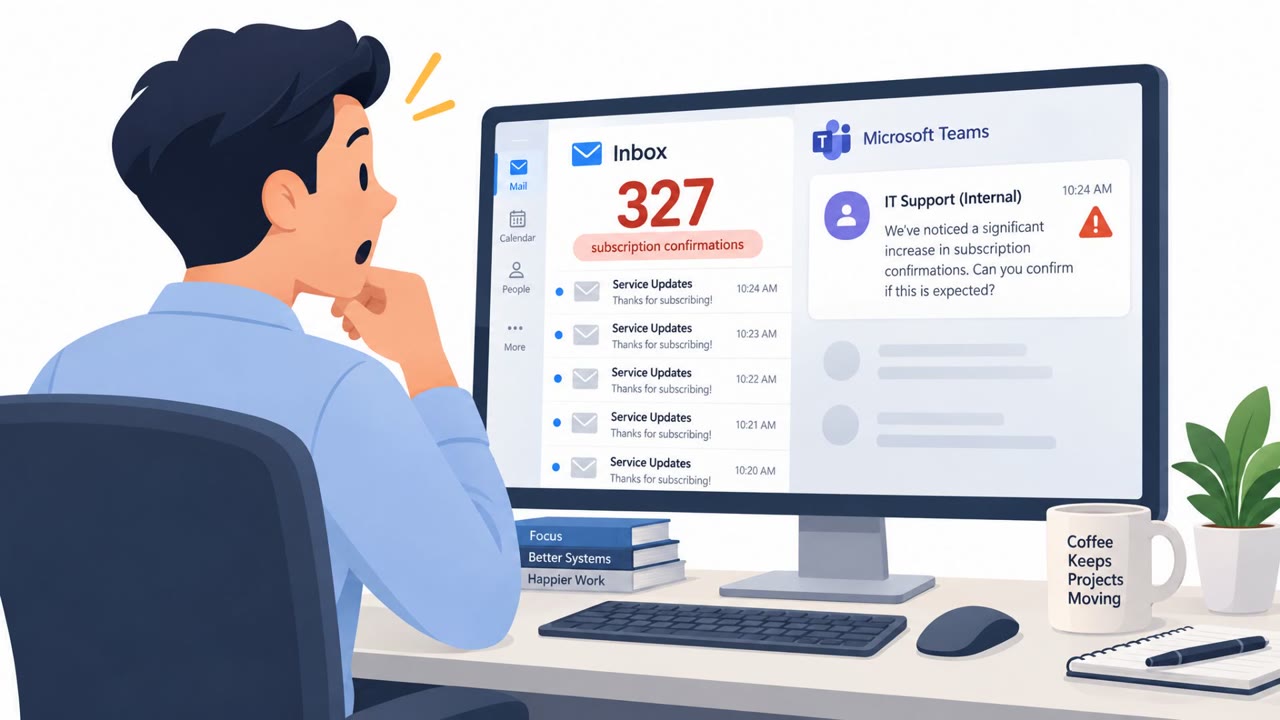
Attackers are posing as internal IT support staff in Microsoft Teams, often after flooding an employee’s inbox with subscription emails to create urgency. They persuade victims to grant remote access through legitimate support tools, then install malware, steal information, and in some cases deploy…

October 26, 2026
Fake IT Support Calls Opened the Door to Ransomware

Fake IT Support Calls Opened the Door to Ransomware

Attackers impersonated IT help desk staff through phone calls, email, and Microsoft Teams, using employees’ names and email addresses to appear legitimate. They persuaded users to open remote-access sessions, and one such session led to a ransomware incident. The campaigns did not focus only on…

October 30, 2026
Spam Flood Sets Up Fake Teams IT Support

Spam Flood Sets Up Fake Teams IT Support

Attackers overwhelm employees with hundreds of spam messages, then contact them through Microsoft Teams while posing as internal IT support. They offer to fix the inbox problem, move victims into a voice call, and persuade them to install or use remote-access tools such as Quick Assist. The scams…

October 27, 2026
Fake IT Support Abused Teams Chat

Fake IT Support Abused Teams Chat

This threat report describes more than 400 real incidents in which attackers used Microsoft Teams external chat to impersonate internal IT support staff. Employees were persuaded to start remote sessions and install access tools, with some cases leading to stolen credentials, movement across…

November 2, 2026
Scammers Hijack Staples and Dell Order Emails

Scammers Hijack Staples and Dell Order Emails

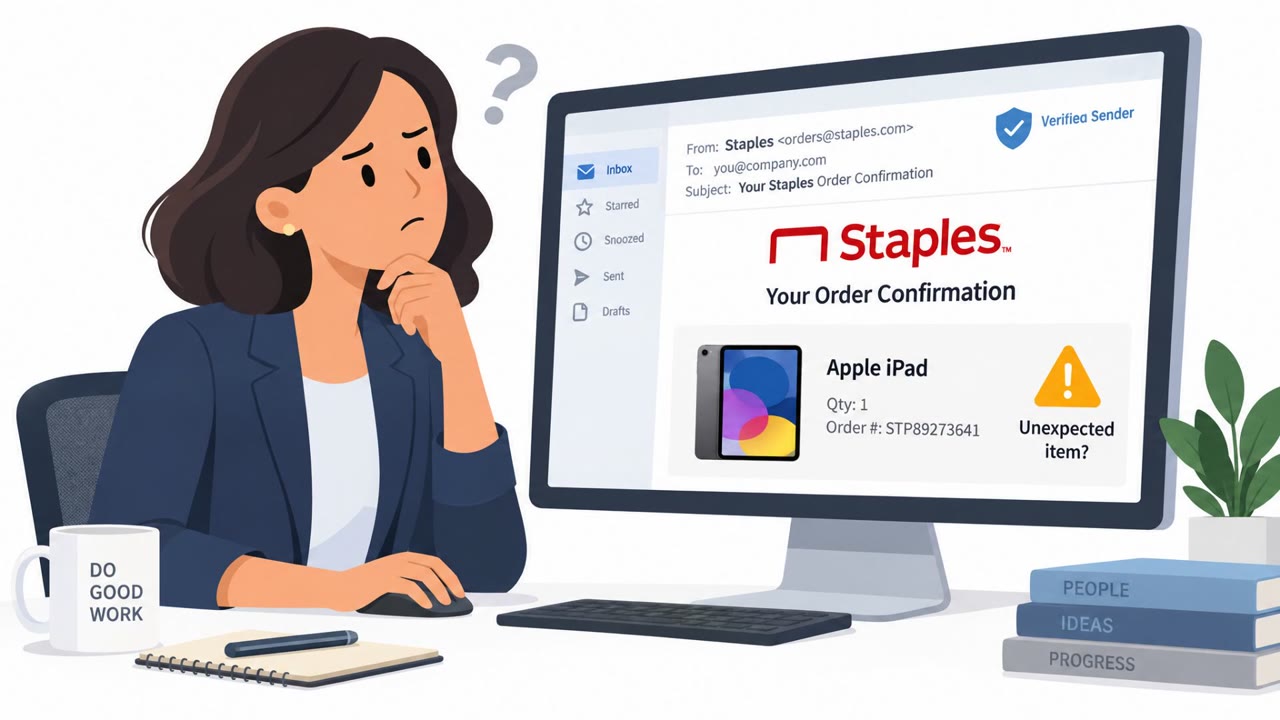
Cisco Talos found roughly 1,400 scam emails sent through legitimate Staples and Dell order-notification systems. Attackers placed fake helpline numbers and support prompts into order fields, causing trusted retailers to email recipients about purchases they did not make. The scam then pressures…

October 28, 2026