Fake Police Reply Lures Ukraine Officials

The Hacker News · High sophistication
Last updated October 8, 2026

Russia-aligned actor UAC-0099 targeted Ukrainian government personnel using malware (ASHVEIN) that steals credentials and enables remote control. A key lure described is a malicious .NET file that shows a decoy Microsoft Word document pretending to be an official response from Ukraine’s National Police, encouraging recipients to trust and open it while malware installs in the background.

Key findings

  • UAC-0099 (tracked as Earth Sirrush) used ASHVEIN, a .NET infostealer/RAT, against Ukrainian government personnel.
  • A described lure uses institutional impersonation: a malicious executable "AnswerFromPolice" that displays a Word decoy claiming to be a response from the National Police of Ukraine while installing malware.
  • The attackers rely on credible-looking decoy content to increase trust and open rates.
  • The toolset supports credential theft (Chrome/Firefox), screenshots, file collection, and remote execution, consistent with espionage objectives.

Who’s being targeted

  • Commonly targeted roles: Government staff, Executives and executive assistants, Administrative staff, HR and legal teams, Security/IT helpdesk.
  • Affected industries: Government, Defense, Border security, Logistics, Critical infrastructure.
  • Attack channels: email.
  • Impersonated: National Police of Ukraine.

Awareness takeaways

  • Treat unexpected ‘official’ documents (police, government, regulators) as high-risk and verify via a known, trusted channel before opening.
  • Be suspicious of attachments that show a decoy document, this can be a cover for malware running in the background.
  • Prioritize training for credential theft risk: avoid entering browser credentials after opening unknown files and report immediately if a suspicious attachment was opened.

Red flags to watch for

  • Unexpected attachment claiming to be an official law-enforcement response
  • File type mismatch (executable/.NET app delivering a Word document decoy)
  • Pressure to trust the content because it appears institutional and official
Try Mirage

Mirage safely runs attacks like this one against your own team, so you find out what happens before a real adversary does.

Get a demo
Read the video transcript

Imagine this email: subject line says “Official response from the National Police of Ukraine,” attachment called AnswerFromPolice. You open it, a Word document pops up that looks like a real police reply. But AnswerFromPolice is actually a .NET app dropping ASHVEIN malware while you read. ASHVEIN can grab Chrome and Firefox passwords, take screenshots, collect files, and let someone remotely run commands on your machine, all triggered by that one ‘official’ attachment. If you get an unexpected ‘official’ police or government document, stop. Don’t open it, call or email your known contact to verify it first.

Similar attacks

Fake Freelancer Accounts Pushed Malicious Excel Macros

Fake Freelancer Accounts Pushed Malicious Excel Macros

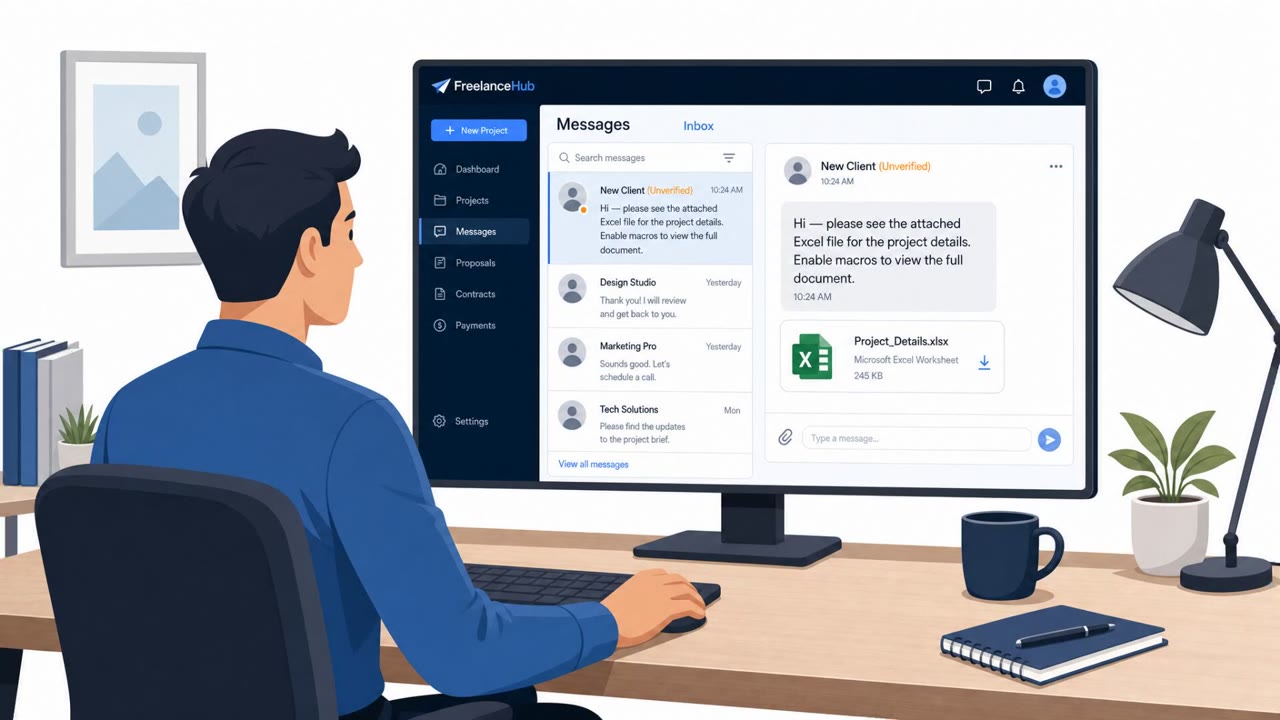
U.S. prosecutors say a Russian national used hundreds of fake accounts on a freelance platform to send Excel files that tricked users into enabling macros, which then downloaded remote-control malware. The campaign targeted tens of thousands of users and led to thousands of infections, enabling…

September 2, 2026
Lazarus Uses Fake Jobs to Drop Zero-Day Malware

Lazarus Uses Fake Jobs to Drop Zero-Day Malware

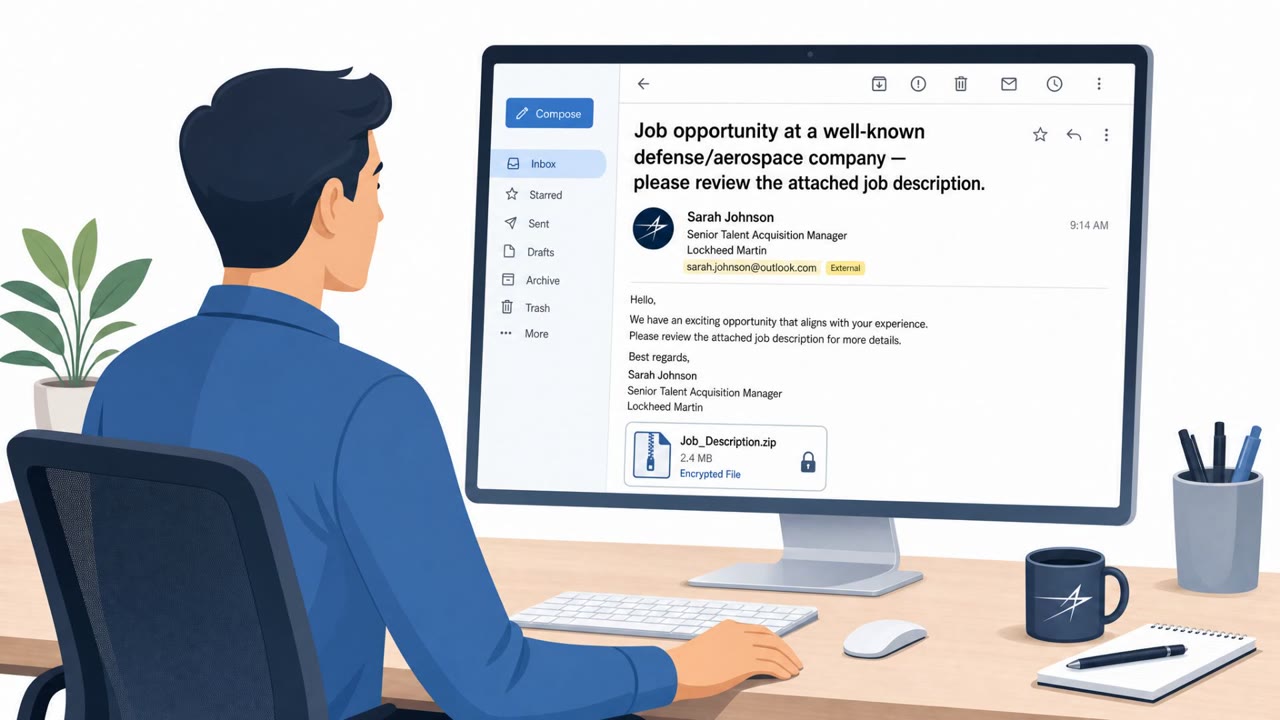
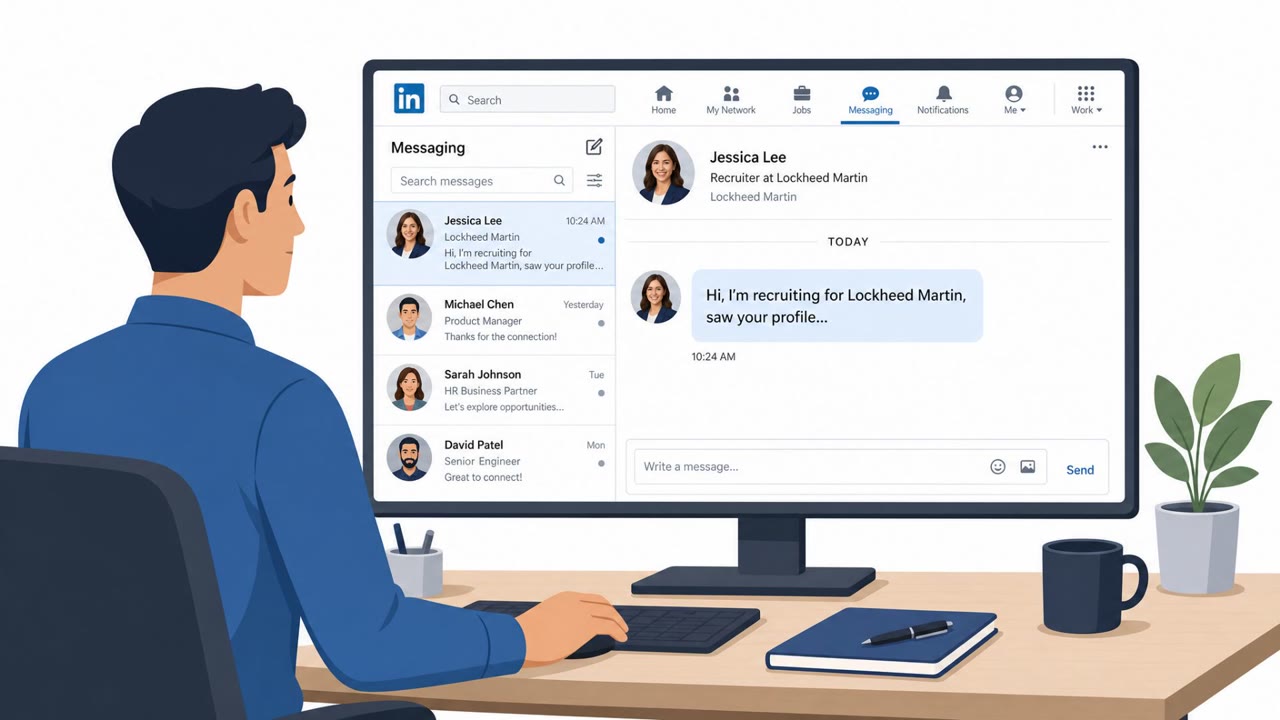
Researchers say the North Korea-linked Lazarus group ran “Operation Dream Job,” posing as recruiters and sending fake job offers to lure targets into downloading trojanized PDF tools and opening booby-trapped PDFs. The campaign focused largely on defense-related organizations and used both a…

August 12, 2026
Fake Dubai Airports Recruiters Target Developers

Fake Dubai Airports Recruiters Target Developers

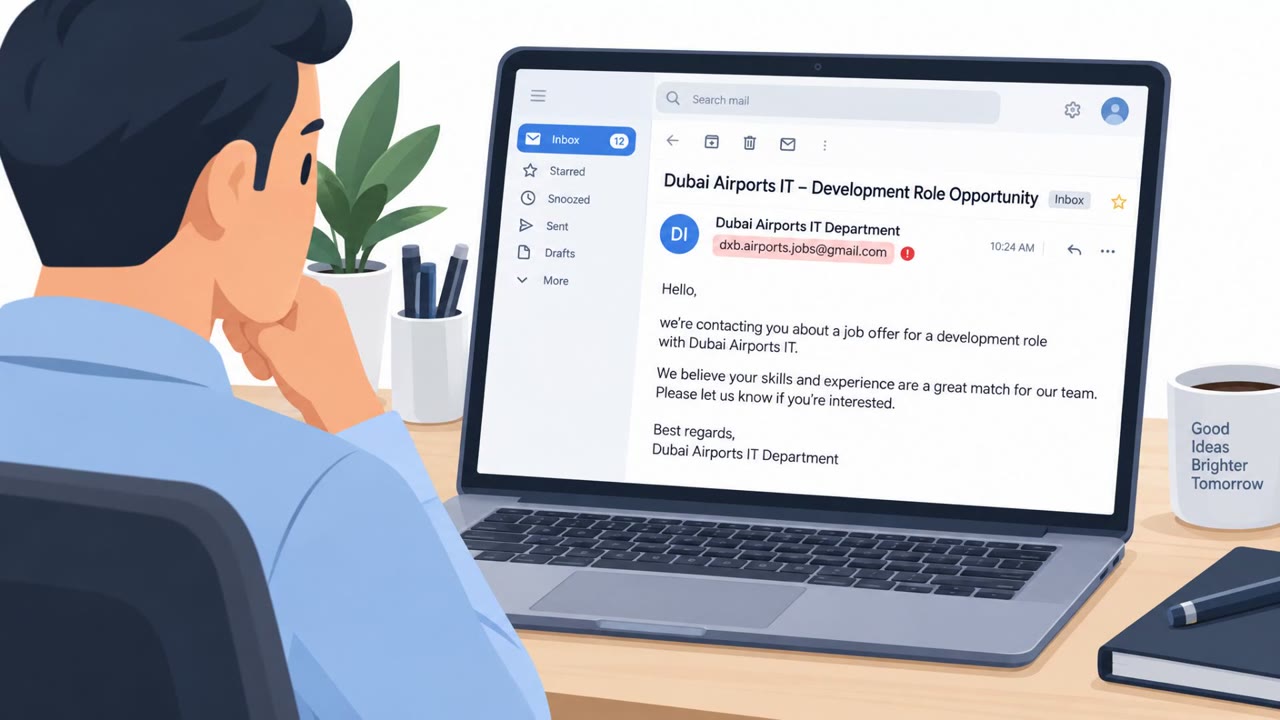
Researchers linked an Iran-aligned campaign to recruitment-themed social engineering that tricked a targeted Iraqi software engineer into downloading a fake "Dubai Airports" careers portal and then opening a trojanized Visual Studio coding test. The lure abused normal developer workflows so malware…

October 10, 2026
CSuite Phish Steals M365 Sessions, Installs RMM

CSuite Phish Steals M365 Sessions, Installs RMM

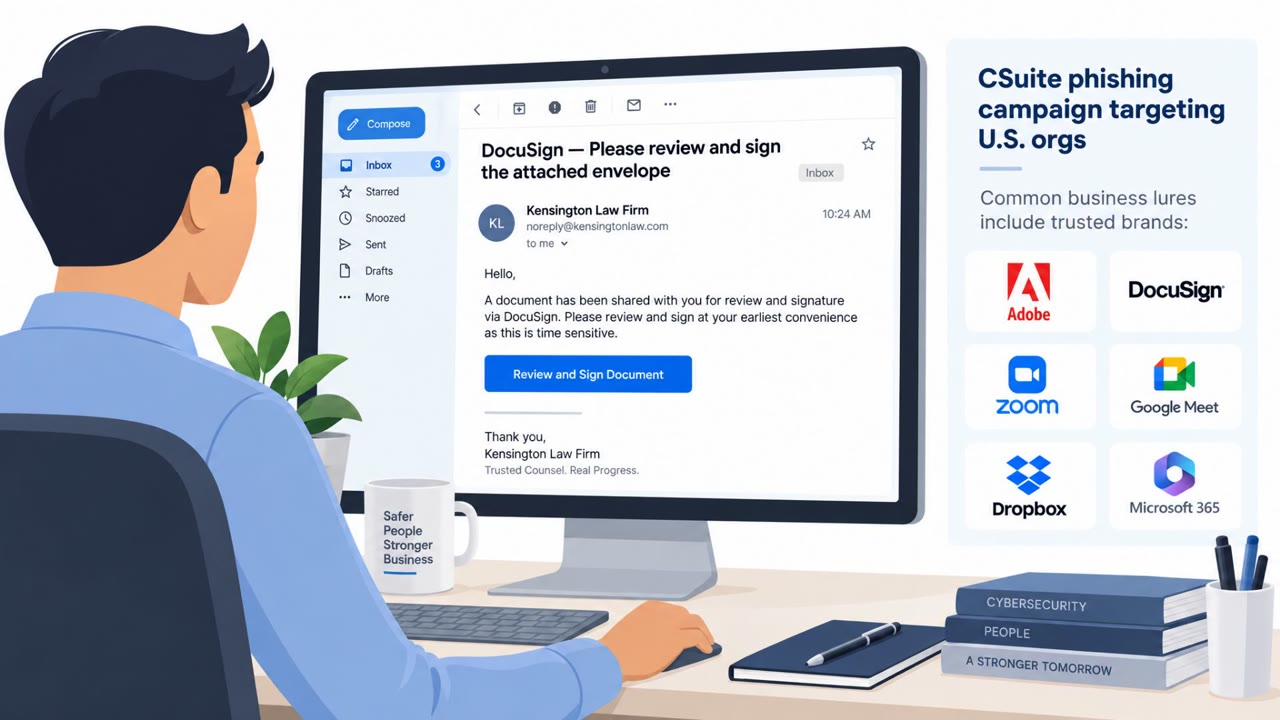
Researchers observed a real phishing campaign (“CSuite”) heavily targeting U.S. organizations using familiar business-themed lures (DocuSign, Adobe, Zoom/Meet, Dropbox, Microsoft 365). After a victim engages, the attackers either steal Microsoft 365 sessions (enabling mailbox takeover and fraud) or…

September 30, 2026
Fake Lockheed Jobs Used to Deliver Lazarus Zero-Day

Fake Lockheed Jobs Used to Deliver Lazarus Zero-Day

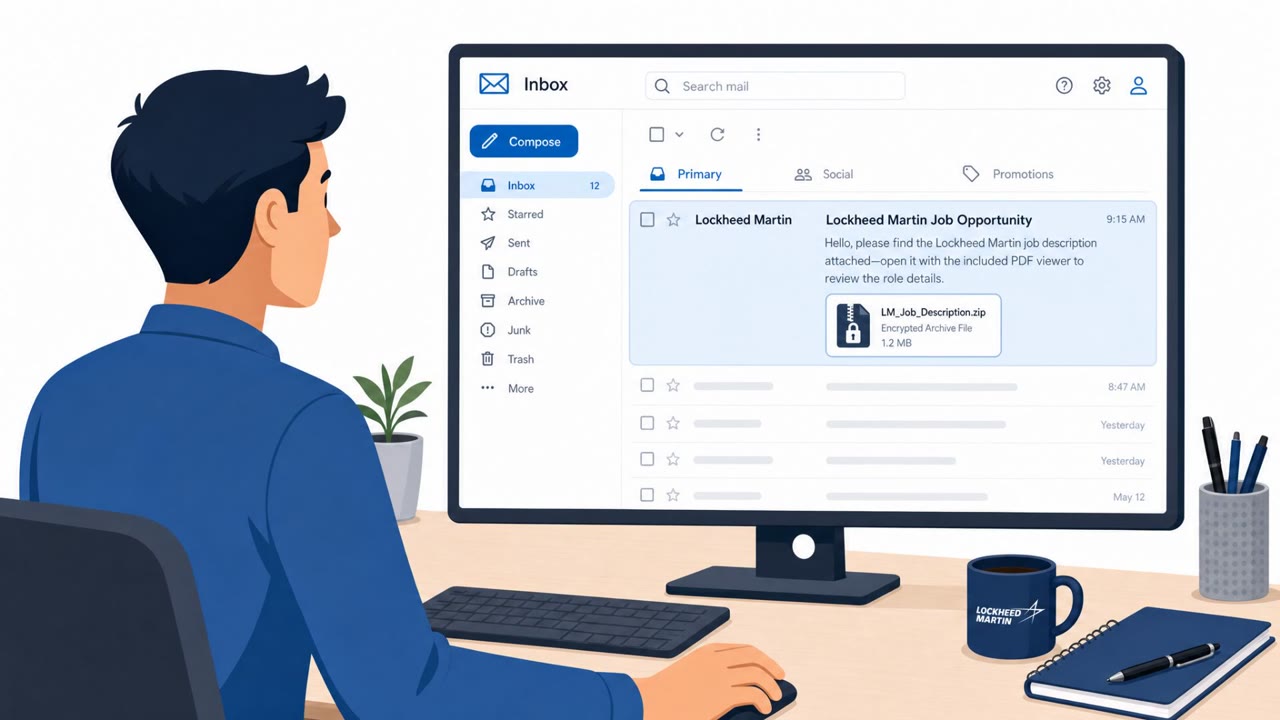
Check Point says North Korea’s Lazarus Group targeted defense and aerospace professionals using convincing fake job offers that led victims to download trojanized PDF software. The campaign used a Windows zero-day (now patched as CVE-2026-68820) to gain full control and hide from security tools,…

August 13, 2026
Fake Job Offers Spread Lazarus Zero-Day Attack

Fake Job Offers Spread Lazarus Zero-Day Attack

Researchers describe a real, ongoing Lazarus-linked campaign where targets are lured with attractive job offers and tricked into downloading a PDF viewer and “job description” documents. Opening the files installs backdoors and, in at least one wave, attackers used a Windows zero-day to gain deep…

August 11, 2026