Mandiant investigated real 2026 incidents in which criminals stole or abused cloud and LLM access to run up massive unauthorized charges. In one case, UNC6993 used a fake application portal to persuade LLM users to paste active access-token data, allowing the attackers to bypass password and MFA protections. The stolen access was then used to enable services, create keys, and monetize LLM capacity.
How the Attack Worked
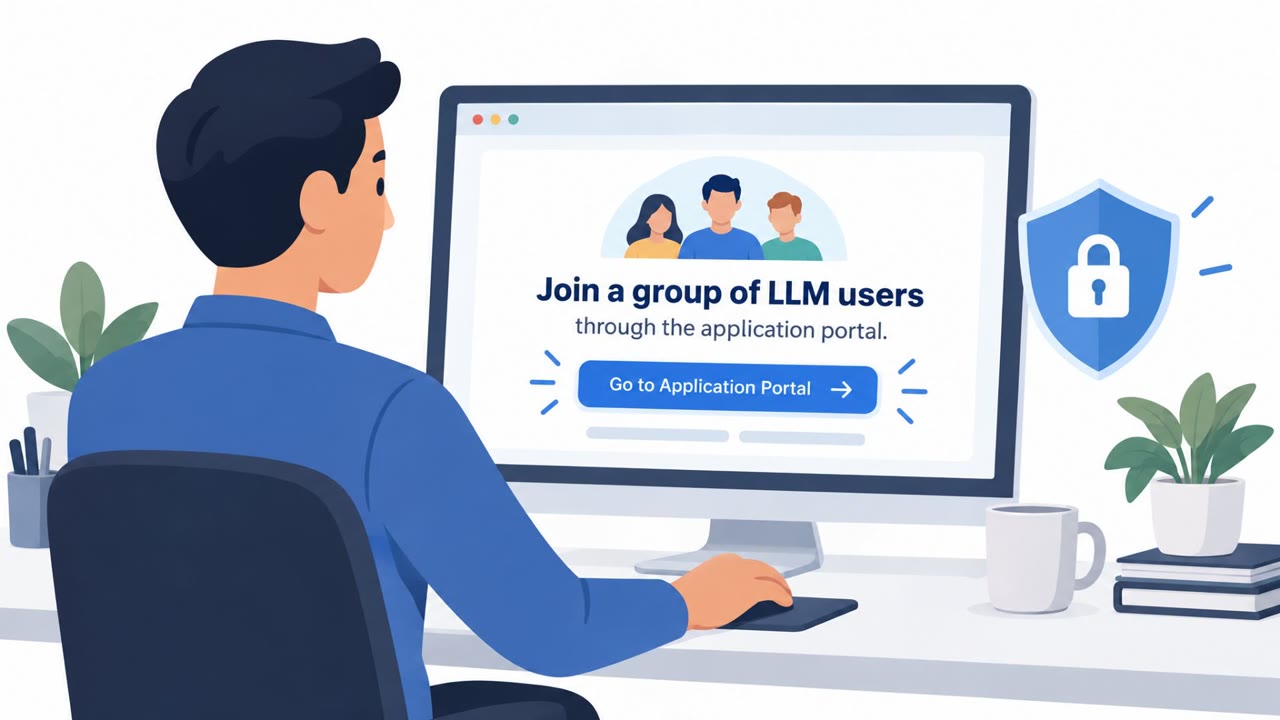
In this incident, the threat actor tracked as UNC6993 built a fake application portal that impersonated a legitimate workflow for joining a group of LLM users. The portal's opening line invited targets to join a group of LLM users, then directed them to navigate to the legitimate LLM service website and copy a raw JSON payload containing an active access token. That token was then submitted to the attacker's backend API, which allowed the attacker to bypass password and multifactor authentication controls entirely. Because the token itself represented an already authenticated session, normal login protections never came into play.
Why It Succeeded
The attack succeeded because it did not ask victims to type a password or approve an MFA push, actions many users have been trained to scrutinize. Instead, it asked for something that looks like routine technical data, a JSON payload, framed as a step in a legitimate-sounding group-joining process. This framing lowered suspicion and exploited the trust users place in copy-paste workflows between a real service and a connected application. Other 2026 incidents in the same investigation show related entry points, including exposed IAM credentials, service-account keys, GitHub personal access tokens, and stolen session tokens, some of which were harvested from public code repositories and tested with minimal requests to avoid detection.
What to Watch For
- Any portal or form that asks you to paste raw JSON, access tokens, or session data from another legitimate service.
- Unexpected invitations to join a group, connect an application, or link an account to an LLM service.
- Sudden, unexplained enablement of LLM services, new API keys, or unusual usage and billing activity.
- API keys or credentials appearing in public code repositories.
Financial services, retail, technology, and transportation organizations were affected across the Americas and Asia Pacific, with developers, cloud administrators, LLM application owners, and finance teams all exposed to risk from this kind of technique.
Building Resistance
Organizations can reduce exposure by training developers, cloud administrators, and LLM application owners to never paste tokens or session data from a legitimate service into a separate portal or chat window. Unexpected requests to join an LLM group or connect an application should be treated as potential credential theft and verified through a known internal contact or official service channel. Teams should also avoid storing API keys and cloud credentials in public repositories and rotate any exposed key immediately. Finally, security operations and finance teams should escalate unexpected LLM service activation, new API keys, or billing spikes as critical security events, since stolen access can generate large unauthorized charges in a very short time.
Key findings
- Mandiant responded to multiple 2026 LLMJacking incidents affecting financial services, retail, technology, and transportation organizations across the Americas and Asia Pacific.
- In one case, UNC6993 operated a fake application portal that induced users to submit raw JSON containing an active access token, bypassing password and MFA controls.
- Attackers primarily gained entry through exposed or stolen cloud credentials, including IAM credentials, service-account keys, GitHub personal access tokens, and active session tokens.
- One threat actor harvested exposed corporate LLM API keys from public GitHub repositories and tested them with minimal one-token requests to reduce detection.
- Individual incidents generated more than $100,000 in fraudulent cloud consumption in one day; some victims incurred cumulative charges of $1 million before access was removed.
- Threat actors resold stolen LLM access through proxy and routing services described as “LLM Mixers.”
Who’s being targeted
- Commonly targeted roles: Developers, Cloud administrators, LLM application owners, DevOps and platform engineering teams, IAM administrators, Security operations teams, Finance and cloud-cost management teams.
- Affected industries: Financial services, Retail, Technology, Transportation.
- Attack channels: website.
- Impersonated: An application portal for a legitimate LLM-user group.
Red flags to watch for
- The portal asks for raw JSON containing an active access token.
- A supposed group-joining workflow requires copying data from a legitimate LLM service.
- The request would bypass normal password and MFA protections.
Frequently asked questions
How did the fake LLM portal bypass MFA?
Users were tricked into pasting a raw JSON payload containing an active access token into a fake portal, which then posted the token to a backend API, bypassing password and MFA controls entirely.
What is LLMJacking?
LLMJacking refers to incidents where attackers steal or abuse cloud and LLM access, often through stolen credentials or tokens, to run up unauthorized charges or resell access through services described as LLM Mixers.
Who was targeted in these incidents?
Mandiant responded to 2026 incidents affecting financial services, retail, technology, and transportation organizations across the Americas and Asia Pacific, with developers, cloud administrators, and IAM administrators among the target roles.
What should organizations do to prevent this kind of attack?
Never paste access tokens or raw JSON from a legitimate service into a separate portal, avoid storing API keys in public repositories, and treat unexpected LLM service activation or usage spikes as critical security events.
Read the video transcript
“Join a group of LLM users.” Sounds harmless, right? UNC6993’s fake application portal sends you to the real LLM service, then asks you to copy raw JSON from there and paste it back into the portal. That JSON contains your active access token. Hand it over, and they can use your session without your password or MFA, and run up cloud charges. The giveaway: a group invite should never need your session. Never paste tokens or raw JSON into another portal.