Lazarus Uses Fake Résumés to Target Korea

The Hacker News · High sophistication
Last updated October 27, 2026

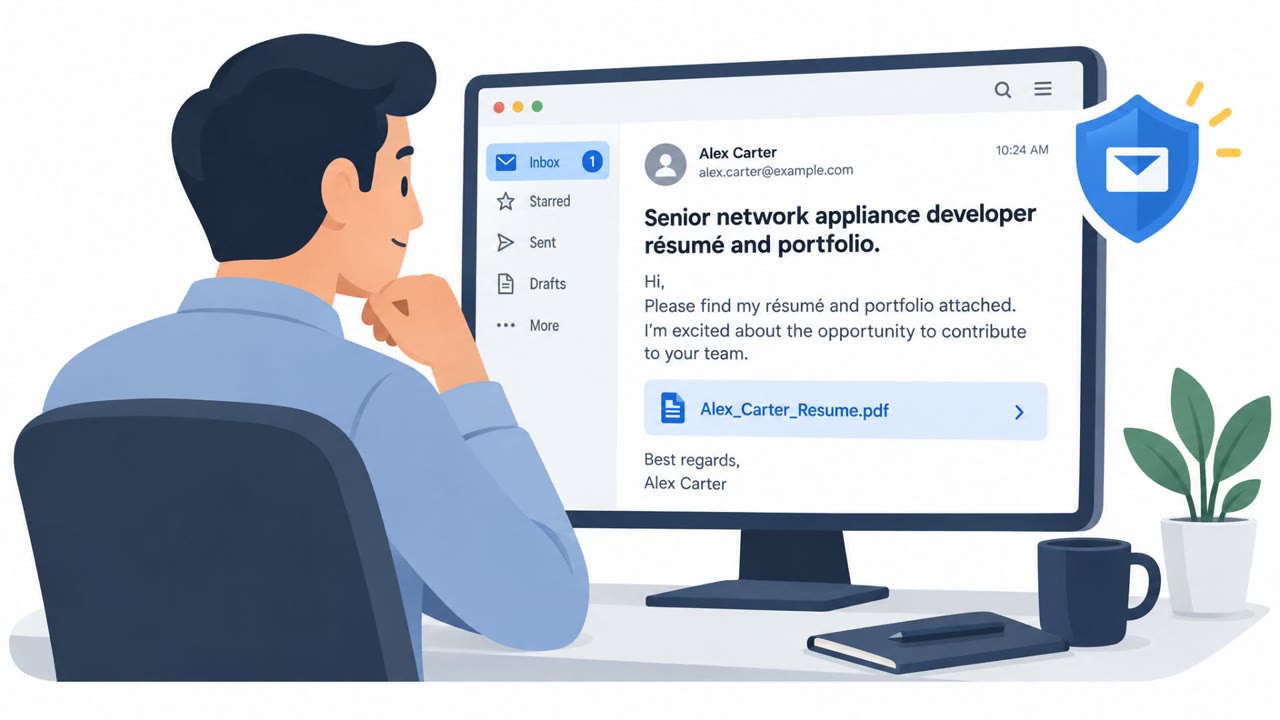
North Korea-linked Lazarus targeted South Korean organizations with tailored phishing emails that directed recipients to fake portfolio and résumé websites. The sites, including GitHub Pages hosting a purported senior network-appliance developer résumé, abused vulnerable financial-security software to install malware. The campaign shows how a convincing job-related link can become the first step in a targeted compromise.

Key findings

  • Lazarus's Operation FlashHole targeted at least three South Korean organizations in construction, software, and wire-communication equipment manufacturing.
  • Attackers sent selective spear-phishing emails linking to fabricated, target-relevant portfolio and résumé sites.
  • One malicious GitHub Pages site presented a résumé for a purported senior network-appliance developer and used a likely AI-generated profile photograph.
  • Visiting the malicious site triggered an infection chain that abused INISAFE CrossWeb EX, a widely used South Korean financial-security product.
  • The malware framework could collect system and browser data, steal files, log keystrokes, take screenshots, and deploy additional backdoors.

Who’s being targeted

  • Commonly targeted roles: Recruiting, Human Resources, Engineering, IT, Network Administration, Employees who review job applications or external technical portfolios, South Korean employees using online banking or government-service security software.
  • Affected industries: Construction, Software, Wire-communication equipment manufacturing, Financial services, Government services, Telecommunications, Semiconductor manufacturing.
  • Attack channels: email, website.
  • Impersonated: A purported senior network-appliance developer.

Awareness takeaways

  • Treat unsolicited links to applicant portfolios and résumés as untrusted, even when the role, skills, and website look highly relevant to your work.
  • Verify an applicant or sender through an independent channel before opening a portfolio link, especially if the page is hosted on a personal or unfamiliar GitHub Pages address.
  • Keep browser-connected financial-security and authentication software updated, because a phishing click can trigger exploitation of outdated software rather than merely display a fake webpage.

Red flags to watch for

  • An unsolicited applicant link is hosted on an unfamiliar GitHub Pages site.
  • The profile photograph may be AI-generated.
  • The message is unusually tailored to the recipient's technical role or organization.
Try Mirage

Mirage safely runs attacks like this one against your own team, so you find out what happens before a real adversary does.

Get a demo
Read the video transcript

A résumé link can be more than a résumé. In Operation FlashHole, Lazarus sent tailored emails: 'Please review my portfolio and résumé for the senior network-appliance developer opportunity.' The link led to a fake GitHub Pages résumé. Here's the catch: simply visiting the site could abuse outdated INISAFE CrossWeb EX to install malware. The photo may be AI-generated, and the perfect job match is bait. Before opening an unsolicited portfolio link, verify the applicant through a separate, trusted channel.

Similar attacks

Lazarus Uses Fake Résumés to Target South Korea

Lazarus Uses Fake Résumés to Target South Korea

Lazarus targeted South Korean organizations with spear-phishing emails that linked to fake, tailored résumé, portfolio, and interior-design websites. Visiting the sites likely triggered an infection through commonly required financial-security software, allowing the attackers to install malware…

October 21, 2026
Fake Recruiter Lure Drops NodeRabbit RAT

Fake Recruiter Lure Drops NodeRabbit RAT

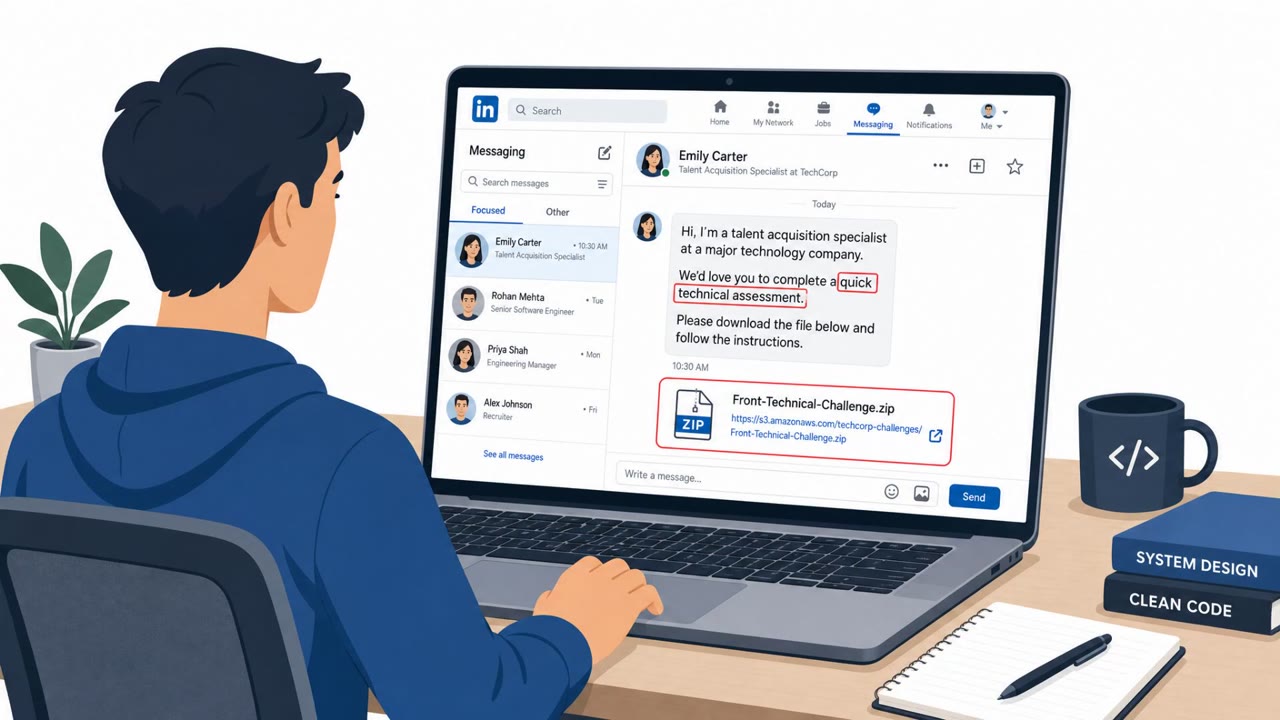
Researchers tied Mirage Kitten to a job-recruiting scam that targets developers via LinkedIn and job platforms. Victims are sent a “technical assessment” ZIP file hosted on legitimate cloud storage; running the project silently installs a remote-access trojan (NodeRabbit) that lets attackers…

September 1, 2026
Fake Install Guides and Helpdesk Calls Drive Attacks

Fake Install Guides and Helpdesk Calls Drive Attacks

This bulletin describes multiple real-world social engineering campaigns where attackers trick people into trusting a familiar screen, like a search result “install guide,” a recruiter outreach, or a helpdesk phone call. The lures push victims to paste commands, install fake software, or reset MFA,…

July 30, 2026
Fake AI Apps on GitHub Deliver Yoba Malware

Fake AI Apps on GitHub Deliver Yoba Malware

Check Point Research identified a real campaign, tracked as Yoba, that uses fake GitHub projects and websites posing as new ChatGPT and Claude desktop applications. Victims searching for AI tools can be directed to convincing pages for supposed releases such as GPT-6 Astra and Claude Opus, then…

October 27, 2026
Fake Gmail Attachment Lure Drops Antino Backdoor

Fake Gmail Attachment Lure Drops Antino Backdoor

A China-nexus threat group targeted government and policy organizations across Asia using spear-phishing emails tailored to the victim’s interests. The emails used spoofed trusted senders and a realistic fake Gmail attachment preview that linked to attacker-controlled pages, ultimately installing…

October 2, 2026
Lazarus Lures Staff With Fake Jobs to Drop Malware

Lazarus Lures Staff With Fake Jobs to Drop Malware

Researchers tied North Korea’s Lazarus Group to a real-world campaign that approaches professionals with convincing fake recruiter outreach and job offers. Victims are tricked into opening a malicious PDF or installing a fake PDF viewer from lookalike websites, which then installs backdoors and can…

August 12, 2026