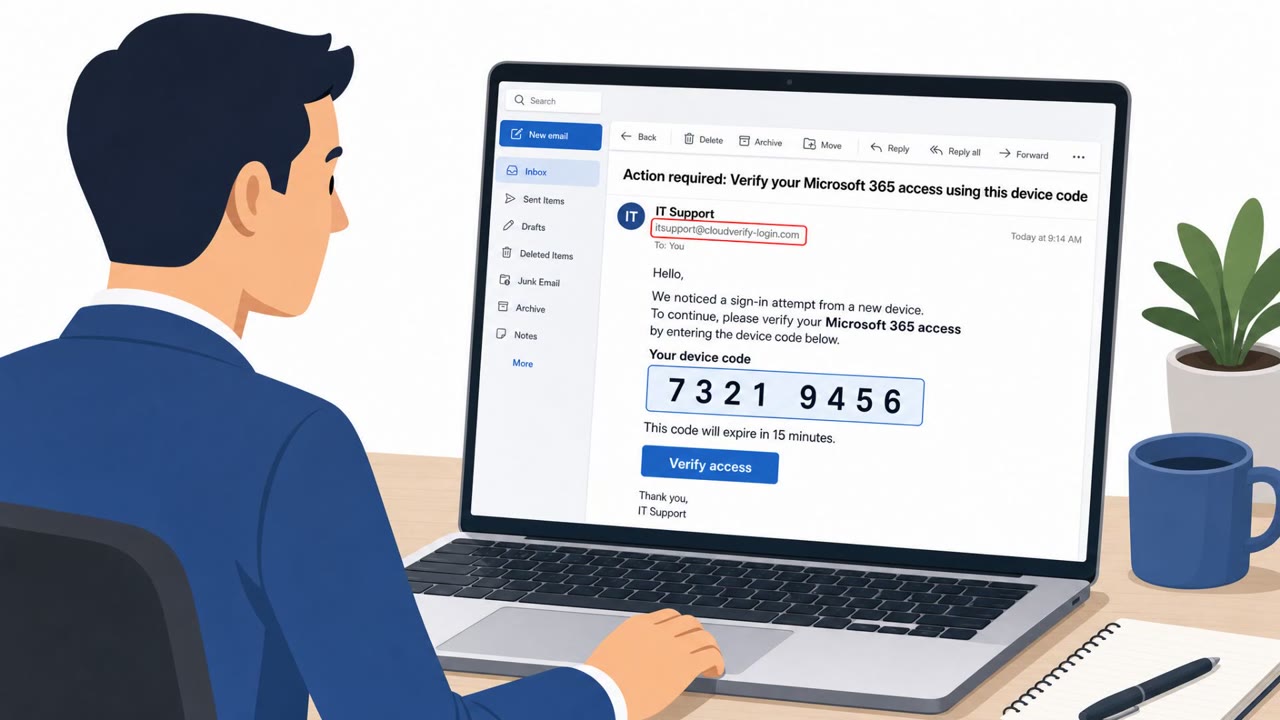
Researchers reported a real intrusion where a China-linked group used a crafted link to exploit Sogou Input Method on Windows and install the GRAYRABBIT backdoor. Victims were lured into opening a special link (potentially via email or chat), which redirected Sogou’s built-in browser to an attacker-controlled page that executed code and installed a remote-access backdoor.
How the attack worked
A China-linked group tracked as UNC3569 used a specially crafted link to trigger components of Sogou Input Method on Windows. Instead of behaving like a normal link, it launched Sogou's built-in browser and redirected it to an attacker-controlled page. That page carried an exploit for CVE-2021-38003, which let the attacker run code with the same privileges as the logged-in user. From there, a downloader pulled in a legitimate copy of 7-Zip alongside a malicious DLL (saved as 7z.dll) and an encrypted payload, all written to C:\Users\Public\Documents. The end result was installation of the GRAYRABBIT backdoor, which communicated with mail.uaiubifas[.]top over port 443 using RC4-scrambled plain TCP rather than standard TLS.
Why it succeeded
The chain relied on a single click to set everything in motion. Because the link used a custom handler rather than a normal https address, it could launch an application directly and hand off control to an embedded browser most users would not expect to interact with. Tencent described the chain as relatively complex, noting that an attacker would still need some social engineering to get a user to actively authorize a browser pop-up prompt. The embedded browser engine also remained on an older Chromium 80 build with key protections disabled, which widened the exposure even after the underlying link-handling issue was addressed.
What to watch for
- A link that launches an application through a custom handler (such as sgbiz:) instead of a normal web address
- An unexpected browser prompt asking to open another program or authorize an action
- A settings or skin-store window unexpectedly opening a web page outside trusted Sogou or Tencent domains
- Unusual files appearing in C:\Users\Public\Documents, especially alongside encrypted payloads
- Network traffic on port 443 that does not look like normal TLS
Building resistance
Employees, especially those using Sogou Input Method on Windows, should treat unexpected links delivered by email or chat as suspicious, particularly if they trigger an application launch or a system prompt. Any request to "authorize" a browser pop-up should be verified through a trusted channel before approval. IT and security teams should monitor for unusual file drops to public folders, unexpected encrypted payloads, and non-TLS traffic on common secure ports like 443, since these can indicate a backdoor has already been installed. Building this kind of awareness across government, education, technology, and finance teams can help catch a one-click exploit chain before it completes.
Key findings
- UNC3569 used a crafted link to trigger Sogou Input Method components and open an attacker-controlled URL inside Sogou’s embedded (old) Chromium browser.
- The exploit page used CVE-2021-38003 to run code with the logged-in user’s privileges, enabling backdoor installation with a single click.
- Gen traced a downloader pulling a legitimate 7-Zip, a malicious DLL (saved as 7z.dll), and an encrypted payload into C:\Users\Public\Documents.
- The resulting GRAYRABBIT backdoor communicated to mail.uaiubifas[.]top over port 443 using RC4-scrambled plain TCP (not normal TLS).
- Tencent fixed the link/argument handling in biz_helper.exe (restricting destinations), but Gen noted the embedded browser engine remained Chromium 80 with key protections disabled.
Who’s being targeted
- Commonly targeted roles: All employees (Windows users), IT/Helpdesk, Government staff, Education staff, Technology teams, Finance teams.
- Affected industries: Government, Education, Technology, Finance.
- Attack channels: email, website.
- Impersonated: Sogou/Tencent support or an internal IT message referencing Sogou Input Method, A web page presented as part of Sogou’s skin store / settings flow.
Red flags to watch for
- A link that launches an application via a custom link type (sgbiz:) instead of a normal https URL
- Unexpected browser prompt asking to open another program or "authorize" an action
- Link destination not clearly a trusted Sogou/Tencent domain
- A settings window that unexpectedly opens a web page outside expected Sogou/Tencent domains
- Unusual downloads or activity writing files to C:\Users\Public\Documents
- Network traffic to port 443 that is not normal TLS
Frequently asked questions
How did the Sogou link attack work?
A crafted link triggered Sogou Input Method components and opened an attacker-controlled page inside Sogou's embedded old Chromium browser, which used CVE-2021-38003 to execute code with the logged-in user's privileges.
What malware was installed in this attack?
The exploit chain downloaded a legitimate copy of 7-Zip, a malicious DLL saved as 7z.dll, and an encrypted payload into C:\Users\Public\Documents, ultimately installing the GRAYRABBIT backdoor.
How did the GRAYRABBIT backdoor communicate with attackers?
It reached out to mail.uaiubifas[.]top over port 443 using plain TCP scrambled with RC4 rather than standard TLS, which is unusual traffic for that port.
Did the victim need to do more than click a link?
According to the reporting, clicking the link was enough to start the chain, though Tencent noted the attacker would still need social engineering to get the user to authorize a browser pop-up prompt.
Read the video transcript
Clicking the link was all it took: one Sogou shortcut, and the GRAYRABBIT backdoor was on their PC. UNC3569 used that crafted 'sgbiz:' link to launch Sogou Input Method’s built-in Chromium browser, hit an exploit page for CVE-2021-38003, and silently drop the GRAYRABBIT backdoor. Behind that one click, the exploit pulled a legit 7-Zip plus a fake 7z.dll and an encrypted payload into C:\Users\Public\Documents, then GRAYRABBIT started talking to mail.uaiubifas.top on port 443 using weird non‑TLS traffic. Your move: if a link tries to open Sogou or any app via a custom type like 'sgbiz:' and pops up an authorization box you weren’t expecting, stop and report it to security, don’t click Open.