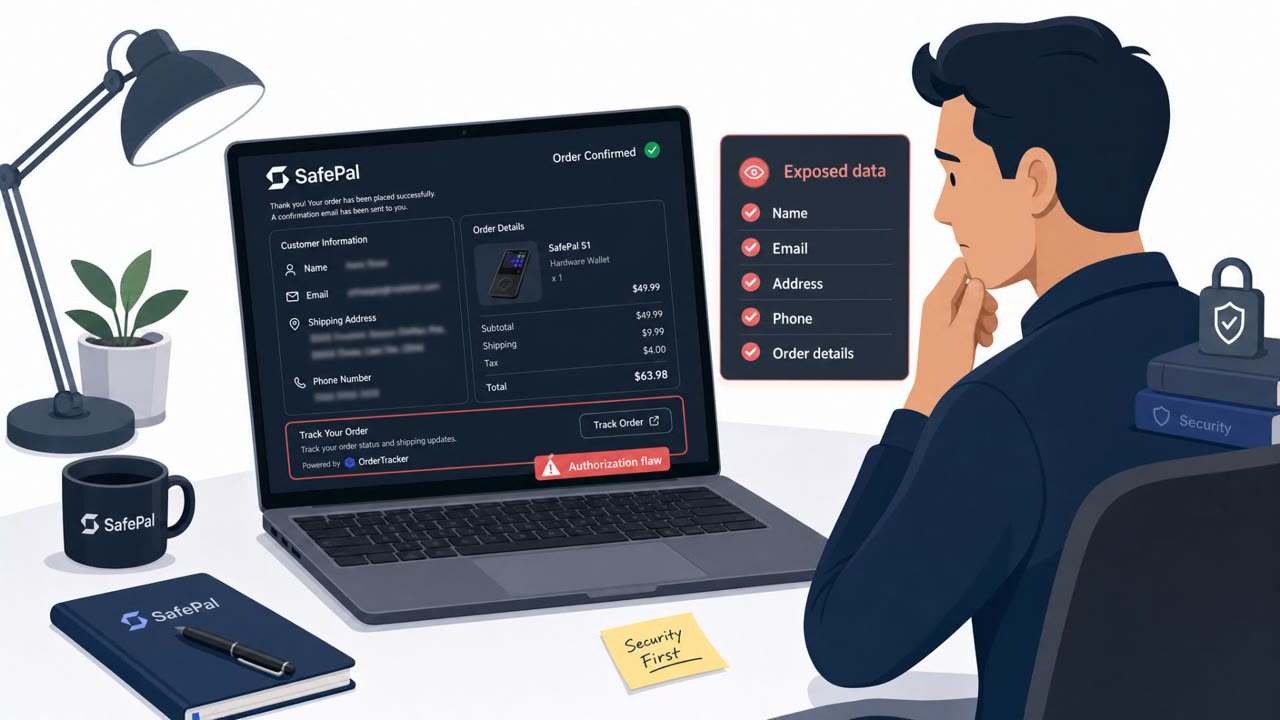
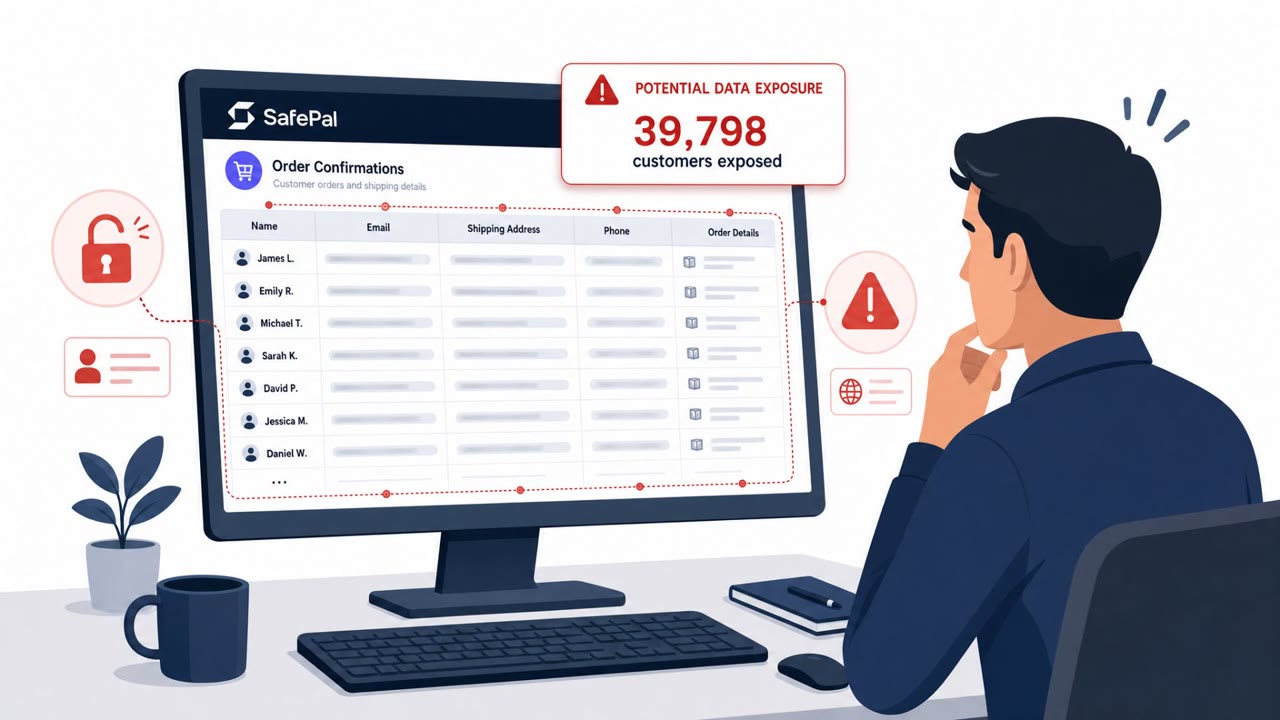
SafePal says an order-tracking plug-in flaw exposed order data for 39,798 customers, including names, contact details, shipping addresses, and purchase information. A customer reported receiving a suspicious email, letter, and phone call from someone pretending to be SafePal and urging them to click a link to “fix” a hardware wallet security issue. SafePal warns the leaked order data can enable targeted impersonation and phishing even though wallet seed phrases and private keys were not exposed.
Key findings
- Order information for 39,798 customers was exposed (names, emails, shipping addresses, phone numbers, and purchase details).
- A customer reported a multi-channel impersonation attempt (email, letter, and phone call) claiming a security issue with a recently purchased hardware wallet and pushing a link click.
- SafePal states seed phrases/private keys and payment details were not exposed, but warns exposed order data may be used for targeted phishing/impersonation.
- SafePal notified affected customers via email on Aug 16 from security@safepal.com with the subject “[Important] Your SafePal Order Information Has Been Affected.”
- A threat actor claimed to be selling data matching the same customer count and order window, but authenticity is unconfirmed.
Who’s being targeted
- Commonly targeted roles: Customers/End users, Customer Support, Security/Trust & Safety, Communications/PR, Fraud/Investigations.
- Affected industries: Cryptocurrency / Web3, FinTech, E-commerce / Direct-to-consumer hardware, Consumers (end users).
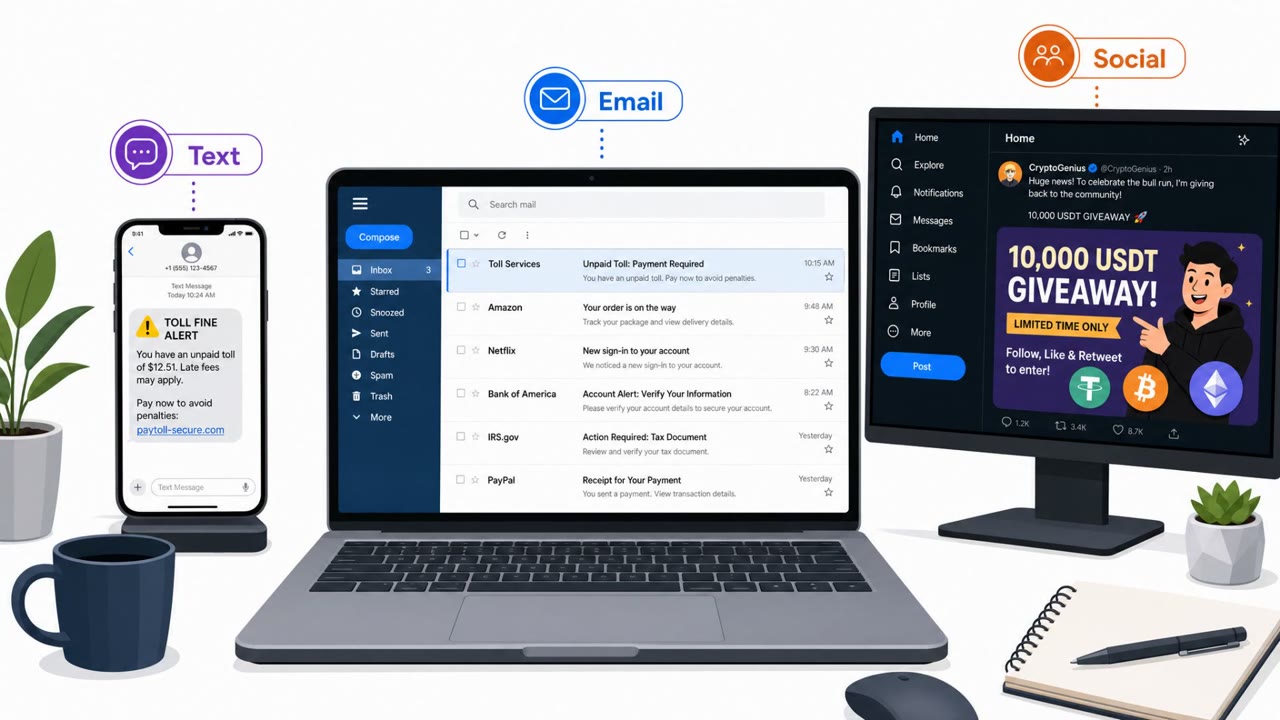
- Attack channels: email, physical, vishing.
- Impersonated: SafePal (customer support/security).
Awareness takeaways
- Treat unexpected “security issue” messages about recent purchases as suspicious and verify using official channels (not the provided link/number).
- Never share or enter seed phrases/private keys in response to emails, websites, phone calls, or letters, assume compromise if you do.
- Expect highly targeted phishing after a personal-data exposure (order IDs, shipping details, phone numbers) and increase vigilance for impersonation.
- Scrutinize any unexpected contact or deliveries referencing your hardware-wallet purchase, across email, phone, and postal mail.
Red flags to watch for
- Unexpected message about a “security issue” tied to a recent purchase
- Pressure to click a link to fix a device issue
- Message claims to be SafePal but is not confirmed through official channels
- Unsolicited postal mail referencing your purchase details
- Instructions that route you to a link/number not verified on SafePal’s official site
- Uses fear/urgency about a device security problem
- Unsolicited call referencing your order/shipping details
- Caller pushes you to act immediately
- Any request to share or enter seed phrases/private keys
Read the video transcript
Imagine this: you bought a SafePal wallet, and weeks later you get an email, a letter, and even a phone call about a “security issue.” That’s exactly what happened after SafePal’s order plug‑in leaked data for almost forty thousand customers, names, emails, phone numbers, shipping addresses, and what they bought. Impersonators then used those details to sound legit: “We detected a security issue with your recently purchased SafePal hardware wallet, click this link to fix it.” Email, letter, phone call, all pushing that same link. If you get any “security issue” message about a SafePal or other wallet, do not use their link or number, go to the official website or app yourself and contact support from there.