Ukraine’s parliament approved tougher penalties targeting fraudulent call centers that manipulate victims into sending money, making fake investments, or giving access to bank accounts. The move follows an alleged corruption scandal where officials were accused of taking bribes to shield scam operations, and recent police actions that shut down dozens of suspected scam centers.
Key findings
- Ukraine passed legislation to make it a distinct crime to commit fraud via electronic communications and to run/recruit for fraudulent call centers.
- Scam call centers in Ukraine use teams of operators to manipulate victims into transferring money, making bogus investments, or granting access to bank accounts.
- Investigators alleged officials took bribes from fraudulent call centers to shield them from law enforcement, with victims in Ukraine and abroad.
- Ukrainian cyber police reported dismantling a Kyiv-based call center that allegedly stole over $500,000 from dozens of Americans; operators posed as financial advisers and pushed fictitious investments.
- Authorities reported a nationwide action involving 411 searches and the shutdown of 94 suspected fraudulent call centers in one week.
Who’s being targeted
- Commonly targeted roles: All employees, Finance/Payroll, Executives, Customer support/Call center staff (if applicable).
- Affected industries: Consumers/General public, Financial services (impersonated financial advisers).
- Attack channels: vishing.
- Impersonated: Financial adviser / investment advisor, Banking support / account specialist (generic).
Awareness takeaways
- Treat unsolicited investment pitches as suspicious and verify the firm/adviser independently before sending money.
- Never give a caller information or perform steps that could grant access to your bank account; use official channels to verify requests.
- Assume organized scam teams can target people at scale, including internationally, and build training around phone-based manipulation.
Red flags to watch for
- Unsolicited call pitching an investment opportunity
- Pressure to transfer money quickly
- Vague or unverifiable details about the investment
- Caller asks for actions that would enable account access
- Unverified caller identity (no call-back via official number)
- Requests for personal/banking details over the phone
Read the video transcript
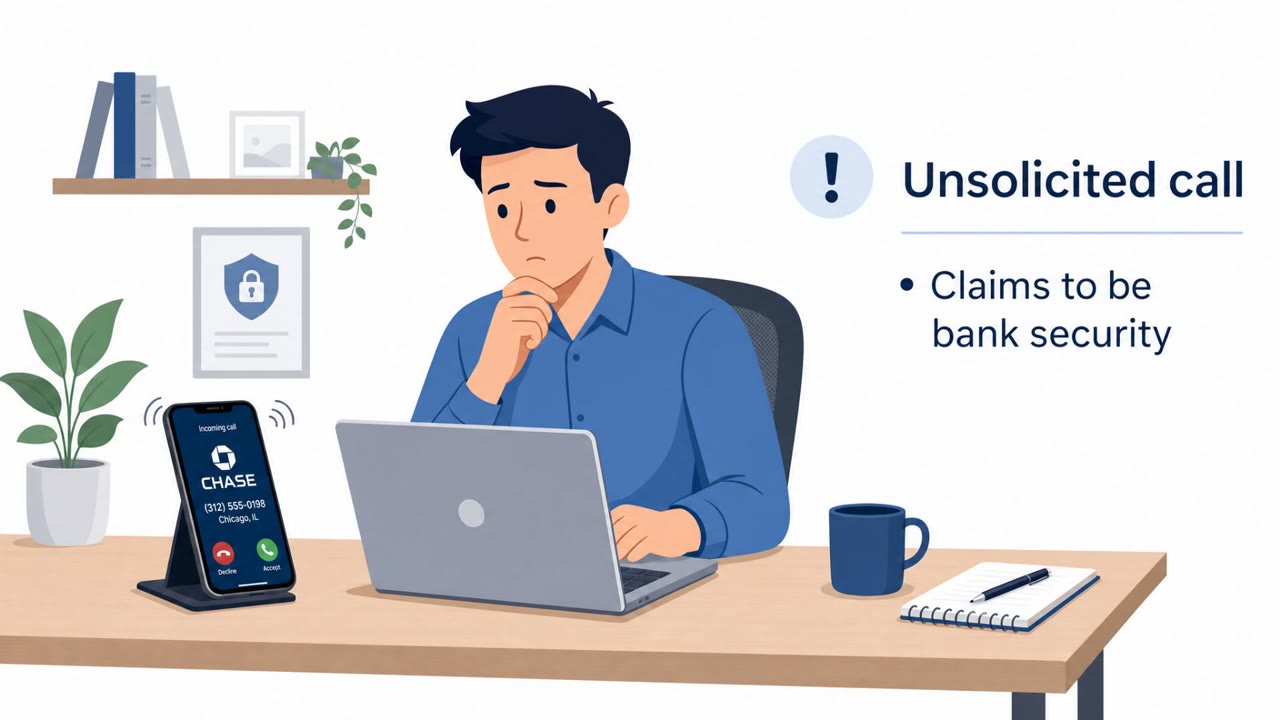
If a stranger calls saying, “I’m your financial adviser with a great investment,” assume it’s a scam until proven otherwise. Ukraine just passed a law targeting fraudulent call centers, teams of English‑speaking operators posing as advisers, convincing people to invest in fictitious assets and stealing over five hundred thousand dollars from Americans alone. Their script is simple: “I’m calling about an investment opportunity” or “I’m here to fix your bank account, just follow my instructions.” The red flags: you didn’t ask for this call, they’re vague on details, and they push you to move money or give account access fast. Your move: if anyone calls to pitch investments or ‘fix’ your bank, hang up and call back using the official number on the company’s website or your card, never the number that just called you.