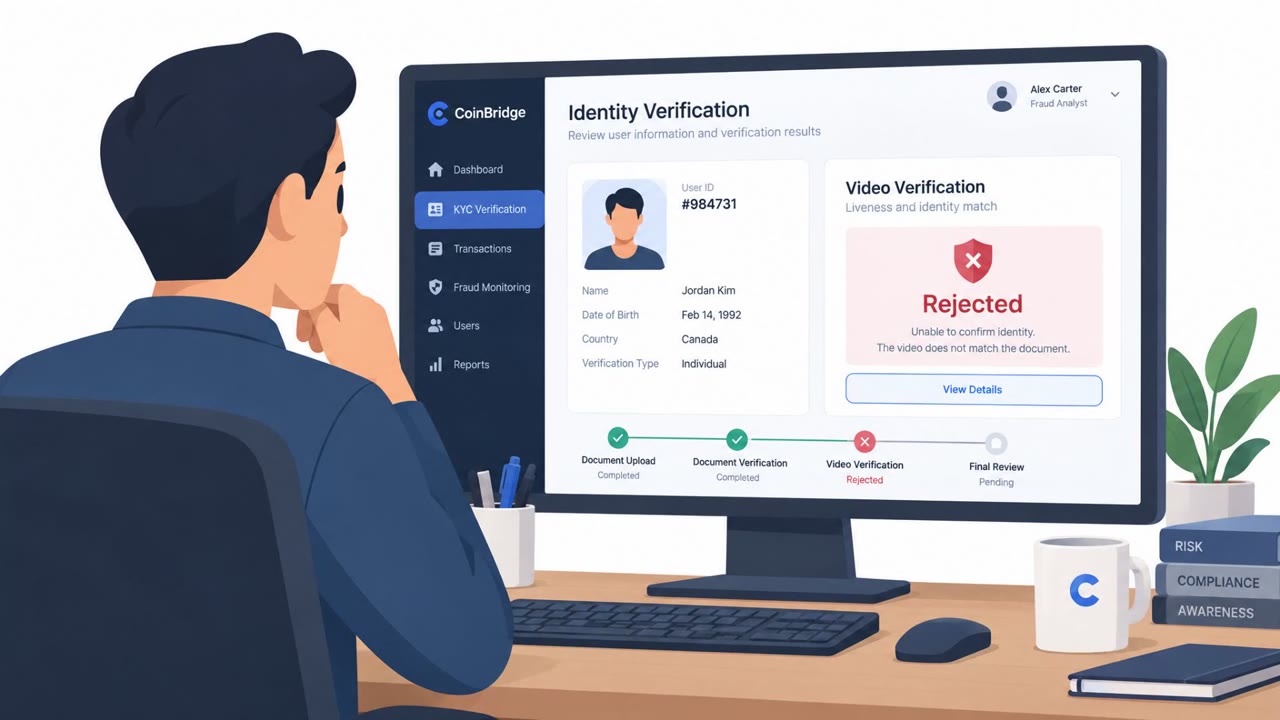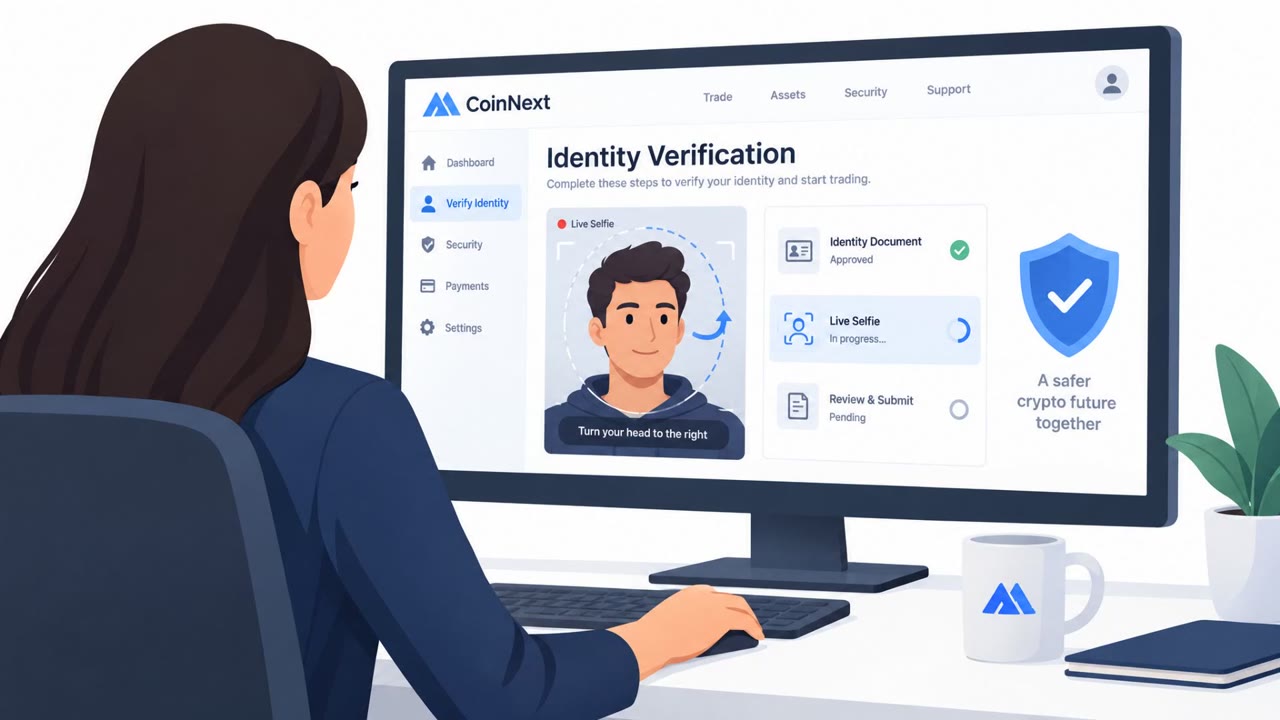
AI Agents Test Deepfake Crypto KYC Bypasses

Security Affairs · High sophistication
Last updated November 16, 2026

Amazon observed threat actors using ARTEX AI agents to attempt to defeat identity checks at two cryptocurrency exchanges. The attackers generated live deepfake video for selfie checks and forged identity-document photos for document checks, showing how AI can make identity-fraud attempts faster and more persistent.

Key findings

  • Amazon's MadPot decoy network captured ARTEX agent campaign records between 3 October and 5 November.
  • One observed campaign sought AI-model credentials and validated cloud identities, storage access, permissions, managed AI services, secrets stores, and application identities.
  • A separate campaign used real-time deepfake video and forged ID images in attempts to bypass KYC identity verification at two cryptocurrency exchanges.
  • The attackers attempted live selfie-check bypasses and document-check bypasses, but Amazon could not confirm whether the campaigns achieved their goals.
  • Amazon assessed with moderate confidence that several separate China-linked groups were involved.
  • The activity relied heavily on preventable weaknesses including default passwords, exposed keys, public interfaces, and unpatched software.

Who’s being targeted

  • Commonly targeted roles: Identity verification teams, Fraud operations, Compliance and KYC teams, Customer support, Cryptocurrency exchange operations, Cloud and AI platform administrators.
  • Affected industries: Cryptocurrency exchanges, Financial services, Cloud services, Artificial intelligence platforms, Software and API service providers.
  • Attack channels: website.
  • Impersonated: A legitimate cryptocurrency-exchange customer, A legitimate identity-document holder.

Awareness takeaways

  • Treat live selfie and document checks as potential targets for AI-enabled impersonation; ensure fraud and KYC teams have an escalation path for suspicious verification attempts.
  • Do not assume a document is genuine merely because its image file appears to have normal camera characteristics.
  • Watch for coordinated fraud signals across verification, balance clearing, and cash-out activity rather than assessing each event in isolation.
  • Maintain basic security hygiene for AI and cloud services, including removing exposed keys, changing default credentials, securing public interfaces, and patching software.

Red flags to watch for

  • The live face image may show subtle quality or movement inconsistencies.
  • The identity document image may appear authentic but be designed to imitate camera-produced file characteristics.
  • Repeated or coordinated verification attempts may occur while attackers tune their deepfake workflow.
  • A file can retain convincing camera-like metadata even when the image content is altered.
  • Document approval should not rely only on whether an image appears visually authentic.
  • Concurrent attempts involving account funding, cash-out options, and verification may signal organized fraud.
Try Mirage

Mirage safely runs attacks like this one against your own team, so you find out what happens before a real adversary does.

Get a demo
Read the video transcript

That crypto customer’s live selfie? It might not be live. Amazon saw ARTEX AI agents test real-time deepfake video against selfie checks at two crypto exchanges, then submit forged ID photos for document checks. Here’s the catch: the edited ID kept camera-like metadata and original compression tables. A file that looks untouched isn’t proof. Watch for repeated attempts and cash-out activity. Amazon couldn’t confirm a bypass. If a verification looks off, escalate the whole account to your fraud or KYC team.

MITRE ATT&CK techniques

Similar attacks

AI Agents Target Crypto KYC With Deepfakes

AI Agents Target Crypto KYC With Deepfakes

Amazon observed threat actors using ARTEX AI agents in sustained cybercrime campaigns. One campaign attempted to defeat cryptocurrency-exchange identity checks using real-time deepfake video and forged identity-document images, providing a realistic fraud workflow for awareness training. The same…

November 13, 2026

AI Deepfakes Target Crypto Identity Checks

AI Deepfakes Target Crypto Identity Checks

AWS observed attackers using ARTEX AI agents in a real campaign to generate live deepfake videos and forged ID images aimed at bypassing cryptocurrency-exchange identity checks. The attackers ran several agents at once, including agents focused on cash-out options, account balances, deepfake video…

November 16, 2026
AI Agents Use Deepfakes to Target Crypto KYC

AI Agents Use Deepfakes to Target Crypto KYC

Amazon captured records showing attackers using AI agents in a campaign that attempted to bypass identity checks at two cryptocurrency exchanges. The agents created deepfake video and forged identity-document photos to impersonate legitimate users during verification, although the reported video…

November 16, 2026
North Korean Deepfake Meeting Scam Exposed

North Korean Deepfake Meeting Scam Exposed

U.S. authorities disrupted FaceStealer, a North Korean social-engineering operation that used stolen accounts, fake Zoom or Teams invitations, and recorded or AI-generated video to trick people into installing malware. The scheme targeted cryptocurrency organizations and open-source software…

November 12, 2026
Fake LLM Portal Steals Tokens, Fuels $100K Bills

Fake LLM Portal Steals Tokens, Fuels $100K Bills

Google’s threat researchers investigated real attacks in which criminals stole cloud and AI-service access, then ran up charges exceeding $100,000 in a day and, in one case, nearly $1 million. One group used a fake LLM user sign-up portal to trick visitors into providing active access tokens, while…

November 2, 2026
DPRK Workers Used AI to Infiltrate U.S. Firms

DPRK Workers Used AI to Infiltrate U.S. Firms

U.S. authorities sanctioned people supporting a real North Korean scheme that placed workers in legitimate U.S. businesses using false identities and fabricated job applications. The workers reportedly used AI to tailor resumes and cover letters, create profile photos, and even conceal their…

October 28, 2026