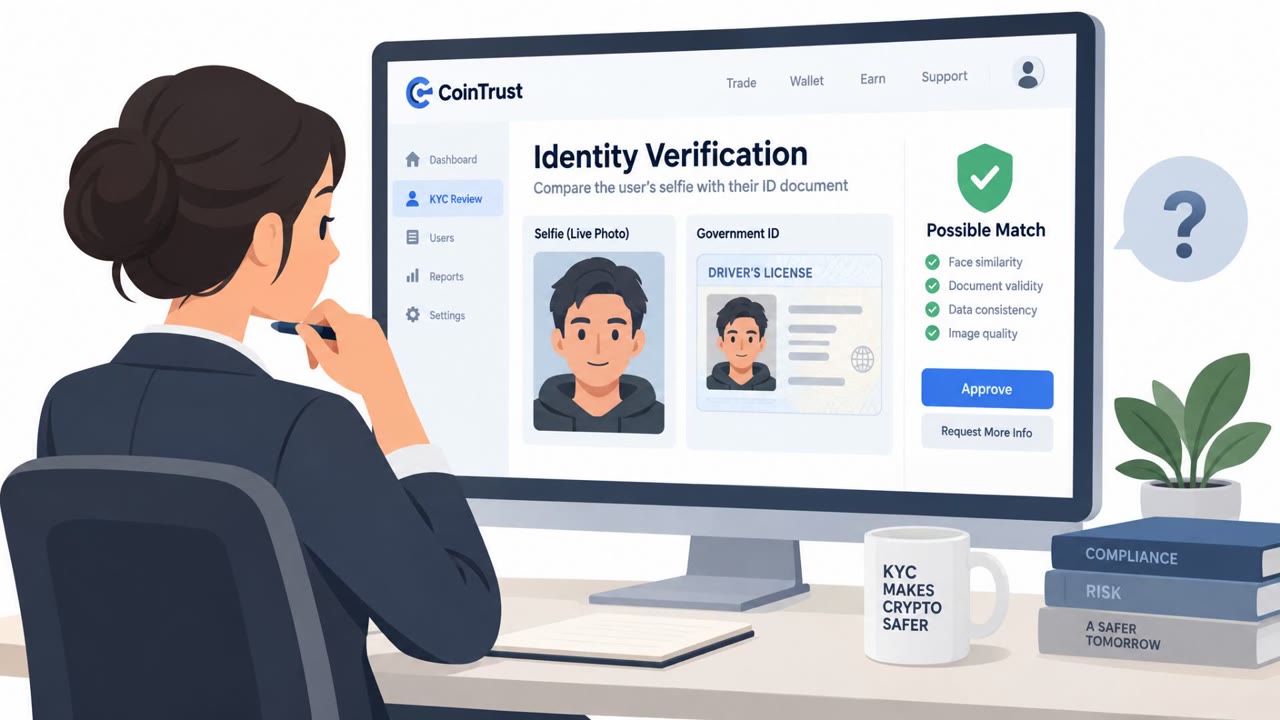
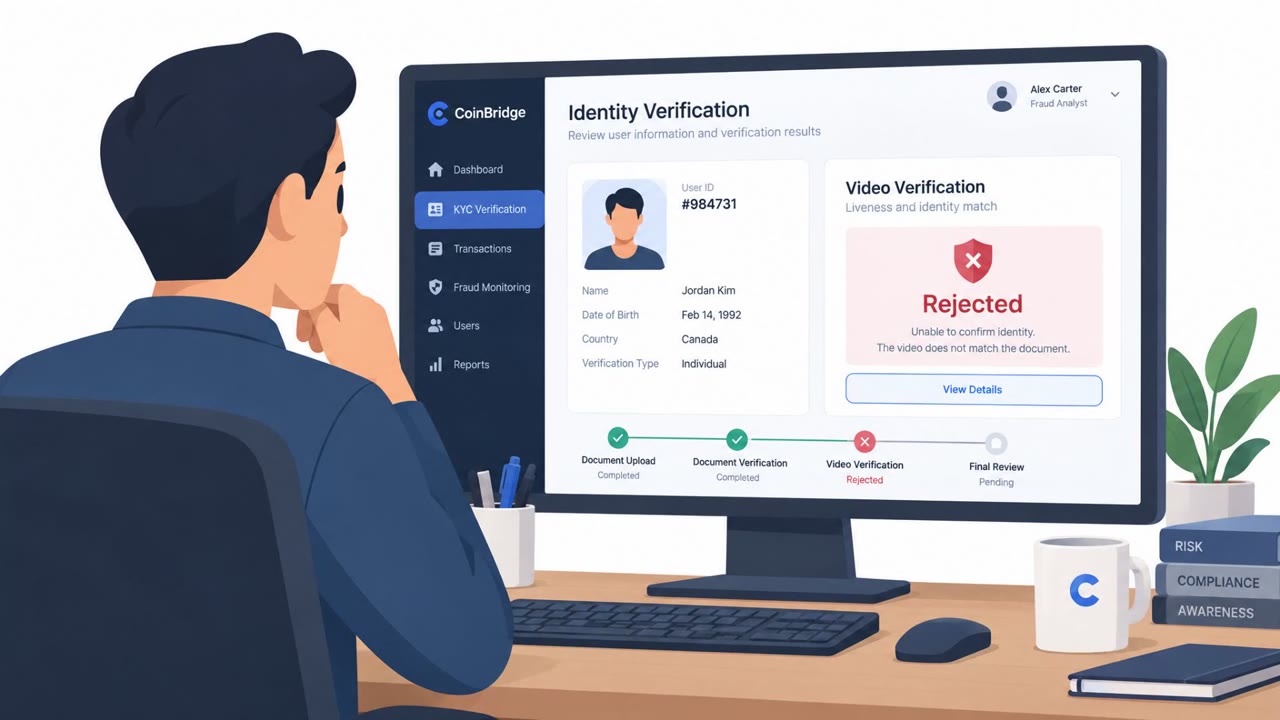
AWS observed attackers using ARTEX AI agents in a real campaign to generate live deepfake videos and forged ID images aimed at bypassing cryptocurrency-exchange identity checks. The attackers ran several agents at once, including agents focused on cash-out options, account balances, deepfake video production, and verification bypasses.
Key findings
- Amazon detected an ARTEX campaign that used AI agents to steal API keys and cloud credentials, then used the stolen access to search for more AI-model access keys.
- A separate ARTEX campaign used real-time deepfake video and forged ID photos in attempts to bypass cryptocurrency-exchange KYC identity checks.
- The deepfake video attempt completed the requested face-movement sequence, but the exchange vendor’s server-side decision rejected every attempt.
- Attackers divided work among multiple AI agents, including cash-out research, balance clearing, deepfake-video setup, and identity-verification bypass work.
- The FBI said ARTEX can reduce the time to chain attack techniques, with some intrusions reaching privileged access in under three hours.
- AWS said the campaigns succeeded where basic controls were absent, including exposed keys, default credentials, unauthenticated interfaces, and unpatched software.
Who’s being targeted
- Commonly targeted roles: Cryptocurrency exchange KYC teams, Fraud operations teams, Customer onboarding teams, Cloud administrators, Application developers, Security operations teams, Third-party risk managers.
- Affected industries: Cryptocurrency exchanges, Financial services, Banking, Government, Energy, Healthcare, Cloud and AI service providers.
- Attack channels: website.
- Impersonated: A cryptocurrency-exchange customer undergoing KYC verification.
Awareness takeaways
- Treat identity-verification checks as a fraud-control process, not just a simple selfie or document step; use strong server-side checks that can reject manipulated video.
- Do not assume realistic-looking ID photos are genuine; escalation procedures should cover suspected synthetic images and suspicious account-verification attempts.
- Protect API keys, cloud credentials, and application secrets from exposure in code, public artifacts, and unsecured services.
- Prioritize controls for internet-facing applications, self-service portals, cloud systems, and supplier connections because automated attacks can move quickly.
Red flags to watch for
- Selfie-video movement may appear technically precise but unnatural or inconsistent.
- ID images may contain synthetic camera metadata designed to resemble an original photo.
- A document and a live-video check may be coordinated as part of a single account-takeover or cash-out attempt.
Read the video transcript
A crypto customer passes the live selfie moves. Are they real? In an ARTEX campaign, AI agents made a real-time deepfake video and forged ID photos. Other agents researched cash-out and clearing balances. Here's the catch: the face landed within seven pixels of its target. The exchange's server-side check still rejected every attempt. A perfect-looking selfie isn't proof. If a selfie or ID looks off, flag the verification for fraud review.