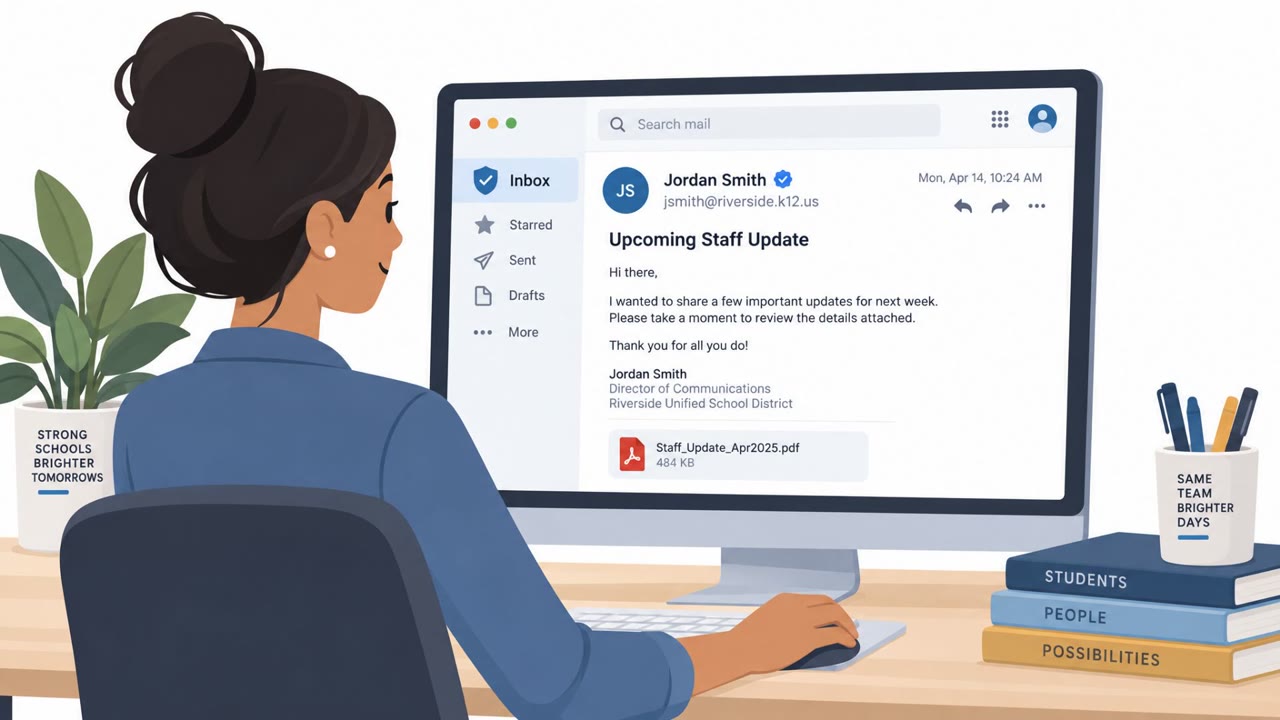
Bomb-threat emails sent to thousands of schools in Italy and other European countries caused fear, evacuations, and disruption. The messages were signed “Mikhail Andropov” and appear to have used university email accounts previously exposed in stolen-credential data, although there is no proof that the leaked credentials were used or who sent the threats.
Key findings
- About 6,000 Italian schools reportedly received bomb-threat emails on 11 November; similar messages were also reported in Northern Ireland, Scotland, and Ireland.
- The emails were signed “Mikhail Andropov,” threatened pupils and school staff, and mentioned a bomb targeting the Italian prime minister.
- Hudson Rock found two university email addresses associated with the threats in infostealer-data collections, but explicitly did not claim the exposed credentials were used to send the emails.
- One affected address was reportedly linked to a Vidar infostealer record containing saved credentials and evidence of password reuse across services.
- Da-Yeh University reportedly identified an alumnus account sending a high volume of mail, believed it was compromised, and suspended it.
- The article recommends addressing compromised devices and active sessions, not only resetting passwords, and monitoring for unusual outbound email volume.
Who’s being targeted
- Commonly targeted roles: School administrators, School office staff, Campus safety teams, University IT and identity teams, Email security teams, Teachers.
- Affected industries: Primary and secondary education, Higher education, Government and public safety, News media.
- Attack channels: email.
- Impersonated: “Mikhail Andropov”, University email-account holder.
Awareness takeaways
- Treat alarming, unexpected email threats as safety incidents: report them promptly through the organization’s emergency process and avoid replying to or broadly forwarding the message.
- A password reset alone may not remove an attacker. Revoke active sessions and tokens, check mailbox rules and sign-in methods, and investigate the original device.
- Watch for abnormal sending activity from ordinary accounts, especially a sudden increase in outbound email.
- Avoid reusing passwords across services, because one infected device can expose multiple accounts and enable wider abuse.
- Handle unexpected threatening emails as urgent safety reports: use established escalation procedures and do not engage with the sender.
- Resetting a password alone may not remove an attacker; revoke sessions, review account settings, and inspect the affected device.
- Investigate a sudden increase in outbound messages from a normal user account.
- Do not reuse passwords across services, because a single device infection can expose multiple organizational accounts.
Red flags to watch for
- An alarming threat sent from an unexpected external or unrelated university email account.
- A sender identity that cannot be independently verified.
- A message designed to create panic and force an immediate reaction.
- A sudden spike in outbound messages from a normal user account.
- Messages sent from an account that does not normally contact schools or newsrooms.
- Previously exposed credentials or reused passwords associated with the account.
Read the video transcript
A bomb threat lands in a school inbox, from a university address. That happened across Italy: about 6,000 schools reportedly got emails signed ‘Mikhail Andropov,’ threatening pupils and staff and mentioning a bomb targeting the prime minister. Here’s the catch: a real university address doesn’t prove who sent it. Da-Yeh University reportedly suspended an alumnus account after a surge of outgoing mail. Don’t reply or forward it around. Report the email through your organization’s emergency process now.