North Korean attackers reportedly used a convincing fake recruiting process to persuade a Binance software engineer to download a malware-laced coding assignment onto a work computer. The compromise later gave the attackers access to wallet infrastructure and was used in the reported $6.3 billion cryptocurrency theft. The case shows how realistic recruiter impersonation, video interviews, and fake technical assignments can bypass technical controls by exploiting employee trust.
How the Attack Worked
This case, attributed by the FBI to TraderTraitor, a North Korean operation linked to Lazarus Group, began with a fake recruiting process rather than a technical exploit. A purported project director contacted a Binance software engineer through a legitimate job-hunting platform and arranged a series of interviews with a fake company. During a live video interview, a fake HR representative shared a social-media account containing personal photos and videos to build trust with the engineer.
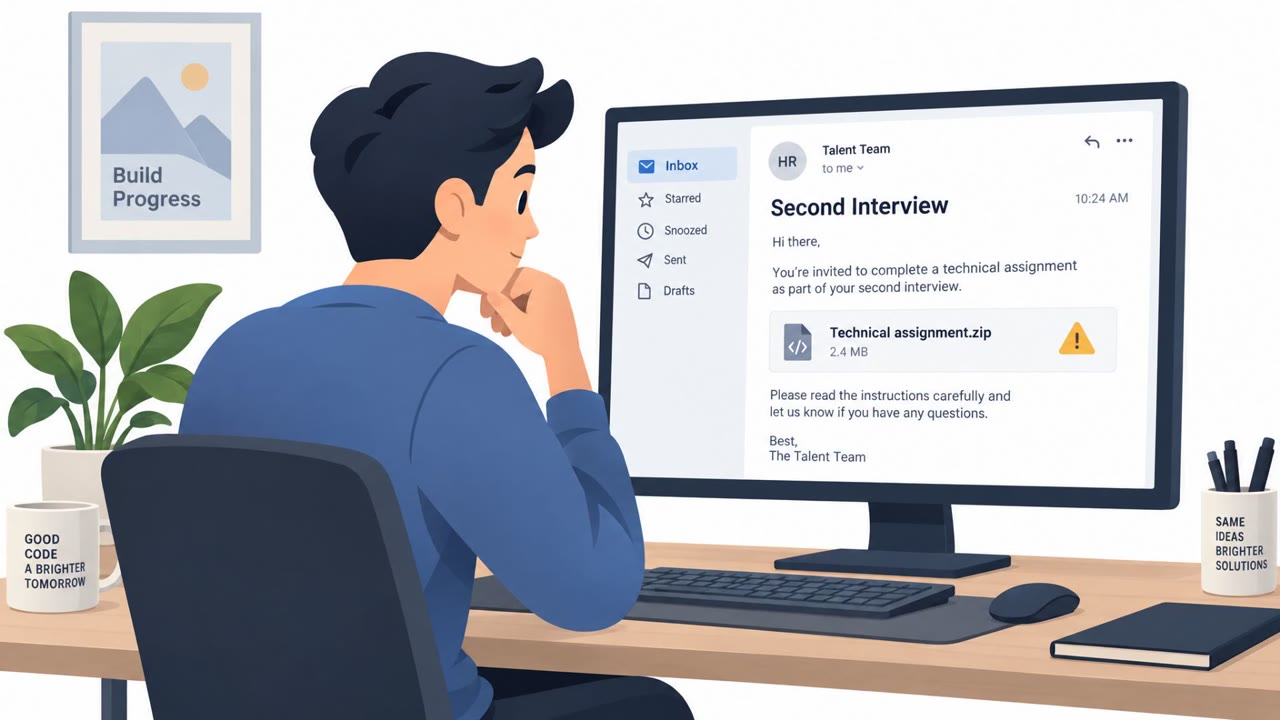
In a later interview conducted over a popular social-chat app, a fake CEO instructed the engineer to download a coding assignment as part of the hiring process. That assignment was a malware-laced code repository. When the engineer set it up on his work computer, the code executed and replaced a legitimate pyenv development-tool component with a malicious version, giving the attackers a foothold.
Why It Succeeded
The scheme worked because it exploited trust-building steps that look routine to job seekers: a credible-sounding platform, multiple interview rounds, a friendly HR contact, and an executive persona delivering a technical task. None of these steps involve obviously malicious links or attachments in the way employees are typically trained to recognize. The use of personal photos and videos on a social-media profile added a layer of apparent authenticity that is difficult to verify quickly.
What to Watch For
- Unsolicited recruiter outreach that moves quickly into a multi-stage interview process.
- An interviewer presenting a social-media profile with personal content as proof of legitimacy.
- A job opportunity that cannot be verified through a company's official website or known contacts.
- Requests to download and run unfamiliar code, especially a coding assignment delivered through a chat app rather than a verified recruiting channel.
- Unexpected installation steps, changes to development tools, or requests for elevated permissions during assignment setup.
Building Resistance
Organizations should treat unsolicited recruiting contact as untrusted until the employer and recruiter are verified through independent channels. Coding assignments from recruiters should never be run directly on a work device without review through a safe, isolated process. Staff with access to deployment credentials, production systems, or financial infrastructure warrant additional training and controls, since a single compromised device was later used to reach wallet engineers' computers, steal deployment credentials, and deploy a container that triggered the theft. Techniques referenced in this case map to spearphishing via service (T1566.003), impersonation (T1656), malicious file execution (T1204.002), valid accounts (T1078), and credentials in files (T1552.001), which security teams can review at attack.mitre.org.
Key findings
- Attackers attributed by the FBI to TraderTraitor, a North Korean operation linked to Lazarus Group, reportedly targeted Binance through a fake recruiting process.
- A purported project director contacted a Binance software engineer on a legitimate job-hunting platform and arranged multiple interviews with a fake company.
- During a live video interview, a fake HR representative shared a social-media account containing personal photos and videos to build trust.
- A fake CEO used a popular social-chat app to tell the engineer to download a supposed assignment containing a malware-laced code repository.
- The malicious repository executed during setup on the engineer's work computer and replaced a legitimate pyenv development-tool component with a malicious version.
- The attackers later used the compromised device and an internal AI tool to access wallet engineers' computers, steal deployment credentials, and deploy a container that launched the theft.
Who’s being targeted
- Commonly targeted roles: Software Engineers, Developers, DevOps Engineers, Site Reliability Engineers, Blockchain and wallet-infrastructure teams, IT and security administrators, Recruiting and HR teams.
- Affected industries: Cryptocurrency exchanges, Financial services, Software development, Blockchain infrastructure.
- Attack channels: linkedin, vishing, website.
- Impersonated: Project director and HR representative of a fake technology company, CEO of a fake technology company.
Red flags to watch for
- An unexpected recruiter outreach moves quickly into a multi-stage interview process.
- The interviewer uses a social-media profile with personal photos and videos as proof of legitimacy.
- The job opportunity cannot be independently verified through the company's official website or known contacts.
- A recruiter or interviewer asks you to run unfamiliar code on a corporate device.
- The coding assignment is delivered through a chat app rather than a verified corporate recruiting or code-review process.
- The repository or setup process requires unexpected installation commands, changes to development tools, or elevated permissions.
Frequently asked questions
How did the fake job interview lead to the Binance breach?
A purported project director reached a Binance software engineer on a job-hunting platform, arranged multiple interviews, and a fake CEO later told the engineer to download a coding assignment that contained a malware-laced repository. The code executed on the engineer's work computer during setup and replaced a legitimate development tool component with a malicious version.
What made this social engineering attempt convincing?
The attackers used a live video interview, a fake HR representative who shared a social-media profile with personal photos and videos to build trust, and a fake CEO persona on a popular chat app, creating a multi-stage process that looked like a normal hiring pipeline.
Who should be most concerned about this type of attack?
Software engineers, developers, DevOps and site reliability engineers, blockchain and wallet-infrastructure teams, and recruiting or HR staff are the groups most likely to be targeted by similar fake recruiting schemes.
How did the initial compromise turn into a large theft?
According to the findings, the attackers used the compromised device and an internal AI tool to reach wallet engineers' computers, steal deployment credentials, and deploy a container that launched the theft.
Read the video transcript
A Binance engineer got a job interview. The assignment was the trap. A supposed project director arranged interviews. A fake HR rep showed personal photos on a video call. Then a fake CEO sent a coding assignment through a chat app. The aha: the code ran during setup on the work computer, replacing part of pyenv. That foothold helped expose deployment credentials and wallet systems. Video calls aren't proof. If an interview asks you to run code, don't use your work computer, send the request to security.