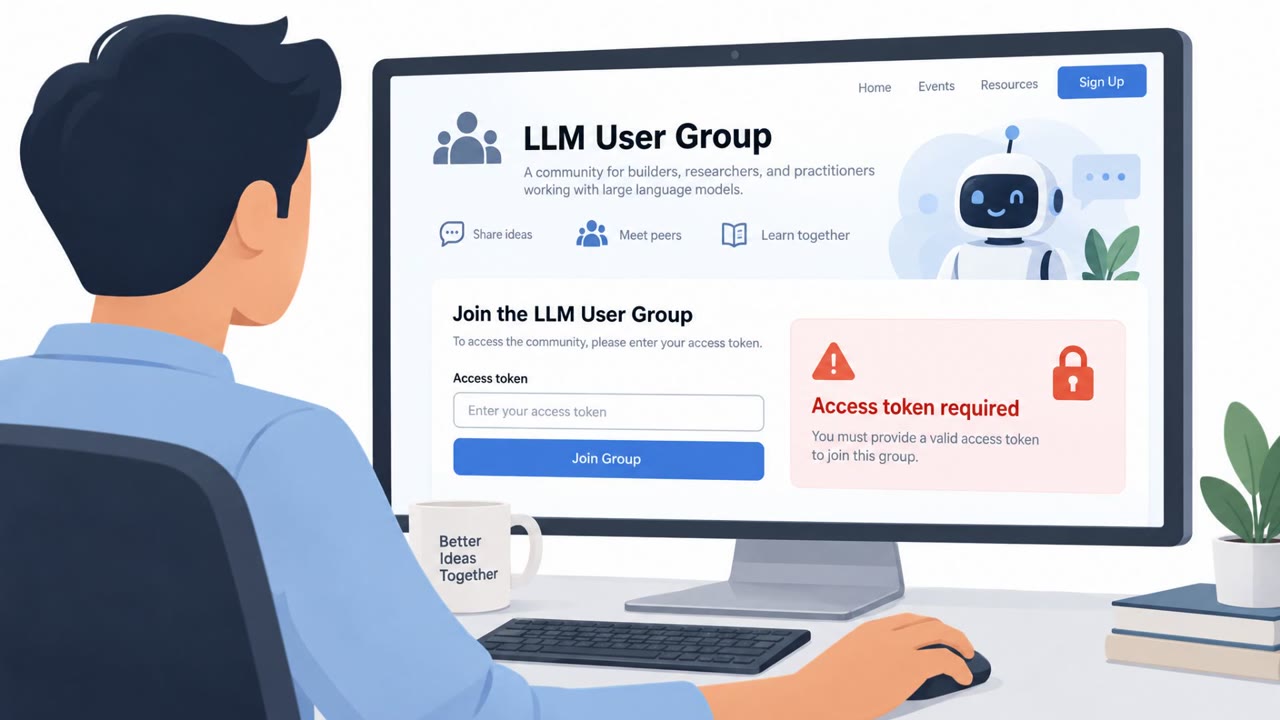
Fake LLM Portal Steals Access Tokens

The Hacker News · High sophistication
Last updated November 3, 2026

Google says attackers are using fake application portals to trick LLM users into handing over active access tokens, allowing criminals to use expensive AI services on the victim’s account. In a separate campaign, unauthorized AI-tool resellers instructed employees to run a one-line setup command that rerouted legitimate coding assistants through third-party servers and disabled safety settings.

Key findings

  • LLMjacking attackers steal or expose LLM API keys and cloud tokens, then consume costly AI resources while the victim pays the bill.
  • Google observed individual incidents exceeding $100,000 in fraudulent charges in one day, with some organizations reaching $1 million before access was revoked.
  • UNC6993 used a fake application portal to collect active LLM access tokens from users, bypassing password and MFA protections.
  • A separate unauthorized relay service used legitimate OpenAI Codex and Anthropic Claude Code tools, then changed their configuration to route requests through third-party infrastructure.
  • The relay setup reportedly relied on employees running a one-line command from a lookalike domain; the resulting script disabled sandbox protections, enabled network access, and disabled telemetry.

Who’s being targeted

  • Commonly targeted roles: Developers, Software engineers, AI application users, Cloud administrators, IT support teams, Engineering managers, Finance and cloud-cost owners.
  • Affected industries: Financial services, Retail, Technology, Transportation, Industrial automation, Electronics manufacturing, Semiconductors, Pharmaceuticals, Shipping, Tire manufacturing, Petrochemicals, Data center services.
  • Attack channels: website.
  • Impersonated: An application portal for a legitimate LLM service, An unauthorized AI coding-assistant reseller.

Awareness takeaways

  • Never paste access tokens, API keys, or raw authentication data into a website that claims to help with account setup, invitations, or group access. Use only the official service workflow and verify unexpected requests with the service owner.
  • Only install or configure AI developer tools using the vendor’s official documentation and domains. Treat a request to run a one-line command from a lookalike domain as suspicious.
  • Do not accept setup instructions that disable security safeguards, sandboxing, logging, or error reporting, even when the underlying software appears legitimate.
  • Protect cloud and AI-service credentials as financial assets: quickly report suspected token exposure because unauthorized LLM use can create very large charges within hours.

Red flags to watch for

  • The portal requests a raw JSON payload containing an active access token.
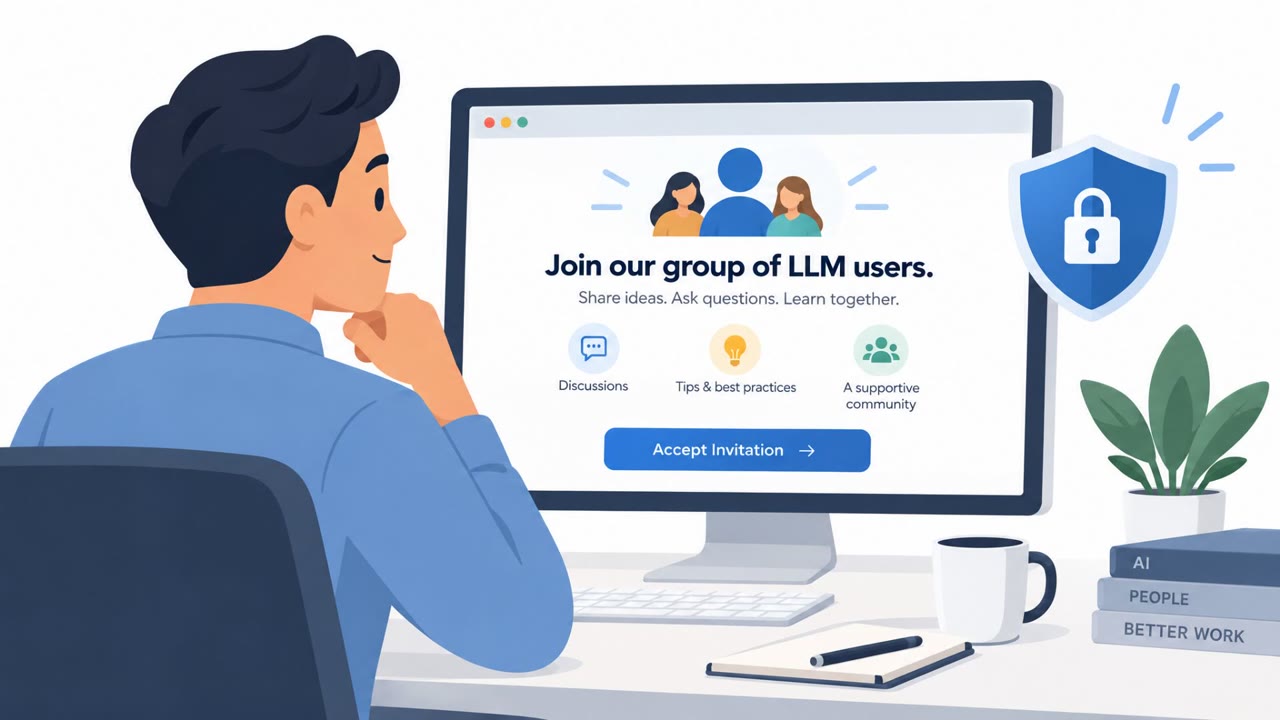
  • A website claiming to help users join a group asks for credentials or token material.
  • The requested token can bypass normal password and MFA protections.
  • The setup command is hosted on the lookalike domain vibe.aiok[.]me rather than the vendor’s official site.
  • The command fetches a fileless PowerShell or bash script.
  • The configuration disables sandboxing, enables network access, and disables telemetry and error reporting.
Try Mirage

Mirage safely runs attacks like this one against your own team, so you find out what happens before a real adversary does.

Get a demo
Read the video transcript

An invite to join an LLM users’ group? Watch what its portal asks for. Google says UNC6993’s fake portal sends you to the real LLM service, then asks you to paste back raw JSON containing your active access token. That token is the aha: it can bypass your password and MFA. LLMjacking can run up AI charges; Google saw over $100,000 in one day. If an invite asks for a token, stop. Never paste it into the portal.

Similar attacks

Fake LLM Portal Steals Tokens, Fuels $100K Bills

Fake LLM Portal Steals Tokens, Fuels $100K Bills

Google’s threat researchers investigated real attacks in which criminals stole cloud and AI-service access, then ran up charges exceeding $100,000 in a day and, in one case, nearly $1 million. One group used a fake LLM user sign-up portal to trick visitors into providing active access tokens, while…

November 2, 2026
Browser Trust Scams: Fake Updates, BitB, ClickFix

Browser Trust Scams: Fake Updates, BitB, ClickFix

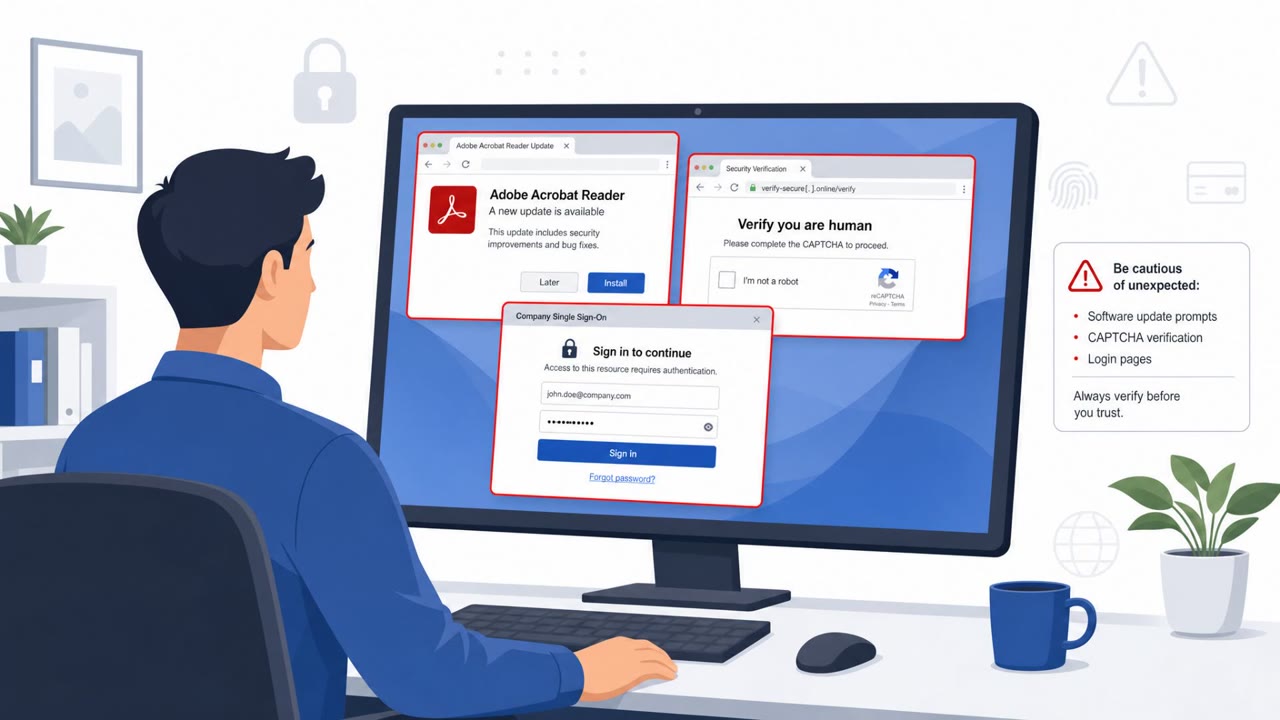
Cofense reports multiple real-world campaigns where attackers don’t hack the browser, they trick employees by copying normal browser experiences like login pop-ups, software update prompts, and “verification” checks. The goal is to get users to enter credentials, approve attacker sessions, or run…

August 26, 2026
Fake LLM Portal Steals Access Tokens

Fake LLM Portal Steals Access Tokens

Researchers found that criminals are stealing cloud and AI access, then reselling it through illicit AI services while victims receive enormous cloud bills. In one documented case, a group used a fake portal for LLM users to trick visitors into submitting information containing active access…

November 3, 2026
GitHub Issue Trick Turns AI Coders Against Repos

GitHub Issue Trick Turns AI Coders Against Repos

Researchers showed that a single public GitHub issue (from someone with no repo access) could steer popular AI coding agents into running dangerous commands, exposing tokens, and changing repositories. The risk comes from AI agents reading untrusted issue/PR text while also having access to…

August 6, 2026
Fake IT Helpdesk Tricks Users Into Remote Access

Fake IT Helpdesk Tricks Users Into Remote Access

This bulletin describes multiple real-world social engineering campaigns where attackers impersonate IT support or use trusted-looking sharing and “Allow” prompts to gain access. Several campaigns abuse Microsoft Teams and document-sharing lures to trick employees into installing remote tools or…

September 3, 2026
Fake SSO + MFA Push Used in Real Breaches

Fake SSO + MFA Push Used in Real Breaches

This weekly roundup includes two real social-engineering-driven incidents. Attackers used social engineering to access Apollo Global Management’s cloud platforms and steal sensitive personal data, and separately attempted a ShinyHunters phishing attack against ReliaQuest using a fake SSO login page…

August 28, 2026