North Korea-linked PolinRider operators used fake recruitment sites and coding assessments to trick developers into running malware. The campaign also spread through compromised GitHub repositories, where hidden code could run when developers built a project or opened it in VS Code. The activity affected thousands of repositories and targeted developer tools, credentials, browser data, and cryptocurrency wallets.
How the attack worked
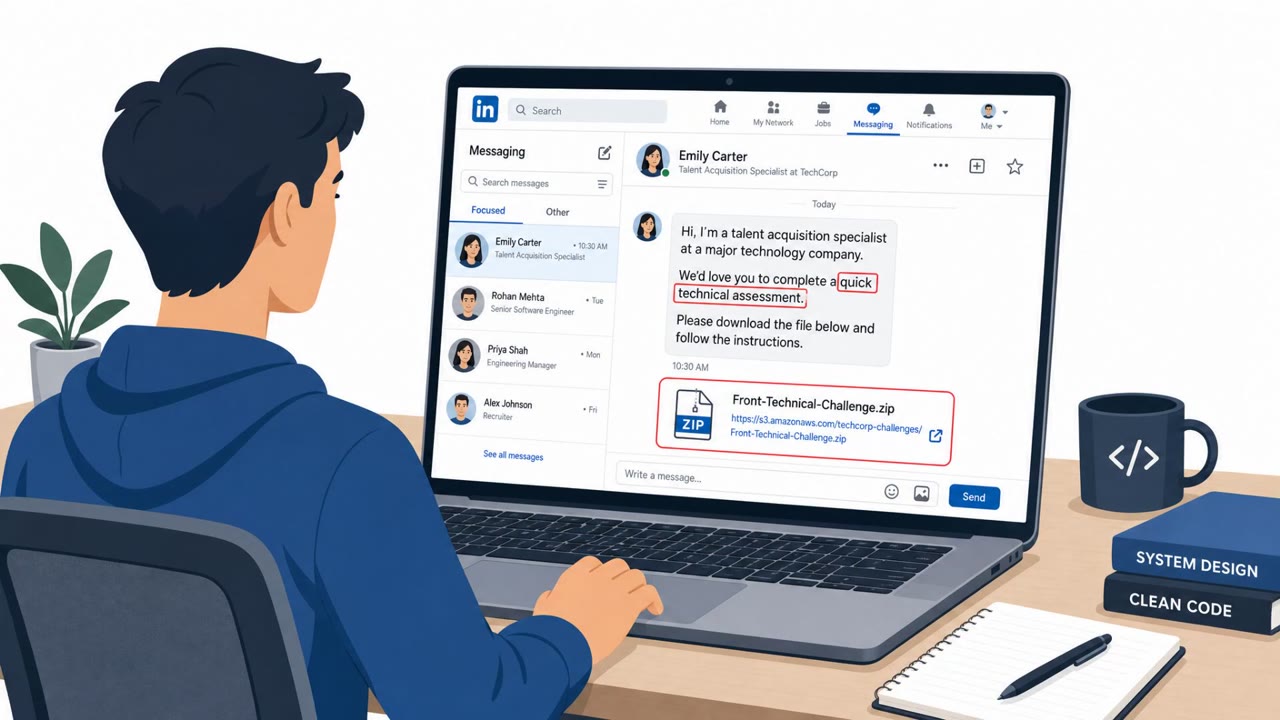
PolinRider operators built fraudulent recruitment campaigns around fake hiring portals and take-home coding assessments. Candidates were told that a camera verification step for an interview required installing a "driver," with the site rejecting the check until the victim ran a one-line curl command. Other job pages instructed candidates to enable Chrome Developer mode and sideload a browser extension to receive job alerts. A third variant used a ClickFix-style lure, asking candidates to paste a command into their terminal as part of a supposed standard settings bundle for interview workflows.
Separately, attackers used stolen GitHub access and hijacked maintainer accounts to insert hidden loaders into legitimate repositories and packages. Apiiro estimated that PolinRider appeared in at least 7,609 GitHub repositories owned by 2,330 accounts. In some cases the hidden code ran automatically when a developer executed a build command, loaded a test configuration, or simply opened the project folder in VS Code.
Why it succeeded
The campaign exploited the routine trust developers place in hiring processes and open-source tooling. A fake camera check, a browser extension requirement, or a terminal command all look like plausible, if annoying, steps in a modern technical interview. On the supply chain side, hijacked maintainer accounts meant malicious code arrived through channels developers already trusted, and in the newest wave, merely opening a folder in VS Code was enough to trigger execution, removing the need for any deliberate action beyond normal review.
What to watch for
- A job site claiming a camera check will fail until a driver is installed
- Requests to enable browser Developer mode or sideload an extension during recruitment
- A hiring process that asks candidates to paste commands into a terminal
- Unfamiliar projects received as coding assessments or pull requests that modify build or test configuration
- Unexpected behavior triggered by simply building or opening a project in an editor
How to build resistance
Developers and job seekers should avoid running terminal commands, installers, or "drivers" required by an unverified job application, and verify recruiters and companies through known, independent contact details rather than links in the job posting itself. Treat any request to enable Developer mode or sideload a browser extension as a serious warning sign. Engineering teams should inspect unfamiliar projects, including those received as take-home assessments, before building, testing, or opening them in development tools, since prior activity shows that malware was designed to search for developer applications and harvest environment secrets, browser passwords, cookies, and cryptocurrency wallet data once executed.
Key findings
- PolinRider used fraudulent recruitment campaigns, fake hiring portals, and take-home coding assessments to persuade prospective victims to run malicious projects.
- Fake recruitment sites told candidates to install a purported driver or Chrome extension, including requests to enable Chrome Developer mode.
- A ClickFix-style workflow instructed candidates to copy and paste a malicious terminal command as part of a supposed settings bundle for interview workflows.
- Attackers used stolen GitHub access and hijacked maintainer accounts to insert hidden loaders into repositories and packages.
- Apiiro estimated that PolinRider appeared in at least 7,609 GitHub repositories owned by 2,330 accounts.
- The malware searched for developer applications and prior waves stole environment secrets, browser passwords, cookies, and wallet data.
Who’s being targeted
- Commonly targeted roles: Software Developers, DevOps Engineers, Open-source Maintainers, Engineering Managers, IT Support Teams, Recruiters and HR Teams, Job Seekers.
- Affected industries: Software development, Open-source software, Technology, Cloud environments, Cryptocurrency and digital-asset users.
- Attack channels: website.
- Impersonated: A fraudulent recruitment portal posing as a prospective employer.
Red flags to watch for
- A job site says a camera check will fail until a driver is installed.
- The site asks a candidate to run a terminal command to continue an application.
- A supposed interview prerequisite downloads or runs software in the background.
- A recruitment site asks applicants to enable browser Developer mode.
- The extension is sideloaded rather than installed through normal, verified channels.
- A job-alert feature is presented as mandatory for an interview or application.
- An employer asks candidates to paste commands into a terminal.
- The request is framed as a routine onboarding or configuration step.
- The command is delivered through a website rather than a trusted corporate software-management process.
Frequently asked questions
What is PolinRider?
PolinRider is a malware campaign that used fraudulent recruitment campaigns, fake hiring portals, and take-home coding assessments to persuade prospective victims to run malicious projects.
How did the fake job sites deliver malware?
Sites told candidates to install a purported driver or Chrome extension, sometimes requiring Chrome Developer mode, or used ClickFix-style prompts to copy and paste a terminal command framed as a standard settings bundle.
How did poisoned GitHub repositories spread the malware?
Attackers used stolen GitHub access and hijacked maintainer accounts to insert hidden loaders into repositories and packages, which could run when a developer built a project or opened it in VS Code.
How many repositories were affected?
Apiiro estimated that PolinRider appeared in at least 7,609 GitHub repositories owned by 2,330 accounts.
Read the video transcript
That take-home coding test could be PolinRider malware. A fake hiring site says your camera check failed. Its fix? A one-line curl command for a ‘driver.’ Another asks you to enable Chrome Developer mode and sideload a job-alert extension. Here’s the catch: the ‘test’ can run hidden code when you build it, or just open its folder in VS Code. PolinRider showed up in at least 7,609 GitHub repositories. A job interview should not need a driver, terminal command, or sideloaded extension. Before running anything, verify the recruiter through the company’s official website.