Cisco Talos tracked UAT-12643 using files disguised as legitimate PDFs, messaging software installers, and VoIP configuration tools to target cryptocurrency users, gamers, and business users. The group’s malicious files can steal data and cryptocurrency, while its remote-access tool uses the Solana blockchain to make its control servers harder to block. Talos has low-confidence links between this activity and North Korea-aligned actors.
Key findings
- UAT-12643 used malicious shortcuts, HTA files, and MSBuild XML files as initial-access payloads, although Talos did not observe how those files were delivered to victims.
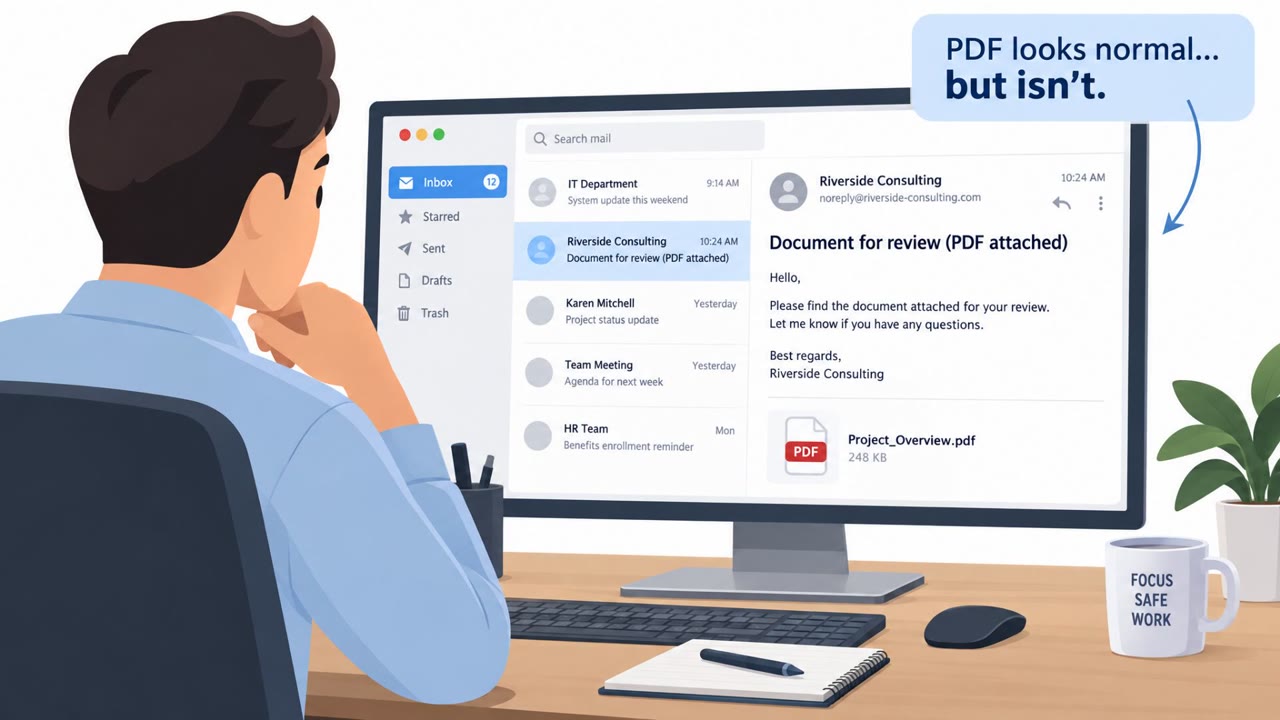
- The actor disguised shortcuts as PDF documents, including use of familiar Windows and Microsoft Edge PDF icons and double-extension filenames.
- Lure themes point to finance and accounting personnel, Viber users, VoIP softphone operators, cryptocurrency holders, and gaming-platform account owners.
- The group used Discord webhooks for victim notifications and GoFile to store stolen-data archives.
- The Overlord remote-access trojan obtained command-and-control server updates from encrypted URLs stored in Solana blockchain transaction memos.
- Talos assessed, with low confidence, that the actor may be aligned with North Korea based on overlaps with known North Korean activity.
Who’s being targeted
- Commonly targeted roles: Finance and accounting staff, Cryptocurrency holders and staff supporting cryptocurrency operations, Gaming-platform account owners, Call-center staff, VoIP and business telephone users, Messaging-platform users, All Windows users who download or open document-like files.
- Affected industries: Finance and accounting, Cryptocurrency services and users, Gaming, Call centers and business telephony, Messaging-platform users.
Awareness takeaways
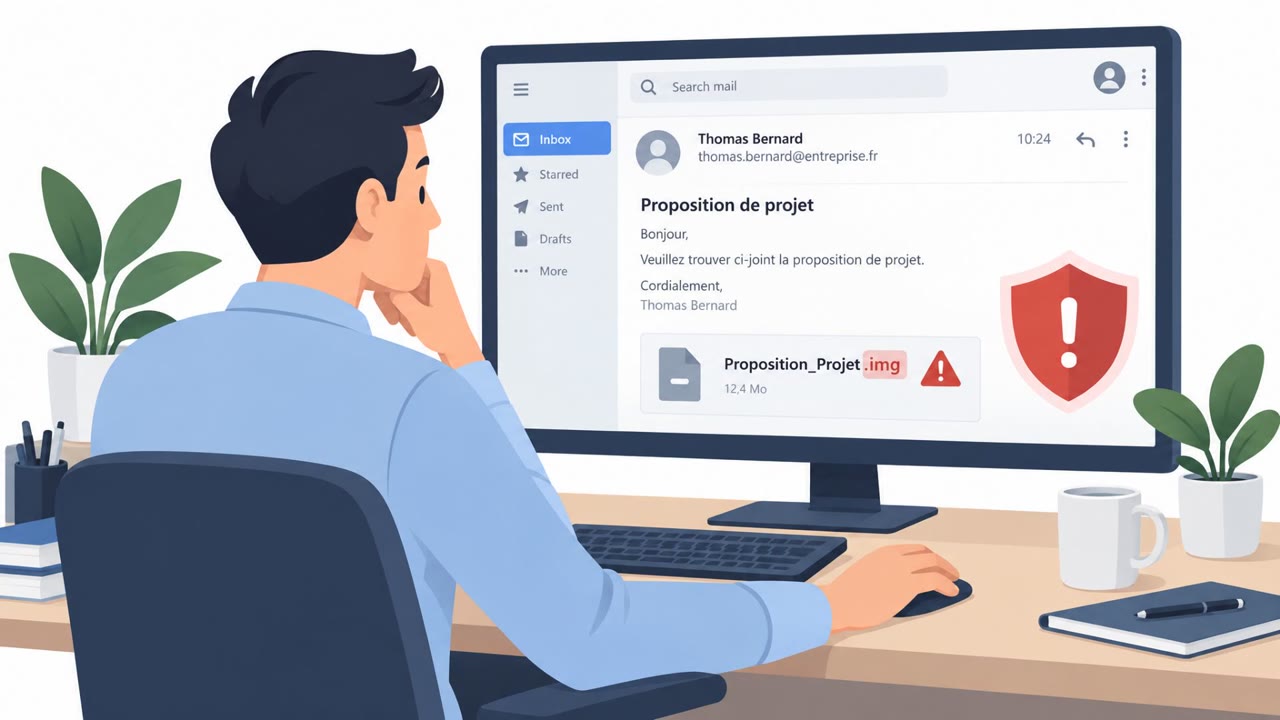
- Treat a PDF-looking shortcut or double-extension file as suspicious, especially when its icon makes it appear to be a document rather than an application.
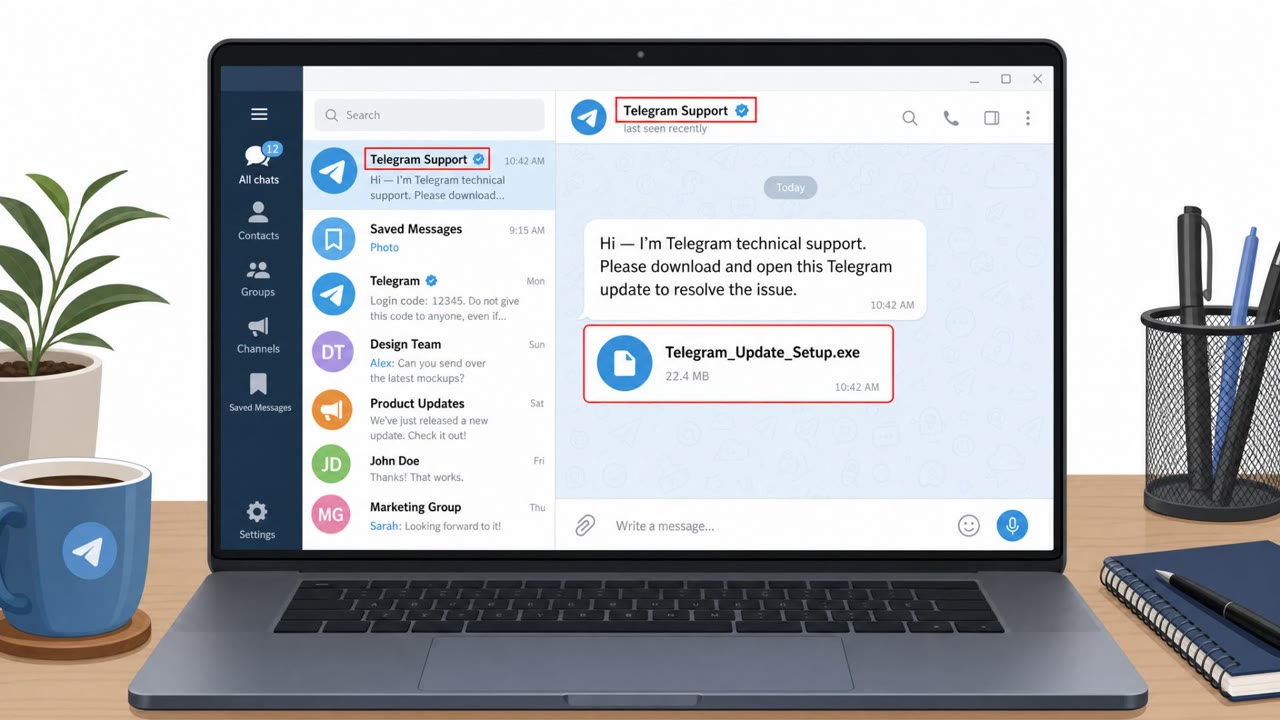
- Do not install software updates, messaging clients, or VoIP configuration files unless they come from the organization’s approved software source.
- Finance and accounting staff should verify unexpected financial-document files through a known contact or approved business system before opening them.
- Report suspicious downloads or files immediately rather than trying to remove or terminate an unfamiliar process yourself.
Read the video transcript
That financial statement looks like a PDF. Is it? UAT-12643 disguised Windows shortcuts as PDFs, using familiar icons and double extensions. Open one, and it can run malware while showing a financial-statement decoy. A PDF icon doesn't make it a PDF. Other lures posed as Viber installers and MicroSIP VoIP files. The malware can steal data and cryptocurrency. Unexpected financial PDF, installer, or VoIP file? Don't open it. Report the file to your security team.