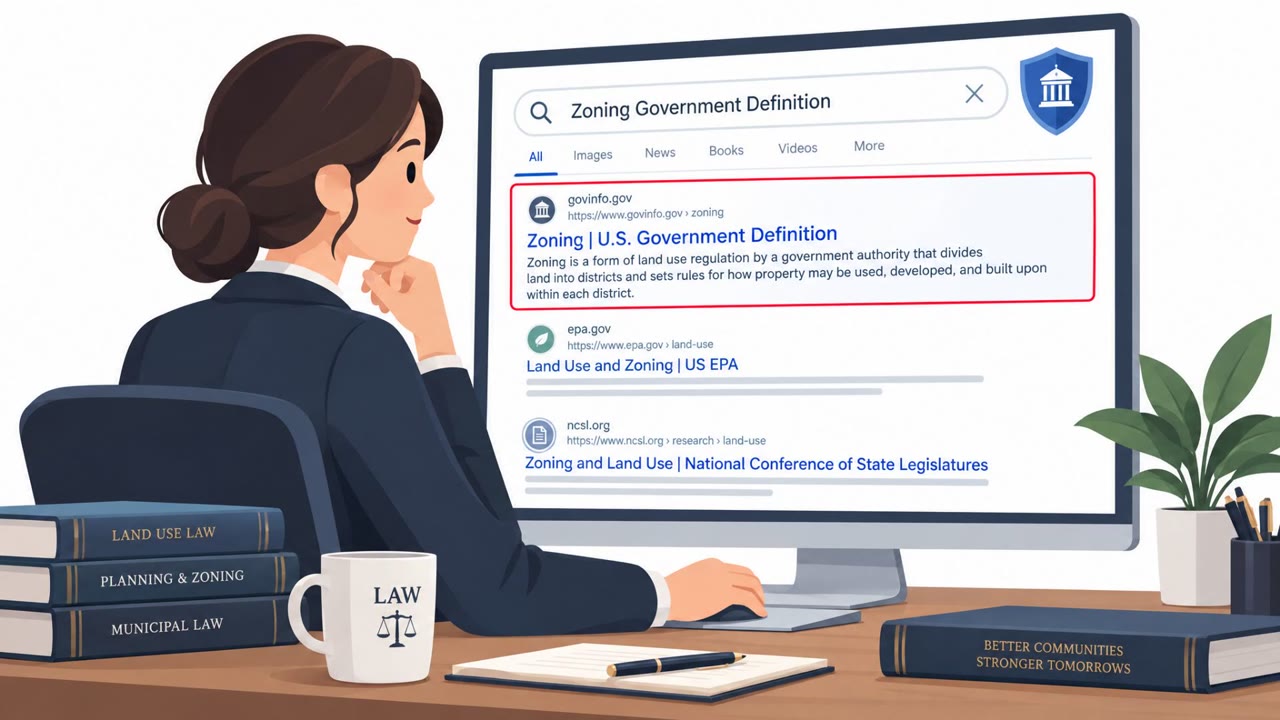
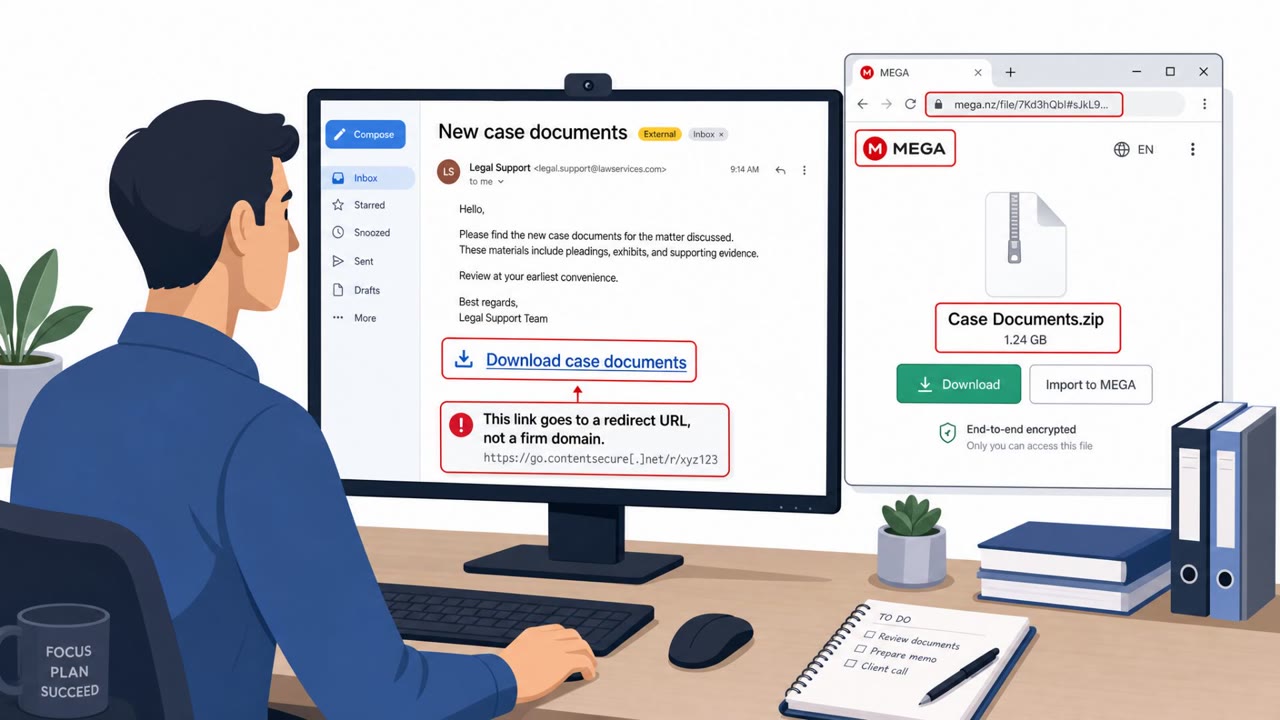
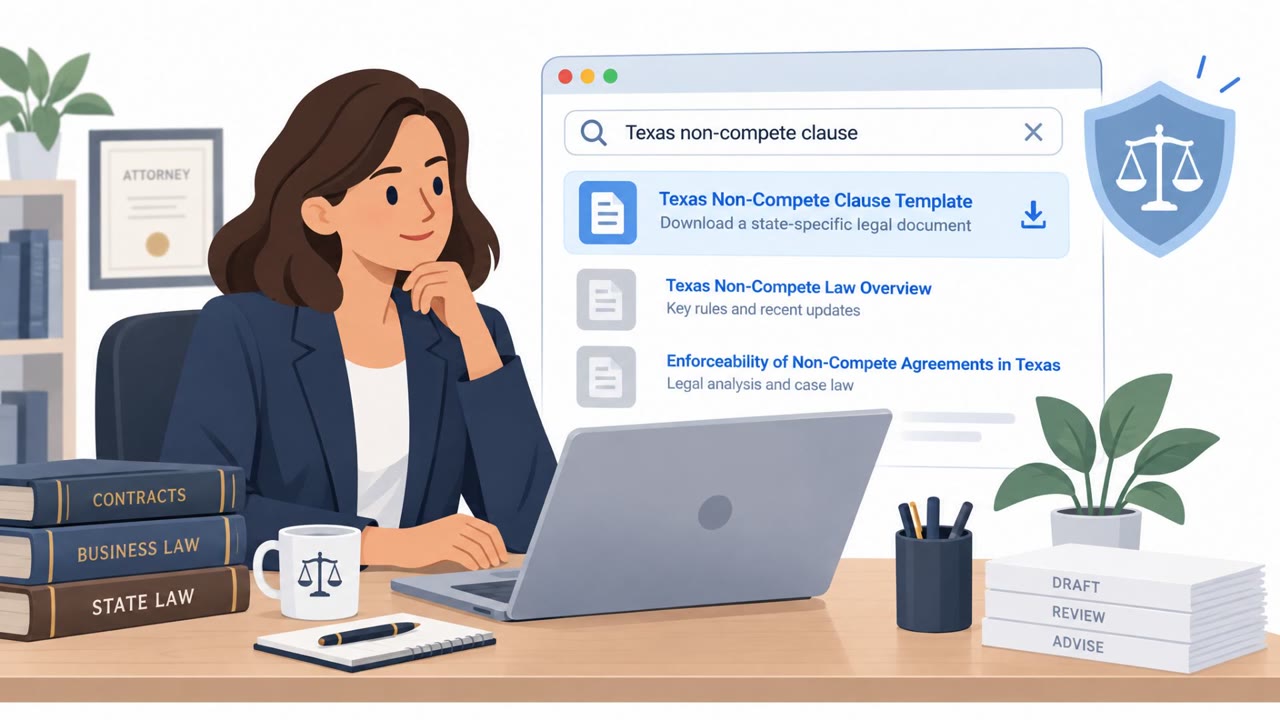
Gootloader operators poisoned search results so legal professionals looking for contract clauses, legal definitions, or templates were led to compromised websites offering a matching document download. The downloaded ZIP file started an infection chain that could give ransomware groups access to the victim’s network. The campaign specifically focused on U.S. legal professionals and used highly targeted, low-competition search phrases to make malicious pages rank highly.
How the attack worked
Gootloader does not rely on phishing emails or messages. Instead, it waits for legal professionals to search for specific legal documents, clause language, jurisdiction definitions, or templates. Operators poisoned search engine results so that compromised WordPress websites ranked at the top of these niche queries, offering exactly the document the victim was looking for, packaged as a downloadable ZIP file. Opening that file could launch a JavaScript infection chain that leads to PowerShell activity, in memory payload execution, credential theft, lateral movement, and ultimately ransomware deployment.
Why it succeeded
The campaign relied on highly specific, low competition search phrases, so there was little legitimate content competing for the same ranking. Because almost no other site targets these exact queries, a hijacked page can win the top search result by default. The operation also used traffic filtering based on country, search referrer, cookies, and IP address, so researchers, sandboxes, and visitors outside the intended target geography were redirected to harmless content instead of the malicious payload. This made the malicious pages difficult to detect or report, even for the compromised site's own owner.
Who was targeted
The stated target set was specific to the legal field: practicing attorneys, in-house counsel, law firm partners, litigation and privacy teams, legal operations staff, general counsel, and legal technology decision makers. The attack exploited routine, legitimate work activity, people simply doing their jobs by searching for contract clauses, definitions, or templates, rather than requiring a user to click a suspicious link in an email.
What to watch for
- A search result that leads to an unfamiliar website offering a ZIP file instead of a normal document preview or PDF.
- A result that matches an unusually specific or niche legal search phrase almost too perfectly.
- A downloaded file that contains a JavaScript file or prompts the user to run a script.
- A site that only displays suspicious content when arrived at from a search engine.
Building resistance
Legal teams should rely on known, trusted legal research platforms and document sources for clauses, templates, and definitions rather than following unfamiliar search results, even when those results appear to rank highly. Staff should be cautious of any document delivered as a ZIP file rather than a standard document format. If a suspicious download has already been opened, the device should be disconnected from the network, without powering it off unless procedures specify otherwise, and the incident reported immediately, since deleting the file alone does not restore trust in the system.
Key findings
- Gootloader did not rely on conventional phishing. It waited for victims to search online for legal documents and placed malicious results at the top of search pages.
- Compromised WordPress websites presented victims with documents matching their legal search queries and delivered ZIP files containing JavaScript.
- The stated target set included practicing attorneys, in-house counsel, law-firm partners, litigation and privacy teams, legal operations, general counsel, and legal-technology decision makers.
- The operators reportedly infected at least 25,000 computers since 2018, then brokered access to ransomware actors.
- The campaign used traffic filtering based on country, search referrer, cookies, and IP address, so non-targets and researchers could be redirected to harmless content.
- The initial JavaScript execution could lead to PowerShell activity, in-memory payload execution, credential theft, lateral movement, and ransomware deployment.
Who’s being targeted
- Commonly targeted roles: Legal department employees, Attorneys, In-house counsel, Paralegals, Law firm staff, Legal operations, Privacy and litigation teams, General counsel offices, IT help desk, Security operations center analysts.
- Affected industries: Legal services, Law firms, Corporate legal departments, Privacy and litigation teams, Legal operations.
- Attack channels: website.
- Impersonated: A legitimate legal-information or document-download website, A compromised WordPress site posing as a relevant legal-information source.
Red flags to watch for
- A search result leads to an unfamiliar website offering a ZIP file rather than a normal document preview.
- The result exactly matches an unusually specific legal search phrase.
- The download contains a JavaScript file or prompts the user to run a script.
- The site is unrelated to legal services or has an unexpected domain and branding.
- The page ranks for unrelated or unusually specific legal queries.
- The content or download is only shown after arriving from a search engine and requests a file download.
Frequently asked questions
What is Gootloader and how does it infect victims?
Gootloader is malware that infects victims through search engine poisoning rather than phishing emails. It places compromised websites at the top of search results for specific legal queries, offering a ZIP file disguised as the exact document the victim searched for.
Who is being targeted by this campaign?
The campaign targets legal professionals including practicing attorneys, in-house counsel, law firm partners, litigation and privacy teams, legal operations staff, and general counsel.
Why is this attack hard to detect?
The poisoned content is shown mainly to search crawlers and targeted visitors based on country, referrer, cookies, and IP address, so researchers and non-target visitors are redirected to harmless content, making the malicious pages hard to spot or report.
What should someone do if they open one of these downloads?
Disconnect the device from the network without powering it off unless procedures say otherwise, and report it immediately; deleting the downloaded file alone does not restore trust in the system.
Read the video transcript
Gootloader doesn’t email you. It waits for your legal search. Search “Zoning government definition Wyoming,” and a top result may offer the exact document. The page looks useful, but its download is a ZIP file. That’s the tell: a legal document shouldn’t arrive as JavaScript inside a ZIP. Open it, and Windows Script Host can start a chain toward credential theft and ransomware. A top result isn’t a trusted source. Get legal clauses from your approved research site instead.