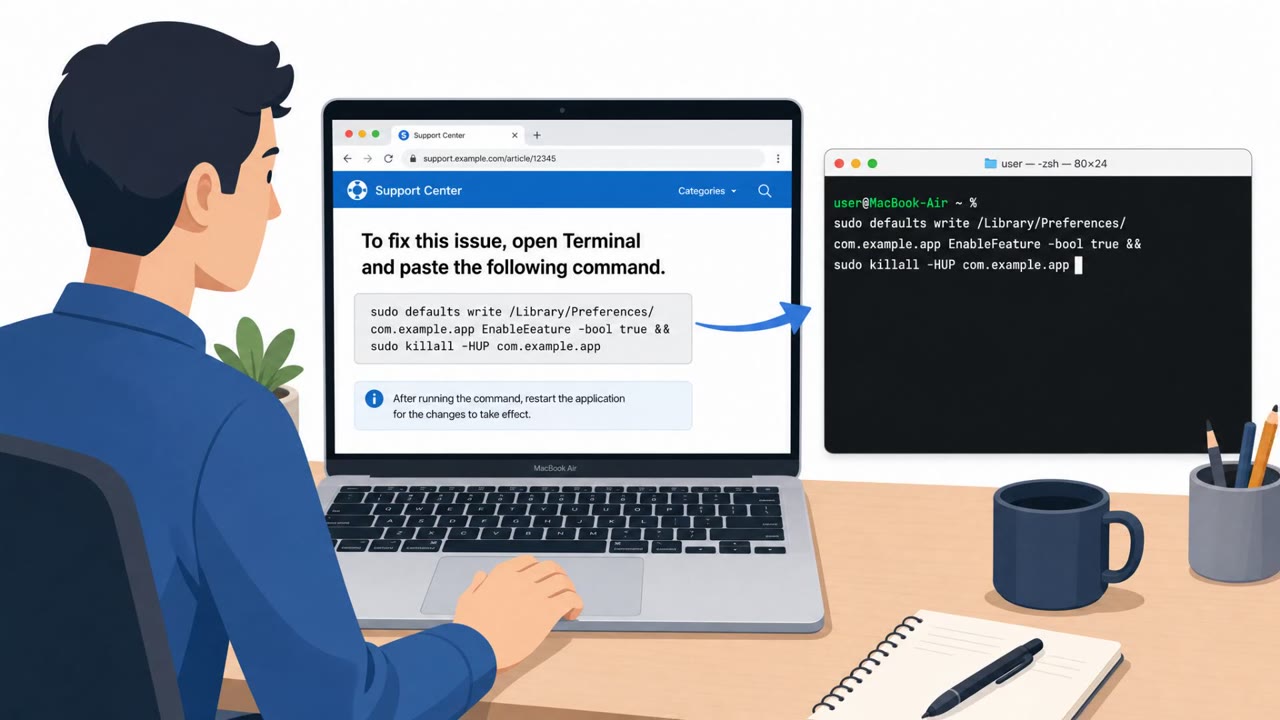
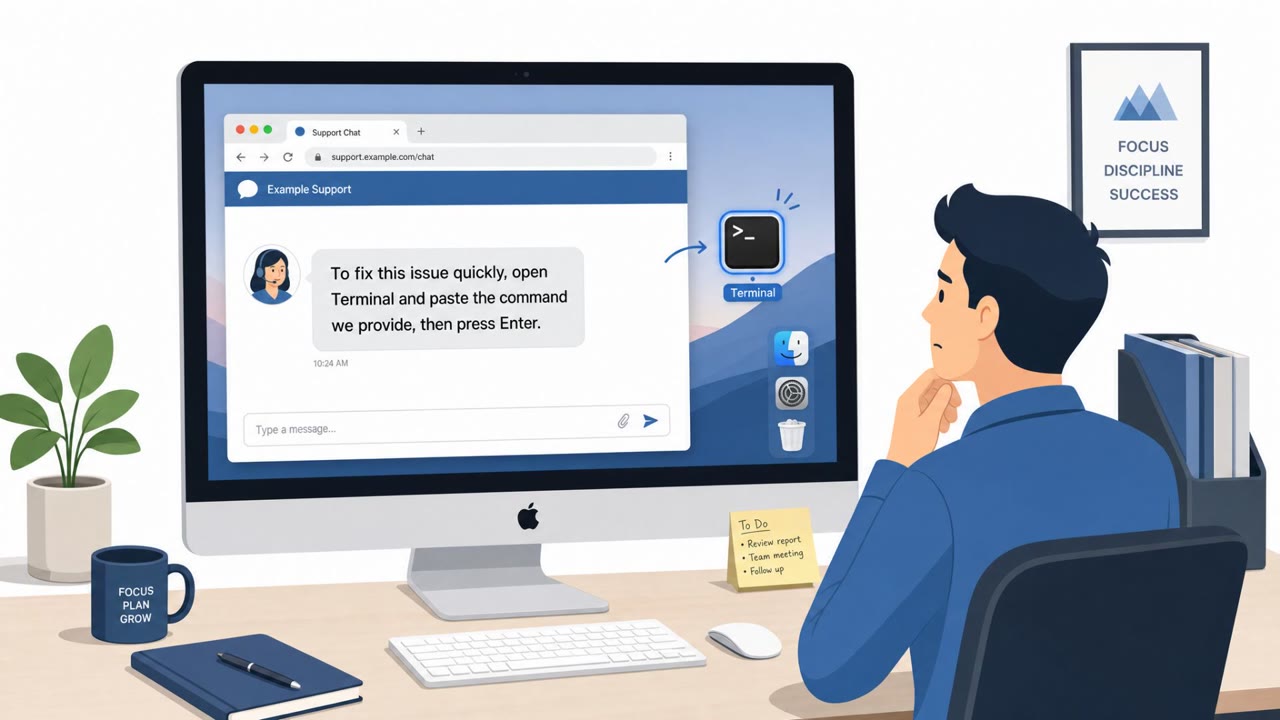
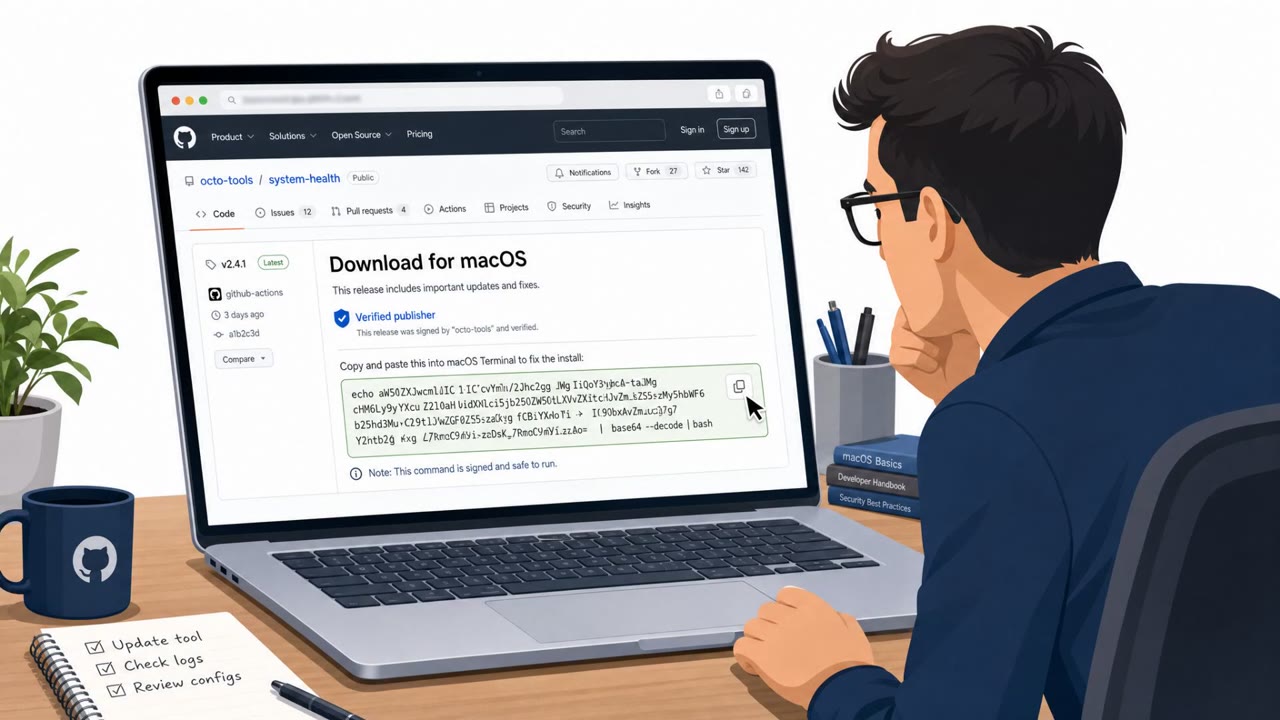
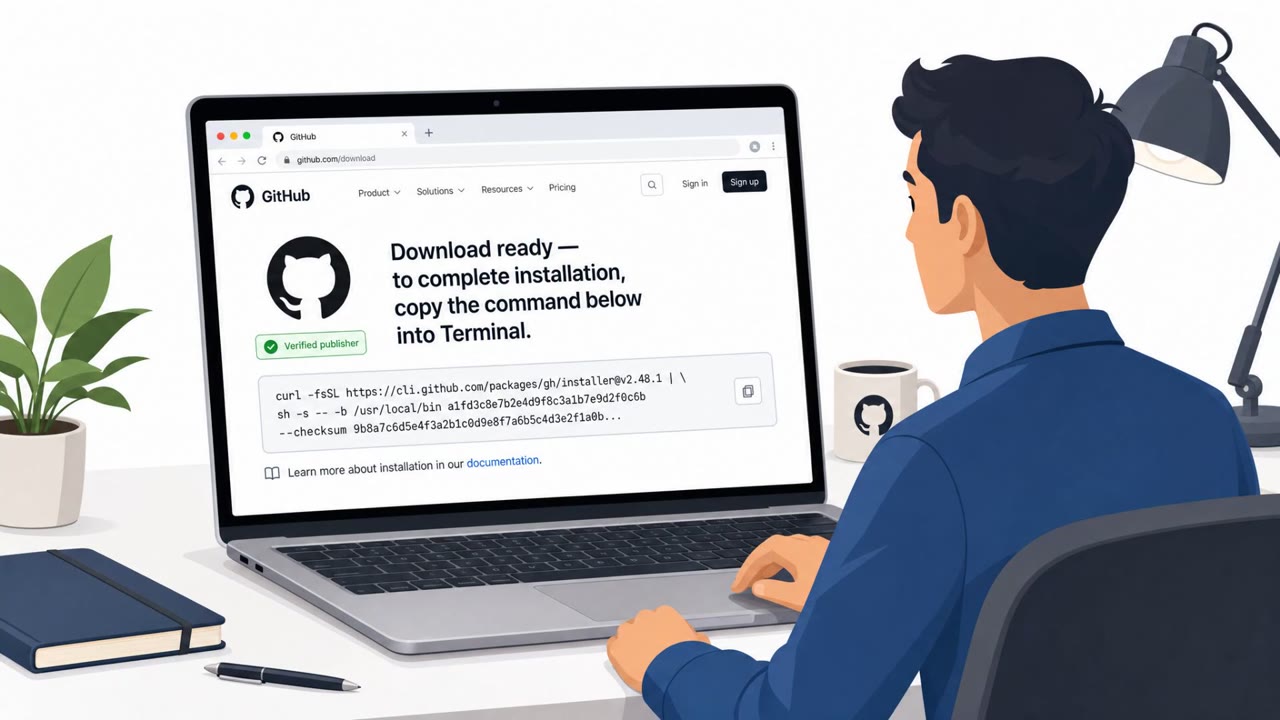
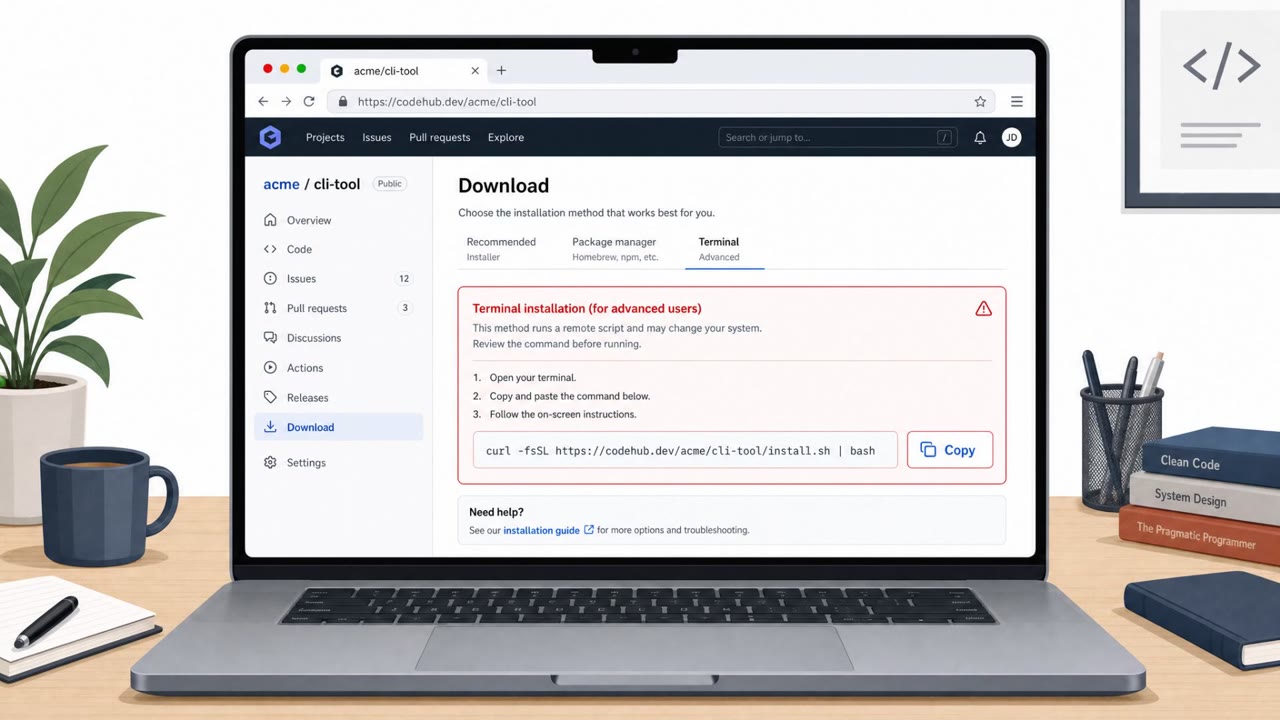
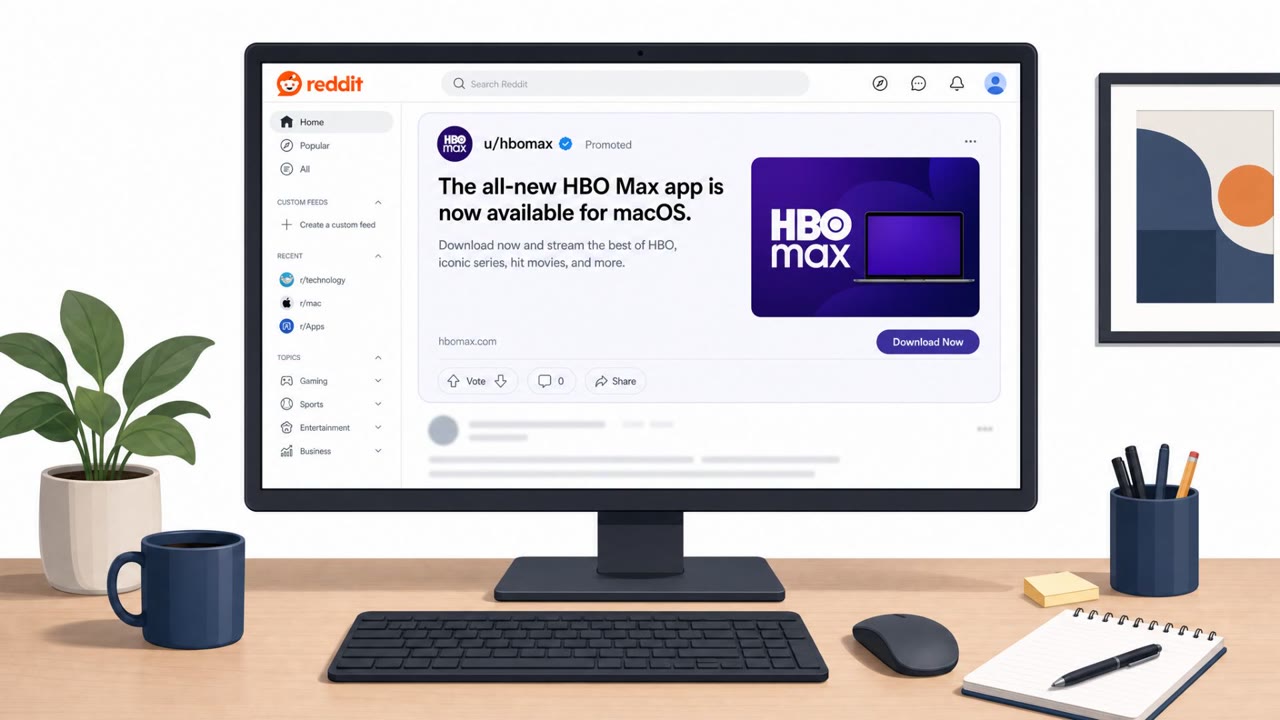
Microsoft describes a real macOS data-stealing campaign (MacSync Stealer) that relies on social engineering rather than software exploits. Victims are tricked into pasting/running commands in Terminal, which downloads the payload and ultimately steals passwords, keys, and wallet data, then uploads it in chunks to rotating attacker domains.
Key findings
- The campaign uses social engineering (ClickFix) to trick users into pasting/running Terminal commands (no exploit required).
- The payload is downloaded via curl from a path pattern like "/curl/[token]" and then decoded/unpacked using native macOS tools.
- Stolen data includes Keychain data, browser passwords/cookies, SSH keys, AWS credentials, Kubernetes configs, and crypto wallet data (Ledger/Trezor).
- Exfiltration is performed via chunked HTTP PUT uploads with parameters like upload_id, chunk_index, and total_chunks, even as domains rotate.
- Microsoft linked 30+ domains to the same operation by tracking repeatable network/request behaviors instead of domain names.
Who’s being targeted
- Commonly targeted roles: All macOS users, Developers, IT/Helpdesk, Cloud/DevOps (AWS/Kubernetes), Teams handling crypto assets/credentials.
- Affected industries: Any organization with macOS endpoints (Mac fleets), Technology teams using cloud credentials (AWS/Kubernetes), Crypto/fintech users holding wallet credentials.
- Attack channels: website.
- Impersonated: A website/prompt claiming to provide a fix (exact brand not specified).
Awareness takeaways
- Treat any request to paste/run Terminal commands as high-risk; verify with IT through a known channel before running anything.
- Don’t rely only on blocking domains for protection, attackers can rotate infrastructure quickly; focus on behavior-based detections and user reporting.
- Use extra safeguards for high-value credentials (Keychain, SSH keys, AWS, Kubernetes, crypto wallets) and minimize where they’re stored on endpoints.
Red flags to watch for
- Any site/instructions asking you to paste commands into Terminal
- Unexplained use of curl to fetch content from the internet
- ‘Fix’ steps that require running scripts without IT verification
Read the video transcript
On a Mac and ever seen a website say, “To fix this issue, open Terminal and paste the following command”? That’s the ClickFix trick behind the MacSync Stealer campaign. No exploit, just you pasting a curl command into Terminal that quietly downloads and runs their payload. Once that shell session fires, it hunts for Keychain data, browser passwords and cookies, SSH keys, AWS and Kubernetes configs, even Ledger and Trezor wallet data, then uploads it in chunks to rotating domains. If any website tells you to paste a command into macOS Terminal, stop and send it to IT through our normal support channel before you run anything.