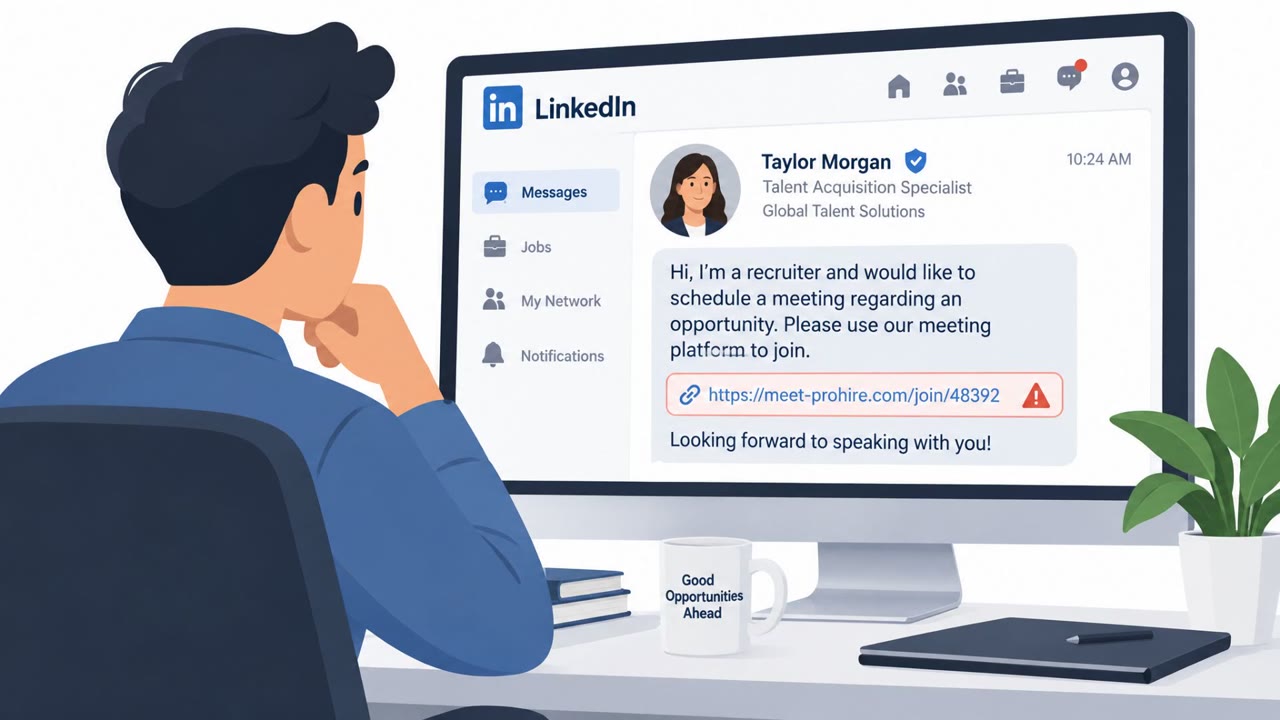
Researchers say the Iranian-linked Volant Manticore group used a fake job applicant’s CV to target a Cyprus-based airline. The CV appeared to link to a legitimate recruitment site, but actually sent the recipient to a malicious archive that installed a backdoor. The group later used healthcare-themed files to target Saudi hospitals and other healthcare organizations.
How the Attack Worked
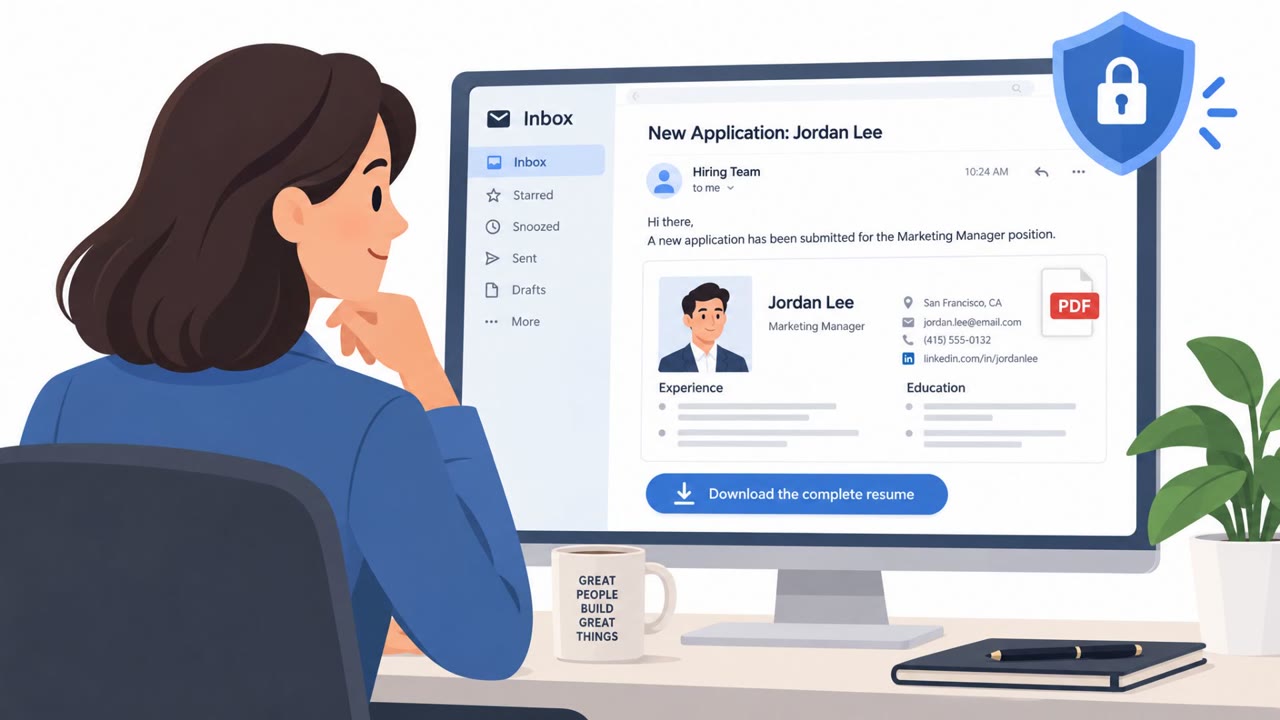
A group identified as Volant Manticore, assessed to be linked to Iran's Ministry of Intelligence and Security, built a fake job applicant persona named Athena Marinou, described as an AI-generated travel and tourism professional based in Cyprus. The fake CV was sent to a Cyprus-based airline and invited the recipient to download the full version from what appeared to be a legitimate recruitment website. In reality, the hyperlink pointed to an archive hosted on Catbox that delivered the KuboShell backdoor. The same group later ran a separate campaign against Saudi targets using healthcare-themed archives named AI_Healthcare_Seminar.zip and Ai_Healthcare_Seminar_Online.zip, with one sample masquerading as PDF-related software and another delivering an N-able remote-management tool.
Why It Succeeded
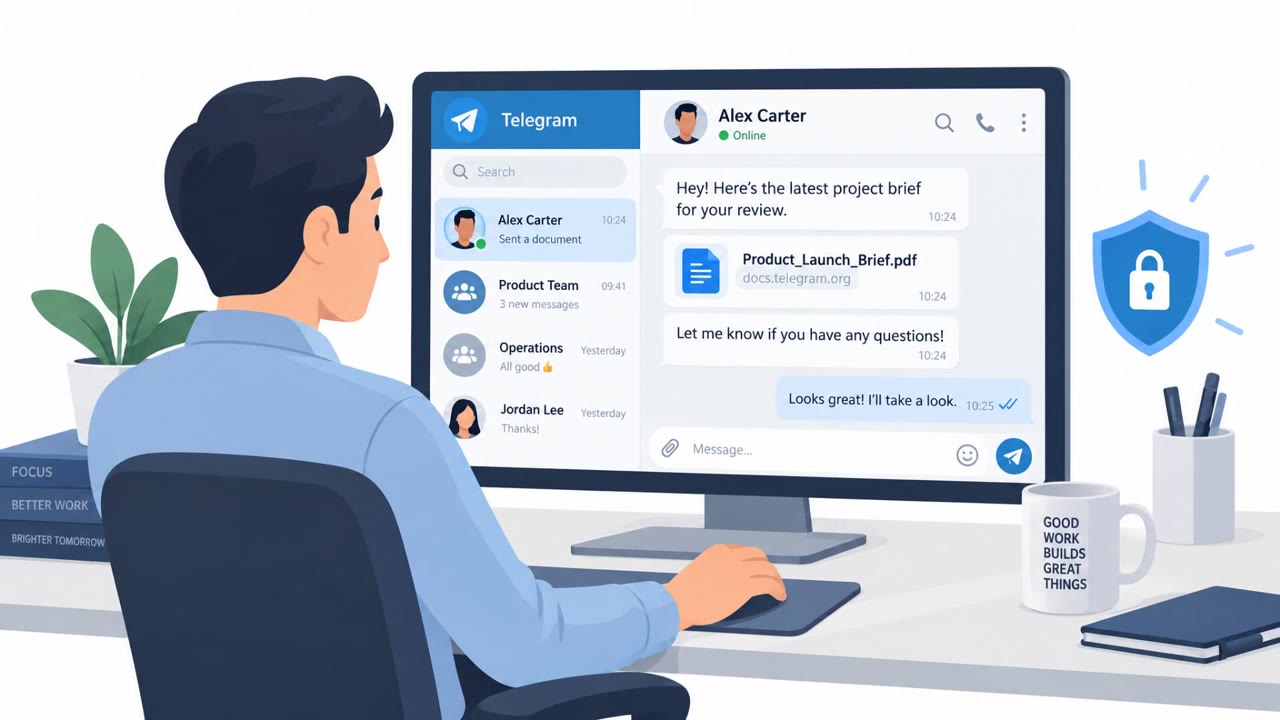
The CV lure worked because it exploited a routine business process: recruiters and hiring managers regularly download applicant documents from external links. The visible text promised a trip to a known type of site, recruitment platforms, which reduced suspicion even though the underlying link led elsewhere. In the Saudi healthcare campaign, the email associated with one archive belonged to a private hospital and was likely compromised using leaked credentials, meaning the message came from a real, recognizable organization rather than an obviously fake sender.
What to Watch For
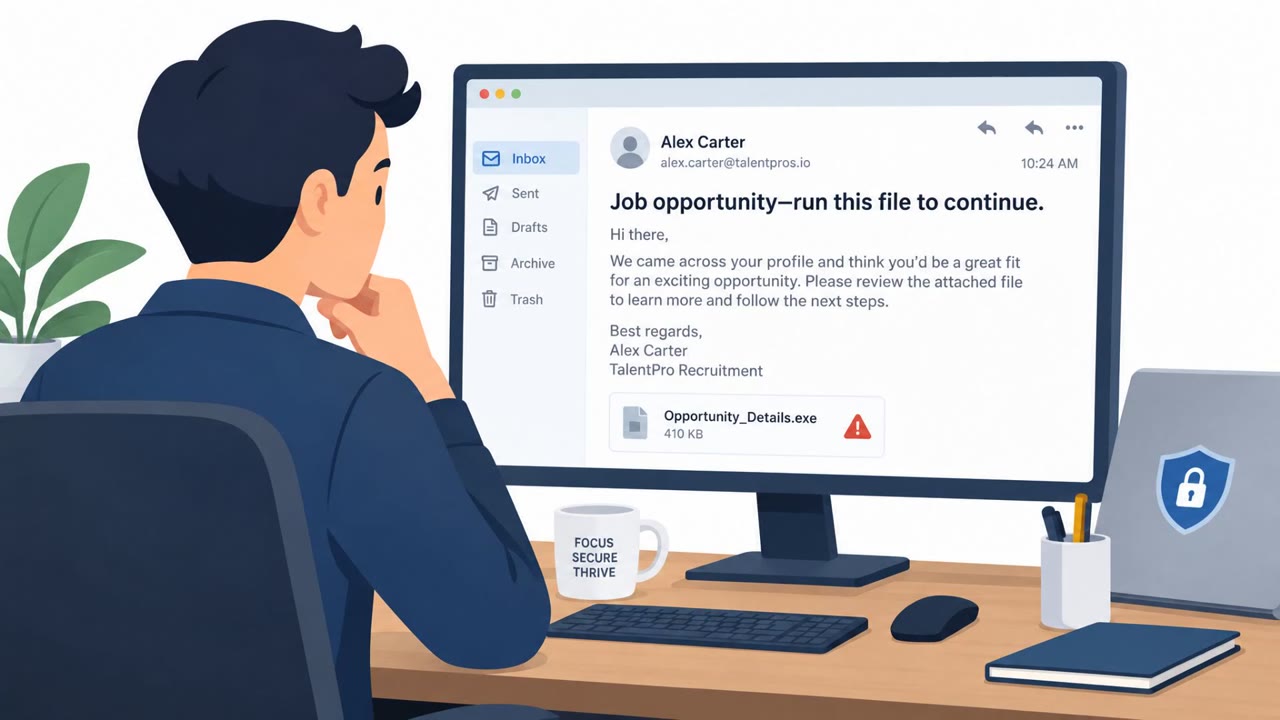
- A job applicant or event invitation delivered as a compressed archive instead of a standard document
- Hyperlink text that claims to lead to a legitimate recruitment or seminar site but may route elsewhere
- Files described as "PDF-related software" rather than simple document attachments
- Unsolicited healthcare or recruitment material arriving from an account that is otherwise familiar
This maps to known techniques including spearphishing links (T1566.002) and user execution of malicious files (T1204.002).
How to Build Resistance
Organizations in sectors named in this campaign, including air transportation, telecommunications, critical infrastructure, and healthcare, should train HR, recruiting, and clinical staff to verify applicant links through the organization's own recruitment system rather than clicking embedded hyperlinks directly. Staff should also be taught to treat archive attachments claiming to be PDF software with caution and to confirm unexpected seminar or business invitations through a known contact method, even when the sender's email domain looks legitimate, since legitimate accounts can be compromised and reused to deliver malware.
Key Takeaway
This case shows that espionage-motivated actors tailor lures to a target's daily responsibilities, whether that is reviewing a CV or attending an industry seminar, and that a familiar-looking sender or link text is not sufficient verification on its own.
Key findings
- Volant Manticore is a previously undocumented Iranian threat group assessed to be linked to Iran’s Ministry of Intelligence and Security (MOIS).
- The group used an AI-generated fake CV for “Athena Marinou,” presented as a Cyprus-based travel and tourism professional, to target a Cyprus-based airline.
- The fake CV claimed to link to a legitimate recruitment site but instead directed victims to a Catbox-hosted archive carrying the KuboShell backdoor.
- A later Saudi campaign used healthcare-themed archives named AI_Healthcare_Seminar.zip and Ai_Healthcare_Seminar_Online.zip.
- One Saudi healthcare-themed archive delivered an N-able remote-management tool, and the associated email account belonged to a private Saudi hospital and was likely compromised using leaked credentials.
- The group focuses on espionage targets including telecommunications, airlines, critical infrastructure, and recently Saudi healthcare organizations.
Who’s being targeted
- Commonly targeted roles: Human Resources, Recruiters, Hiring Managers, Airline employees, Healthcare employees, Hospital administrators, IT and security teams, Executives in critical infrastructure and telecommunications.
- Affected industries: Air transportation, Telecommunications, Critical infrastructure, Healthcare, Government.
- Attack channels: email, website.
- Impersonated: Athena Marinou, an AI-generated travel and tourism professional based in Cyprus, Healthcare seminar organizer or healthcare-related sender using a compromised private-hospital email account.
Red flags to watch for
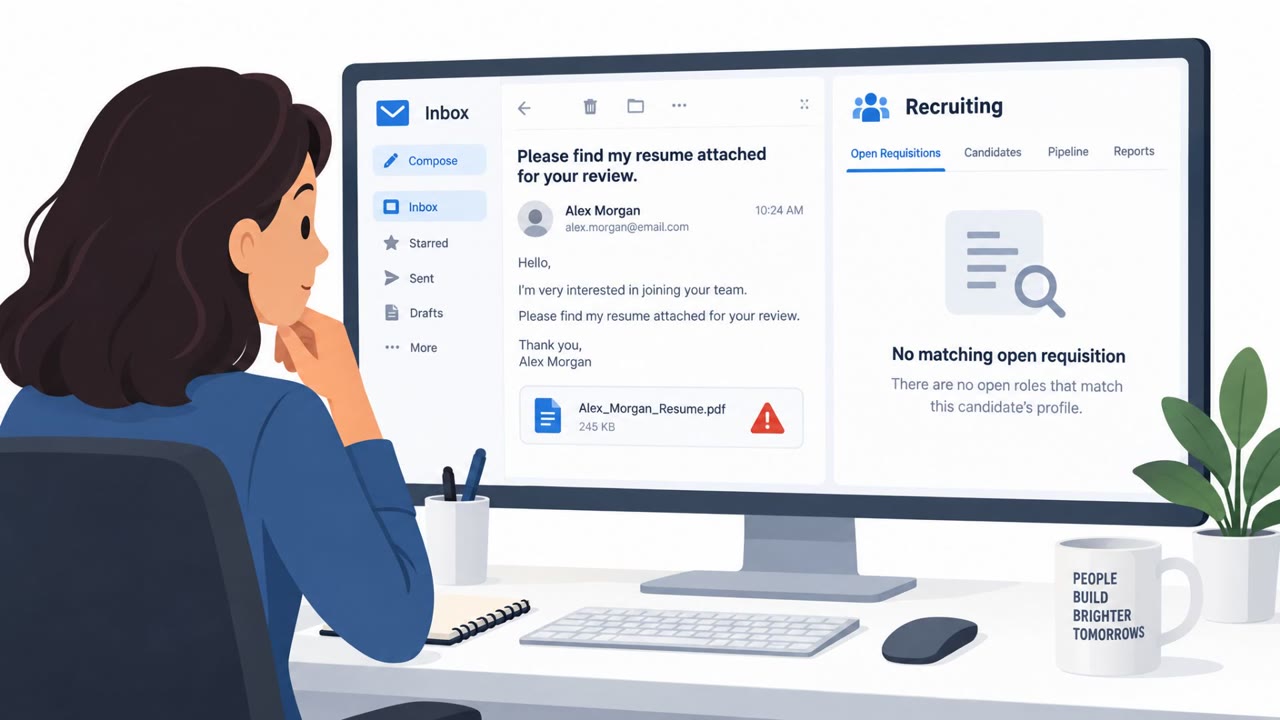
- The applicant persona is AI-generated rather than a verifiable job seeker.
- The visible text claims to lead to a legitimate recruitment website, but the underlying link points to a Catbox-hosted archive.
- A CV is delivered as an archive rather than a normal document or through the expected recruitment platform.
- The attachment is a ZIP archive rather than a standard seminar invitation or PDF.
- The file claims to be PDF-related software instead of simply containing seminar material.
- The apparent sender account may be a compromised hospital account, so a familiar healthcare-domain address alone is not proof of legitimacy.
Frequently asked questions
How did the fake CV attack work?
An AI-generated applicant named Athena Marinou sent a CV that claimed to link to a legitimate recruitment website, but the hyperlink actually pointed to a Catbox-hosted archive delivering the KuboShell backdoor.
Who was targeted besides the airline?
The same group later used healthcare-themed archives, such as AI_Healthcare_Seminar.zip, to target Saudi hospitals and healthcare organizations, with one lure sent from a likely compromised private hospital email account.
What are the red flags in this type of attack?
Key red flags include a displayed link destination that does not match the real one, a CV or invitation delivered as a ZIP archive instead of a normal document, and files claiming to be PDF-related software.
Why did a compromised hospital email make the campaign more convincing?
Because the sender account belonged to a real private hospital, recipients had less reason to suspect the healthcare-themed archive, even though the account was likely compromised using leaked credentials.
Read the video transcript
A job applicant sends a CV. The download isn’t a CV. Volant Manticore’s fake applicant, Athena Marinou, offered a ‘full CV.’ The link looked like a recruitment site, but led to a Catbox ZIP carrying the KuboShell backdoor. That’s the trick: familiar work, unexpected ZIP. Saudi hospitals later received AI_Healthcare_Seminar.zip; another archive delivered an N-able remote-management tool, even from a likely compromised hospital account. Before opening an unexpected CV or seminar ZIP, confirm it through your normal recruitment system or a known contact.