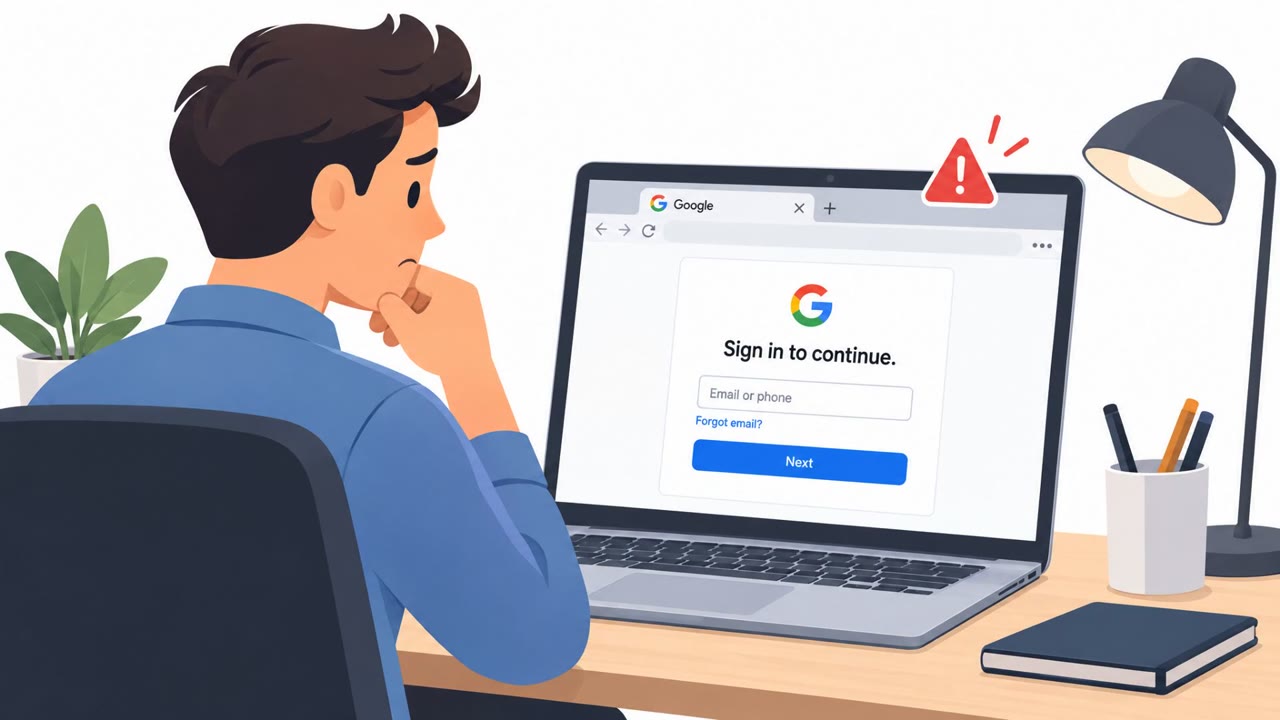
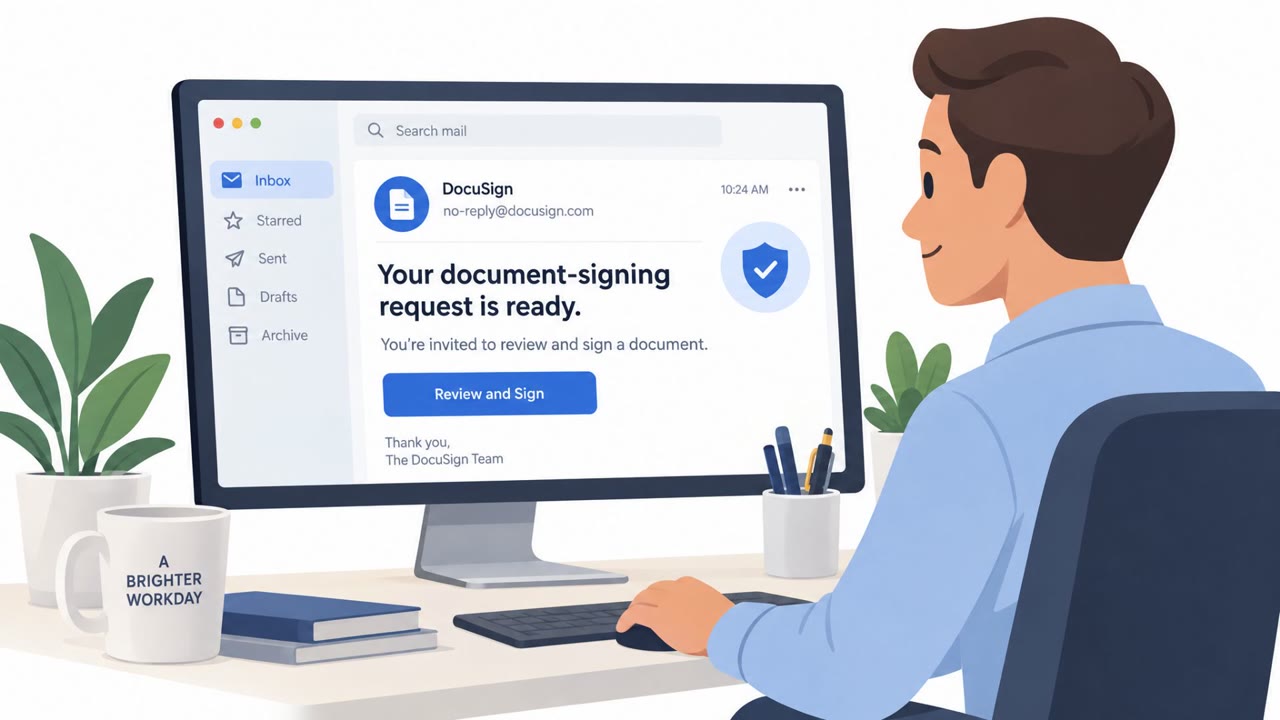
The article describes active campaigns that use familiar business documents, trusted file-sharing services, AI brands, and Microsoft sign-in flows to trick employees into granting account access. The most actionable patterns are phishing emails and document links that lead victims to Microsoft device-code pages or fake DocuSign pages, allowing account takeover without a stolen password.
Key findings
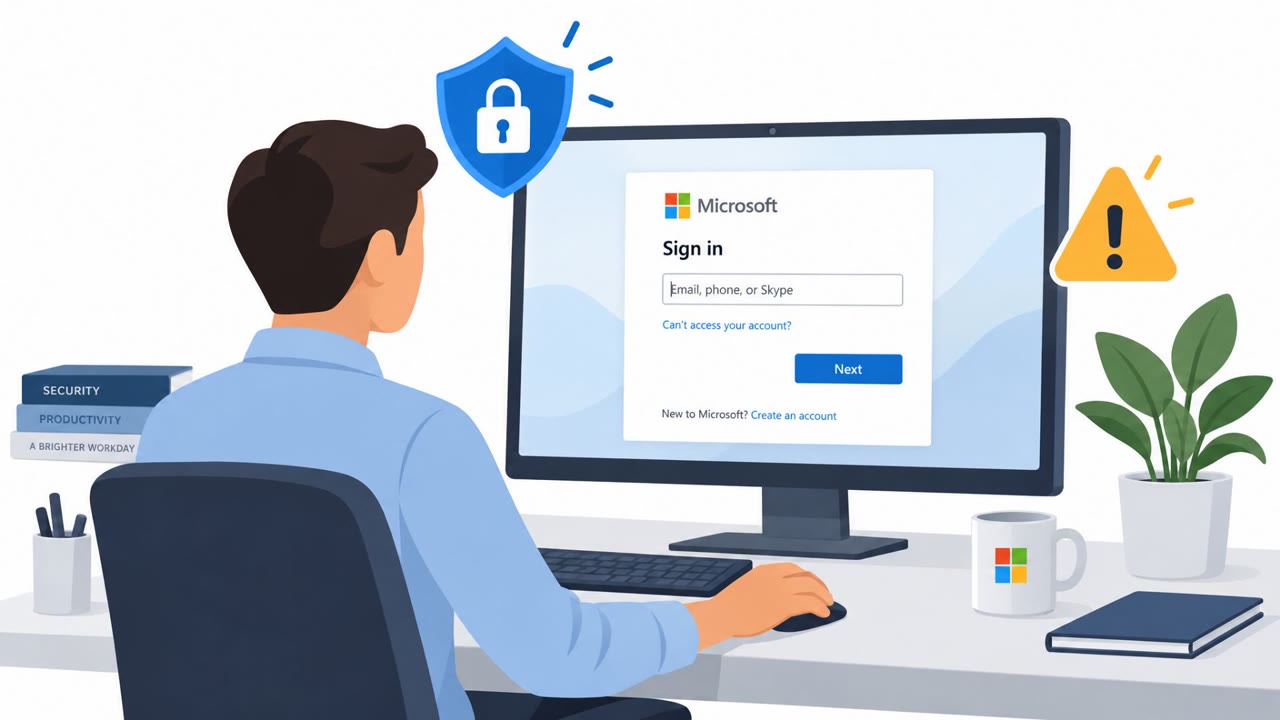
- SkyW4lker used contract, invoice, and business-proposal lures to drive victims through CAPTCHA and trusted platforms to a legitimate Microsoft device-code sign-in page.
- GeorgeGinx hid phishing destinations behind legitimate Adobe Shared Links and targeted government, banking, healthcare, and IT organizations.
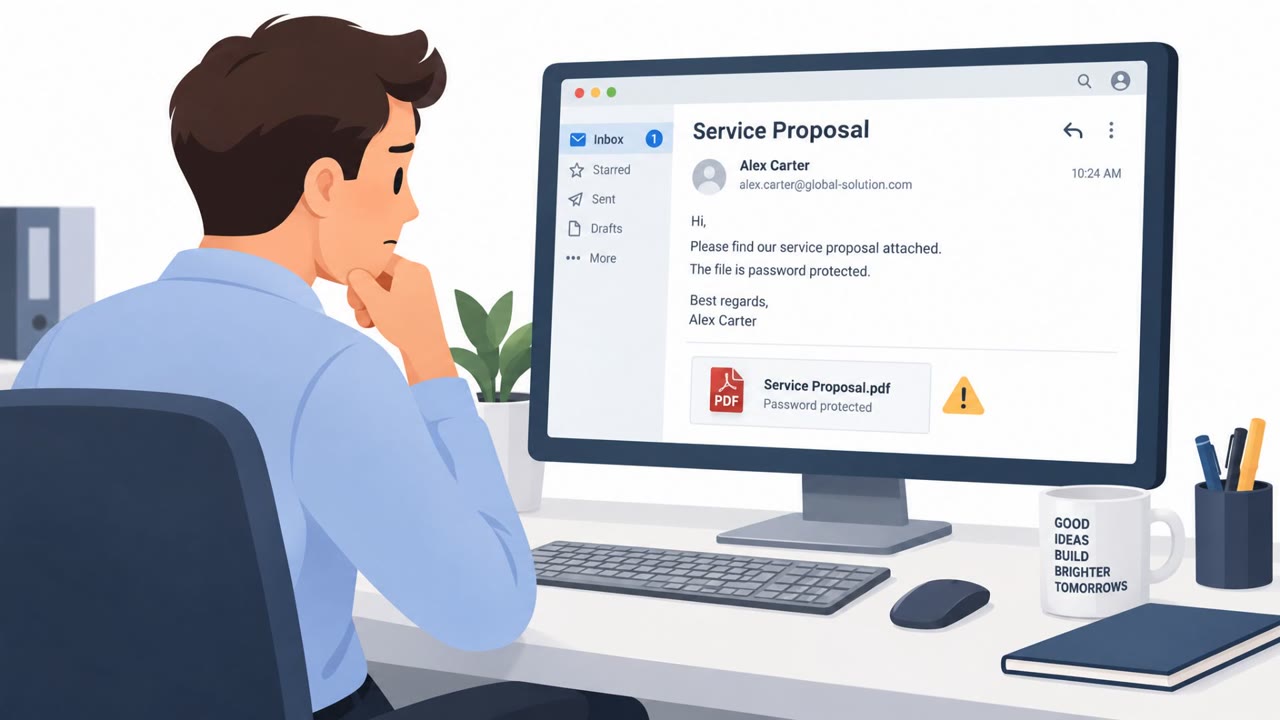
- Mir0Auth used malicious PDF attachments that redirected victims to fake DocuSign pages and then attempted to obtain Microsoft 365 tokens.
- Fake AI application downloads and event invitations impersonated services such as ChatGPT and Claude; one case ran a genuine Claude installer while hidden processes stole browser session cookies.
- The campaigns seek access tokens, browser cookies, or approved device-code access, meaning MFA may not protect an account if an employee approves an attacker-initiated authentication request.
Who’s being targeted
- Commonly targeted roles: All Microsoft 365 users, Finance and accounts-payable teams, Procurement and contract-management staff, Government employees, Banking employees, Healthcare employees, IT staff, Employees who install or evaluate AI tools.
- Affected industries: Technology, Government, Education, Consulting, Healthcare, Banking, Information Technology.
- Attack channels: email, website.
- Impersonated: Microsoft 365 sign-in service, Adobe Shared Links, DocuSign.
Awareness takeaways
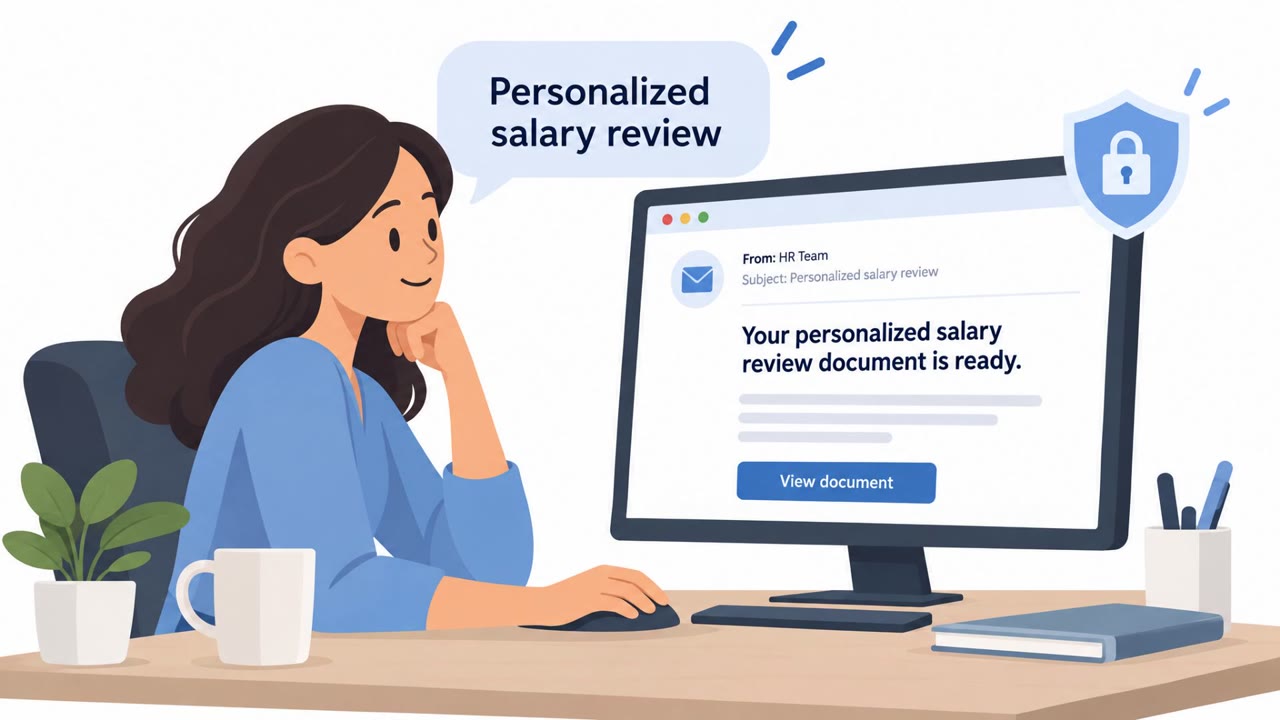
- Treat unexpected contracts, invoices, proposals, and document-review requests as suspicious, especially if they ask for a device code or redirect through multiple sites.
- Do not trust a file-sharing link solely because it uses a familiar service such as Adobe; verify the sender and the final destination before signing in.
- Verify unexpected DocuSign requests using a known contact method instead of opening an attached PDF or signing in from its redirect.
- Only install AI tools approved by the organization, and independently verify unexpected AI event invitations or download offers.
Red flags to watch for
- An unexpected document request requires a device code rather than a normal sign-in.
- The email uses a business-document lure without an expected sender or context.
- The recipient is redirected through CAPTCHA checks or other intermediary sites before reaching Microsoft.
- A trusted Adobe link unexpectedly leads to a Microsoft device-code sign-in page.
- The destination changes after opening a document-sharing link.
- The request asks for a device code when the recipient did not initiate device enrollment or sign-in.
- An unexpected PDF attachment requires a Microsoft 365 authentication step.
- A document attachment redirects to a DocuSign page rather than opening the document directly.
- The authentication page may contain hidden or unusual sign-in activity.
Read the video transcript
“A contract is ready for review.” Sound routine? SkyW4lker uses contract and invoice emails to send you through a CAPTCHA, then to a real Microsoft device-code page. Here’s the catch: the Microsoft page is real. Entering the code can approve someone else’s sign-in, even with MFA. An Adobe Shared Link can lead there, too. If a document asks for a device code, stop. Check with the sender using a contact method you already know.