UK and US cyber authorities and Proofpoint reported a real campaign where the Russian-linked group “Laundry Bear” (TA488) sent emails that could infect victims simply by being opened in Outlook Web Access. The email’s HTML triggers the server to run attacker code, installing a mailbox-stealing backdoor (“OWAReaper”) that can persist and reinfect even after device re-imaging. Targeting was unusually broad across multiple sectors, likely to blend in with normal spam traffic.
How the attack worked
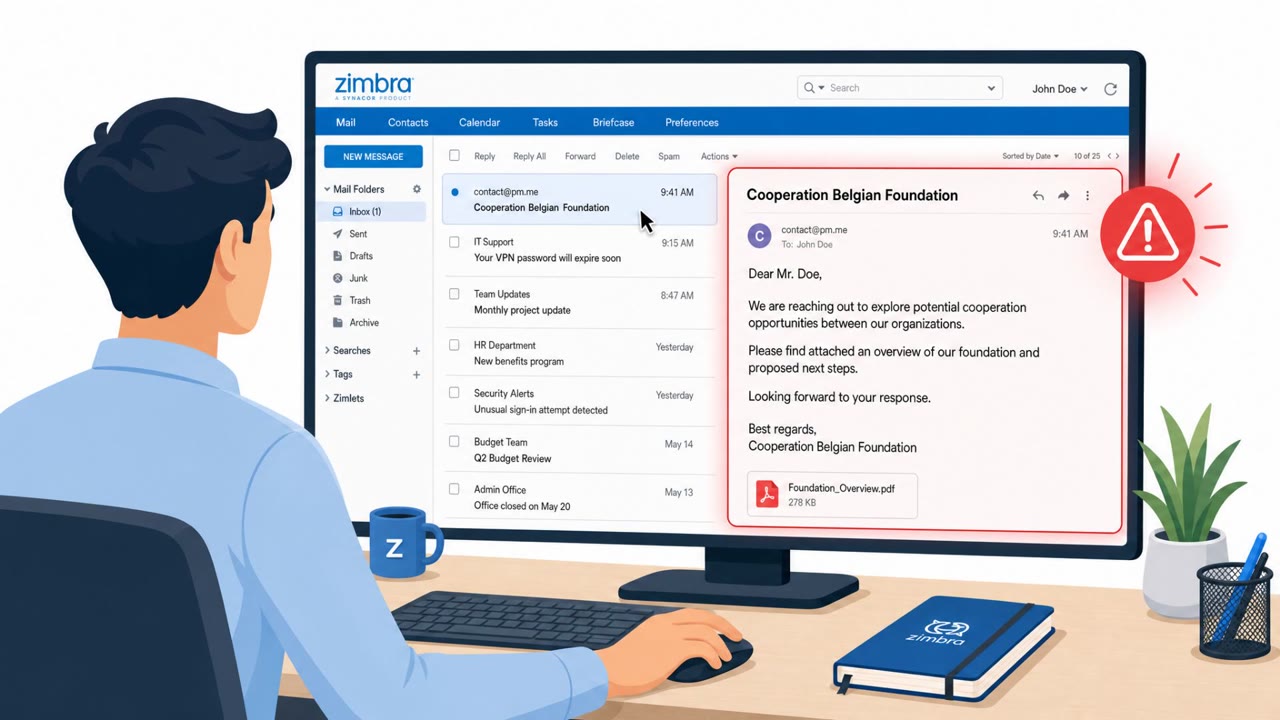
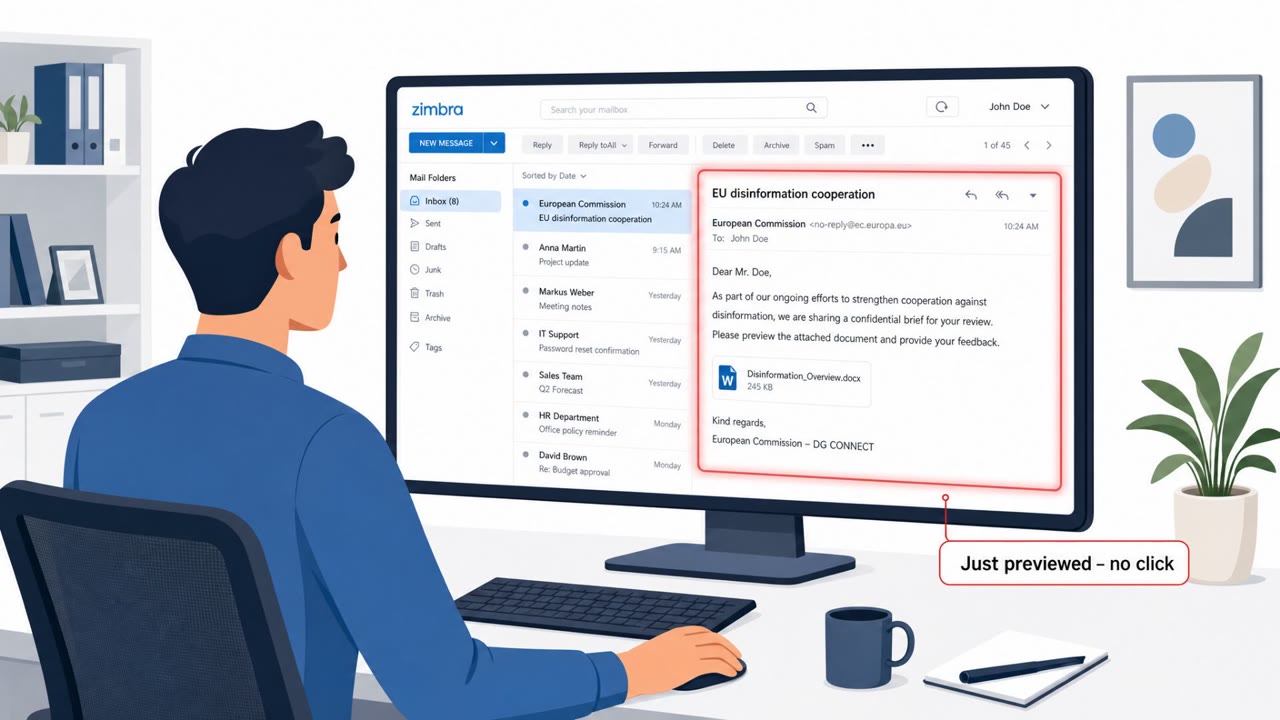
The group tracked as Laundry Bear (TA488) sent emails from a series of compromised accounts, exploiting a vulnerability in Outlook Webmail. Simply opening the message in Outlook Web Access was enough: the Outlook Exchange server mishandled the HTML content of the message and executed arbitrary JavaScript. This is what researchers describe as a half-click technique, since it requires no link click, no attachment open, and no additional user interaction beyond viewing the email. That JavaScript executed a payload called OWAReaper, an implant built to maintain long-term access to a victim's mailbox.
Why it succeeded
Several factors made this campaign effective. First, targeting was unusually broad across government, telecommunications, finance, hospitality, and aerospace organizations, which likely helped the malicious emails blend into normal mass-mailing spam traffic rather than standing out as a targeted lure. Second, the messages came from compromised accounts rather than spoofed or unfamiliar senders, making them appear more legitimate to recipients who trust known contacts. Third, the core mechanism relies on a webmail vulnerability rather than user judgment, so the usual advice of avoiding suspicious links or attachments does not fully protect against it.
What to watch for
- Unexpected emails from real colleagues or vendors that do not match their usual tone or context, since their accounts may have been compromised
- Any indication that simply opening a message in Outlook Web Access caused unusual behavior, since no link click is required to trigger this exploit
- Repeated mailbox or account issues that persist even after password resets or full device re-imaging
- Unusual loading behavior or embedded content when viewing older emails from a webmail cache
Building resistance
Because OWAReaper can persist through a hidden iframe stored in OWA's offline IndexedDB message cache, reopening an older poisoned email can reinfect a mailbox even after cleanup efforts. Security teams should treat repeated post-remediation symptoms as a signal to investigate the mailbox and webmail layer itself, not just the endpoint device. Employees across all roles that use Outlook Web Access, including executives, finance staff, IT administrators, and general staff, should be encouraged to report anything unusual seen in webmail, even if they did not click on anything. Given the attack requires no interaction beyond opening a message, timely patching of the underlying webmail vulnerability and rapid incident response escalation are central to limiting exposure, alongside awareness that a compromised colleague account can be the source of a malicious email.
Key findings
- Threat actor Laundry Bear (tracked by Proofpoint as TA488) pivoted from Zimbra to Outlook Web Access (OWA) using an XSS flaw (CVE-2026-42897).
- Attack emails were sent from “a series of compromised accounts,” aiming to blend into mass-mailing spam with unusually broad targeting.
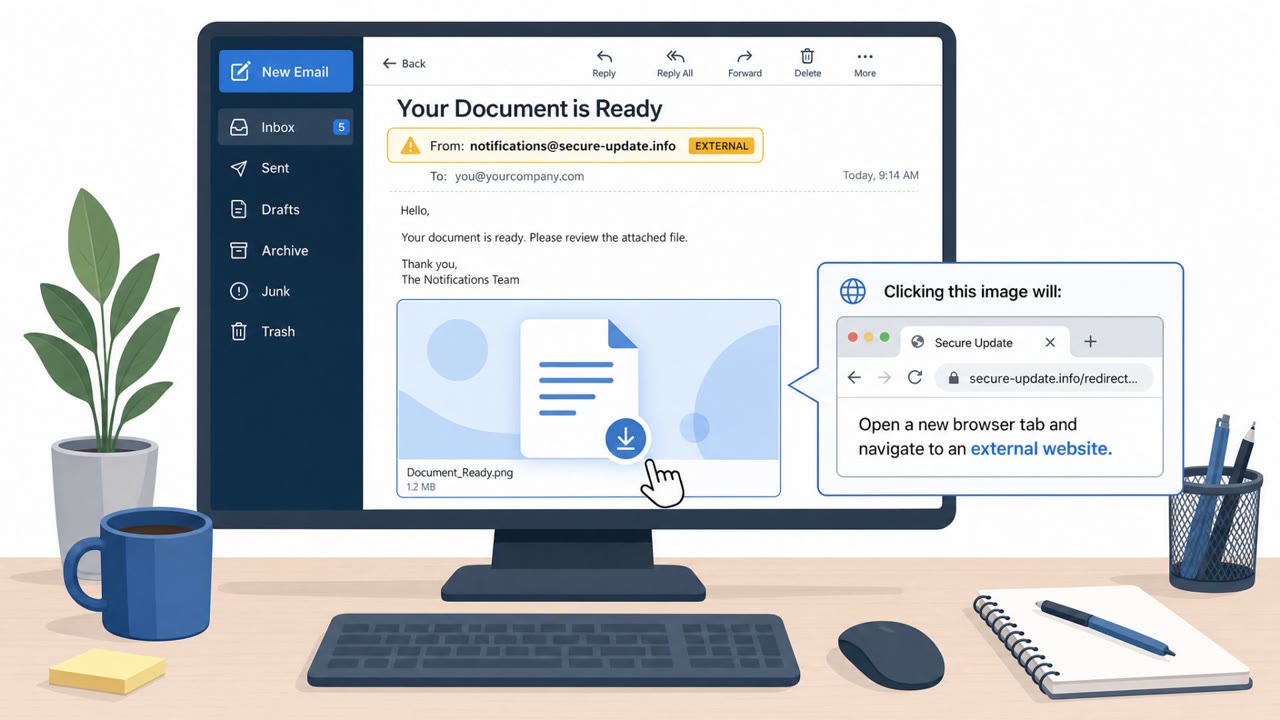
- The attack is “half-click”: the victim only needs to open the email in Outlook Webmail; the server runs attacker-controlled JavaScript from the message HTML.
- Payload “OWAReaper” is described as highly sophisticated and designed to maintain access to mailboxes, including persistence that can survive device re-imaging via cached/offline content.
Who’s being targeted
- Commonly targeted roles: Executives, All employees who use Outlook Web Access (OWA), Government users, Finance teams, IT/Helpdesk, Security operations / Incident response.
- Affected industries: Government, Telecommunications, Finance, Hospitality, Aerospace.
- Attack channels: email.
- Impersonated: A known internal contact (sent from a compromised account), A previously received legitimate-looking email thread (stored in mailbox).
Red flags to watch for
- Unexpected email from a real colleague/account that doesn’t match their usual tone or context
- Using webmail (OWA) to open a message is enough to trigger an issue, no link required in this type of attack
- Unusually broad, generic messages that resemble mass spam but come from legitimate accounts
- An old email becoming ‘dangerous’ again when reopened
- Repeated account or mailbox issues even after password resets or device rebuilds
- Suspicious embedded content behavior (e.g., unexpected loading elements) when viewing emails in webmail
Frequently asked questions
What is the Laundry Bear half-click attack?
It is a technique where opening an email in Outlook Webmail is enough to trigger malicious JavaScript execution, without the victim clicking any link or attachment.
What does the OWAReaper payload do?
OWAReaper is described as a highly sophisticated implant designed to maintain access to mailboxes, and it can persist even after credential rotation and full device re-imaging.
Why is this attack hard to remove?
OWAReaper can reinfect a device through a hidden iframe stored in OWA's offline IndexedDB message cache, so reopening an older poisoned email can trigger the exploit again.
Who is being targeted by this campaign?
Targeting was unusually broad across government, telecommunications, finance, hospitality, and aerospace sectors, likely to blend in with normal spam traffic.
Read the video transcript
You know that feeling of safety, "I just opened the email, I didn’t click anything"? Laundry Bear just blew that up. Russian-linked Laundry Bear, TA488, used a bug in Outlook Web Access, CVE-2026-42897, so that just opening their email in webmail runs their JavaScript on the server and drops a mailbox backdoor called OWAReaper. Their trick: they hijack real accounts to send broad, spammy-looking messages. You open one in OWA, OWAReaper lands in your mailbox, and it can even hide in cached emails so reopening an old message later silently reinfects you, yes, even after a laptop rebuild. If your mailbox keeps acting weird, repeated logins, strange sends, issues even after password resets or rebuilds, stop assuming it’s your laptop. Report it to security immediately and say, "This might be an OWA webmail issue."