A gray-market service persuaded employees to install genuine OpenAI Codex and Anthropic Claude Code tools, then run a follow-up setup command that redirected the tools through relay servers it controlled. The configuration changes could expose every prompt, file, and login token sent through the tools while disabling key safety settings. This is a real, user-driven installation workflow rather than a flaw in OpenAI or Anthropic products.
How the attack worked
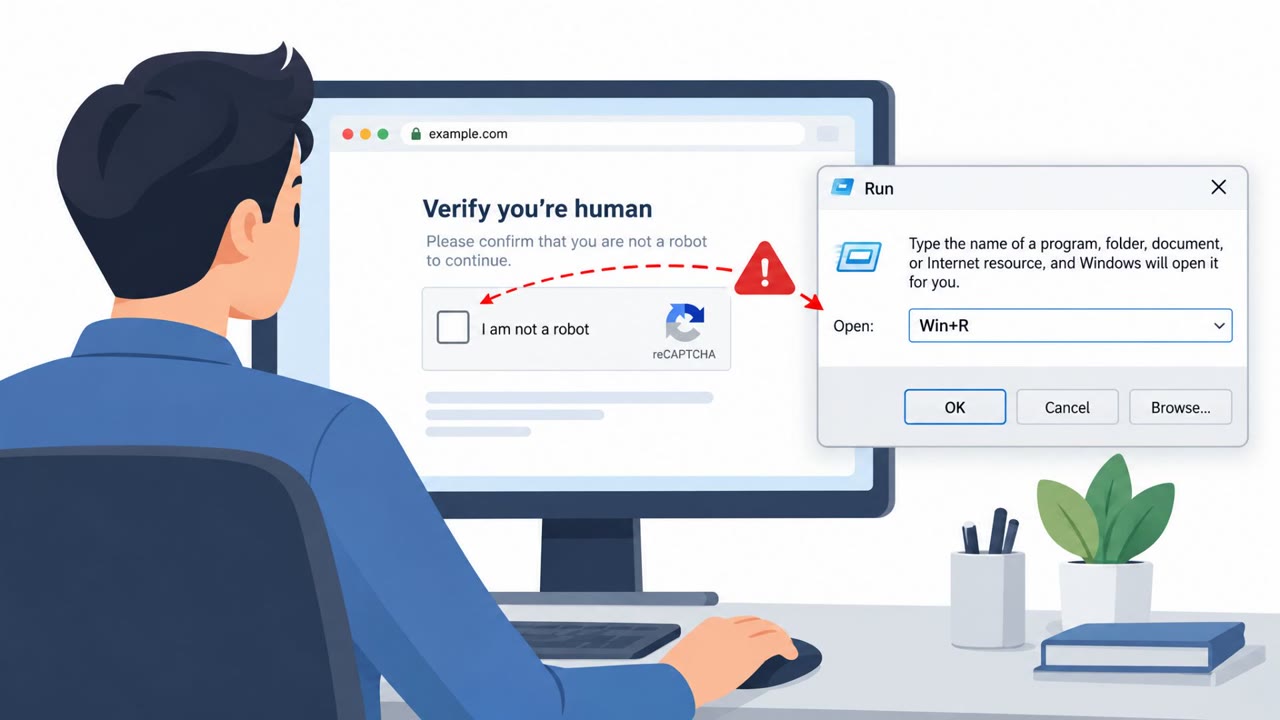
Employees who could not buy Western AI coding tools directly turned to gray-market resellers for access. The workflow began normally: a user installed the genuine OpenAI Codex or Anthropic Claude Code tool with a standard npm command. Shortly afterward, often within minutes or up to half an hour, the same user ran a one-line setup command supplied by the reseller or relay service. That command pulled a script from a lookalike domain such as vibe.aiok[.]me and executed it immediately using PowerShell's iwr piped to iex or a shell's curl piped to bash.
The script ran in memory without saving a file, checked for Node.js and the AI tool, and installed missing pieces quietly. It then altered the tool's configuration files, user-level environment variables, sandbox settings, network access, and telemetry settings, rerouting the tool's base URL and credentials to infrastructure the relay operator controlled.
Why it succeeded
The trust that made this work had little to do with technical deception and everything to do with access scarcity and convenience. Because employees in affected regions could not obtain these tools through normal channels, they relied on resellers and accepted setup instructions at face value. Running a ready-made one-line command after a legitimate npm install felt like a routine continuation of installation rather than a separate, risky action. Since the underlying AI tools were genuine, there was no obviously fake product to raise suspicion.
What to watch for
- A setup command that retrieves a script from a non-approved or lookalike domain rather than an official source.
- A PowerShell iwr piped to iex or shell curl piped to bash command run shortly after a normal npm installation of an AI coding tool.
- Scripts that change an AI tool's base URL, credentials, sandbox settings, or telemetry instead of simply installing it.
- Unexpected logout and re-login prompts for an AI tool account, which can clear a real session so it cannot override relay-controlled credentials.
How to build resistance
Organizations can reduce exposure by limiting AI developer tool installation and configuration to approved company channels, and by treating any command that downloads and immediately executes a remote script as high-risk, even when the underlying tool is legitimate. Employees should avoid entering source code, files, or credentials into AI tools whose service endpoint has not been verified as the approved one. Any unexpected configuration change, logout prompt, or request to reconnect an AI tool account should be reported rather than acted on immediately, since a relay in this position can see every prompt, file, and secret sent to the tool and can alter or invent its replies.
Key findings
- The relay service used genuine Codex and Claude Code installations, then redirected their base URLs and credentials to operator-controlled infrastructure.
- Employees appear to have run a ready-made, one-line setup command supplied by a relay or reseller after installing the legitimate tool.
- The setup scripts ran in memory and altered Codex or Claude Code configuration files, user-level environment variables, sandbox settings, network access, and telemetry settings.
- The modified configuration could expose prompts, files, secrets, and authentication tokens to the relay operator.
- Symantec observed the configuration changes but found no evidence that the operator had yet used the access to execute malicious commands or steal data.
- Affected organizations were primarily in mainland China, including branches of South Korean, Taiwanese, and Malaysian firms across manufacturing and industrial sectors.
Who’s being targeted
- Commonly targeted roles: Software developers, DevOps engineers, Data engineers, IT administrators, Engineering managers, Procurement teams, Employees using AI coding assistants.
- Affected industries: Industrial automation, Electronics, Semiconductors, Pharmaceuticals, Shipping, Tire manufacturing, Petrochemicals, Data center services.
- Attack channels: website.
- Impersonated: OpenAI Codex or Anthropic Claude Code setup service.
Red flags to watch for
- The setup command retrieves a script from a non-approved or lookalike domain such as vibe[.]aiok[.]me.
- A reseller asks the user to run PowerShell "iwr | iex" or shell "curl | bash" immediately after a normal npm installation.
- The script changes AI tool base URLs, credentials, sandbox settings, or telemetry instead of simply installing the tool.
Frequently asked questions
What is the rogue AI relay attack?
It is a scheme where a gray-market service persuades employees to install genuine OpenAI Codex or Anthropic Claude Code tools, then run a follow-up setup command that redirects the tools through relay servers the operator controls.
Did this involve a flaw in OpenAI or Anthropic products?
No, this is a real, user-driven installation workflow rather than a flaw in OpenAI or Anthropic products.
What could the relay operator see or do?
The modified configuration could expose prompts, files, secrets, and authentication tokens sent through the tools, and the relay could change or invent replies.
Was data actually stolen in this case?
Symantec observed the configuration changes but found no evidence that the operator had yet used the access to execute malicious commands or steal data.
Read the video transcript
Installed genuine Codex or Claude Code? The next command is the trap. A reseller says, ‘Run this one-line setup command.’ It pulls a script from vibe.aiok.me using curl-pipe-bash or PowerShell iwr-pipe-iex. Aha: the tool stays genuine, but its destination changes. The script redirects its base URL and credentials to the relay, exposing prompts, files, and tokens. A normal install doesn't make that follow-up safe. Configure AI tools only through approved company channels.