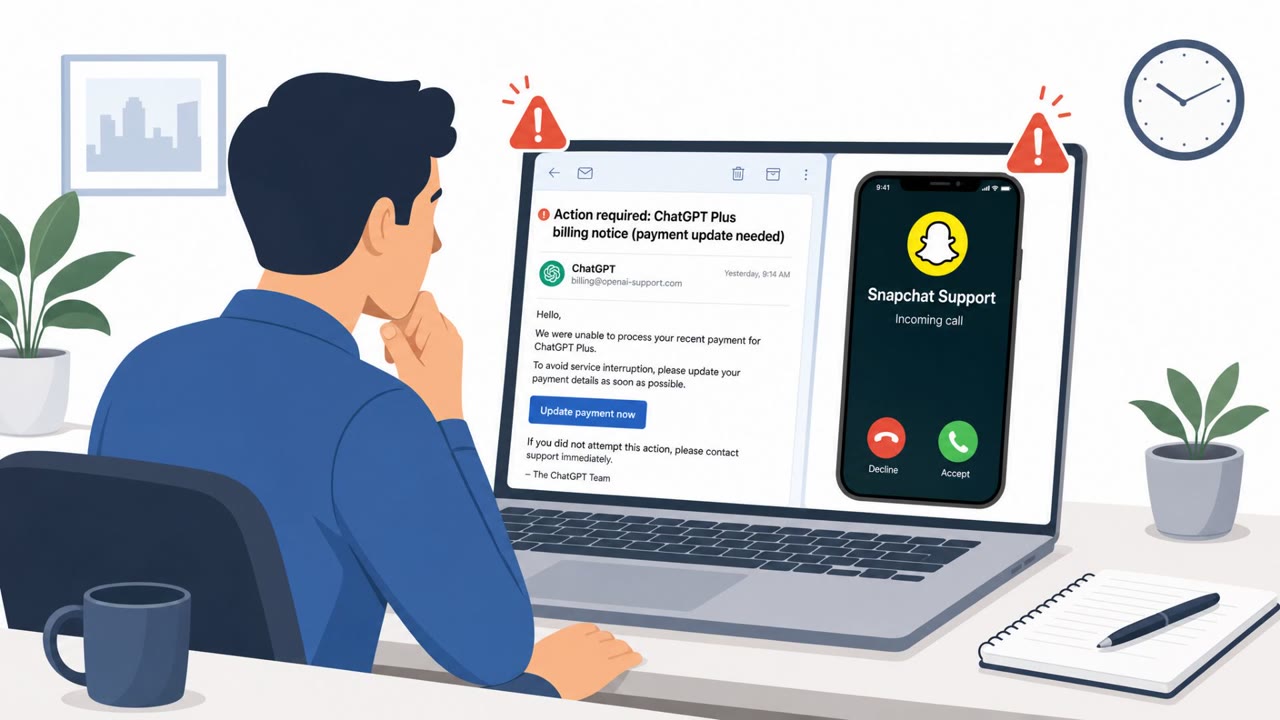
Recovery scammers target people who have already lost money or been locked out of an account, posing as law firms, government agencies, tracing firms, or platform support. They ask for upfront fees, sensitive account details, or cryptocurrency recovery phrases, then take more money or disappear. The FBI recorded 10,516 recovery-scam complaints and $1.4 billion in associated reported losses in 2025.
How the recovery scam works
This attack pattern targets people who have already suffered a loss, a hack, or an account lockout. Scammers reach out first, often through an unsolicited social media message, comment reply, phone call, email, or fake support listing. They impersonate lawyers, recovery agents, government officials, consumer groups, crypto tracing firms, ethical hackers, or platform support accounts. The pitch is simple: pay a fee and get your money, account, or cryptocurrency back faster than official channels allow.
Why it succeeds
Victims of a prior scam or hack are emotionally invested in recovering what they lost, which makes them more receptive to anyone promising a fast fix. The scam exploits this by demanding payment framed as a retainer, processing fee, tax, or release charge before any recovery happens. In more elaborate versions, fraudsters impersonate federal agencies and even direct victims to spoofed government websites using fake profiles and AI-generated videos of officials. Because the victim already believes they are owed something, a confident offer of help can feel like relief rather than a second attack.
What to watch for
- An unsolicited offer of help that arrives after a prior loss or hack, especially if the sender already knows details about what happened
- A demand for an upfront fee, described as a retainer, processing fee, tax, or release charge
- A request for a password, one-time code, backup codes, a wallet recovery phrase, or a photo of identification
- A guarantee of recovery success, which legitimate services do not make
- Links or phone numbers supplied by the supposed helper instead of independently verified official contacts
These patterns show up across the scenarios in this attack breakdown, including fake account-recovery hackers on social media, impersonated FBI officials pointing victims to a spoofed IC3 site, and fake crypto tracing firms that request a wallet recovery phrase after collecting a tracing fee.
How to build resistance
- Treat any unsolicited recovery offer as suspicious by default, particularly one that already references details of a prior loss
- Never pay an upfront fee to recover money, cryptocurrency, or account access
- Never share a password, one-time code, backup code, wallet recovery phrase, or identity document with anyone claiming to be a recovery helper
- Locate official platform, bank, or government support pages by typing the address directly into a browser rather than clicking a link or calling a number provided by the person offering help
- Remember that a hacked account is restored through the platform's own official recovery process, not through a third party charging a fee
Organizations should extend this awareness to finance teams, executives, social media managers, and anyone who manages cryptocurrency or digital wallets, since these roles are common targets for this type of follow-on scam.
Key findings
- Recovery scammers deliberately target people who were previously scammed, hacked, or locked out of an account.
- Common personas include lawyers, recovery agents, government officials, consumer groups, crypto tracing firms, ethical hackers, and platform-support accounts.
- The scam commonly begins with an unsolicited social-media message, comment reply, phone call, email, or fake support listing.
- Fraudsters demand an upfront retainer, processing fee, tax, release charge, or cryptocurrency payment before supposedly recovering money or access.
- They may request passwords, one-time codes, backup codes, wallet recovery phrases, or identity documents.
- The FBI warned about fake FBI social-media profiles and AI-generated videos directing victims to a spoofed IC3 website.
- People aged 60 and over reported the largest losses: $540.5 million across recovery-scam complaints in 2025.
Who’s being targeted
- Commonly targeted roles: All employees, Finance and accounts-payable teams, Executives, Executive assistants, Social media managers, Customer support teams, Employees who manage cryptocurrency or digital wallets.
- Affected industries: Consumer services, Financial services, Cryptocurrency services, Social media platforms, Technology platforms.
- Attack channels: social media, website, email.
- Impersonated: Recovery hacker or unofficial account-recovery specialist, FBI official or recovery firm, Crypto tracing firm or ethical hacker.
Red flags to watch for
- The helper contacted the victim first.
- The person offers a paid shortcut outside the platform's official recovery process.
- The person asks for login secrets or identity documents.
- An alleged FBI representative makes unsolicited contact by social media.
- The person requests payment for recovery.
- The victim is sent to a spoofed government website.
- The service guarantees recovery.
- It demands an upfront fee before any results.
- It asks for a wallet recovery phrase.
Frequently asked questions
What is a recovery scam?
A recovery scam targets people who have already lost money or been locked out of an account, with scammers posing as lawyers, government agencies, tracing firms, or platform support to offer fake help.
Why do recovery scammers ask for an upfront fee?
Scammers frame the fee as a retainer, processing fee, tax, or release charge needed before they can supposedly recover lost money or account access, but no legitimate recovery service requires upfront payment.
What information should never be shared with someone offering to recover an account?
Victims should never share a password, one-time code, backup codes, a wallet recovery phrase, or a photo of their ID with anyone claiming to help recover an account or funds.
How can someone verify a recovery offer is legitimate?
They should find official platform, bank, or government contact pages themselves by typing the address directly into a browser rather than using links or numbers supplied by the person offering help.
Read the video transcript
Locked out of your account? A stranger replies, “I can get any account back for a fee.” That’s the second scam. They found you first, promise a shortcut around the platform’s recovery process, then ask for a fee and your one-time code or backup codes. Same trick, bigger badge: fake FBI profiles and AI videos send people to a spoofed IC3 site. Here’s the giveaway: IC3 never contacts you directly or charges to recover funds. Got a recovery offer? Ignore their link and find the platform’s official help page yourself.