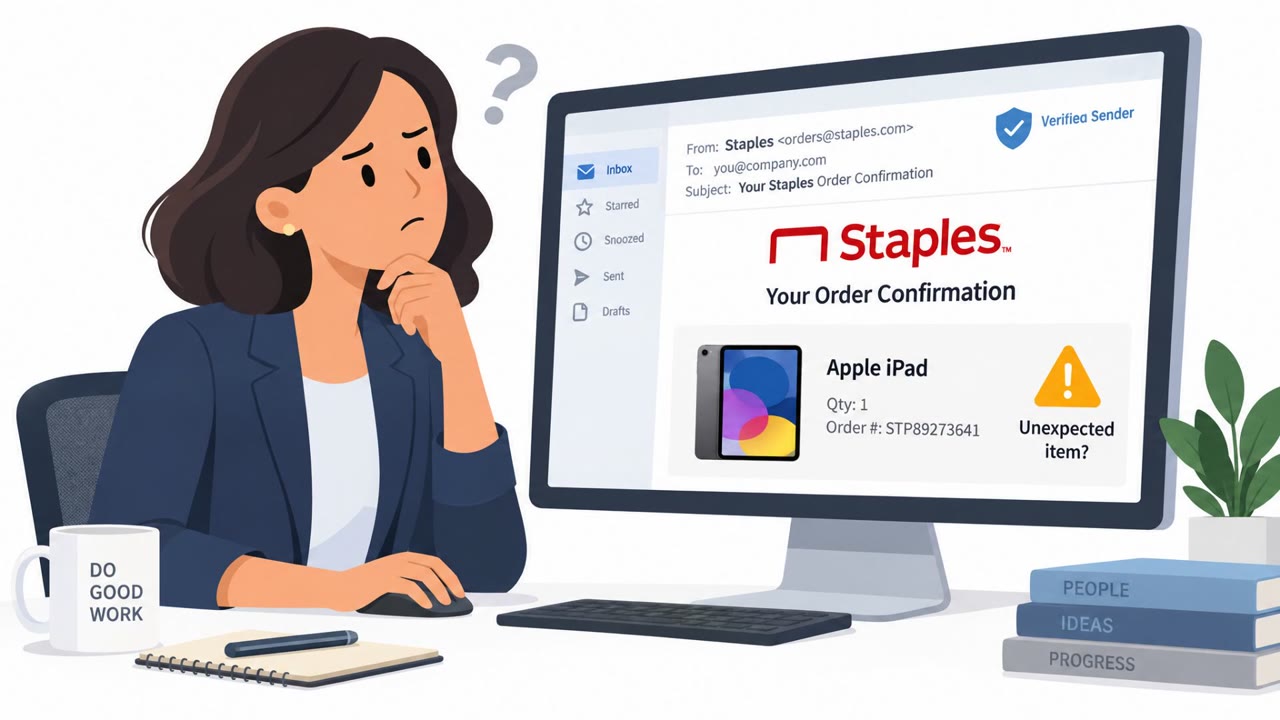
Trusted Retail Emails Hide Phone Scams

Cisco Talos · High sophistication
Last updated October 21, 2026

Attackers abused legitimate Staples and Dell order-notification systems to send convincing emails about expensive purchases the recipient never made. Instead of using a suspicious link, the messages inserted attacker-controlled “helpline” numbers into trusted transaction fields, aiming to move victims into a phone-based scam. Talos also observed similar abuse of registration notifications and mail delivery failure reports to carry phishing lures through legitimate infrastructure.

Key findings

  • Talos observed roughly 1,400 malicious messages abusing Staples and Dell transactional email workflows.
  • The attackers used legitimate, authenticated brand email infrastructure, so the messages passed DKIM and DMARC checks despite malicious content in the rendered order details.
  • Both retail campaigns used an unexpected high-value purchase and an embedded phone number to pressure recipients into calling an attacker-controlled helpline.
  • Talos observed list-bombing and registration-form abuse where attacker-provided text was reflected into legitimate automated emails.
  • A delivery-status notification carried a WeTransfer-themed file-sharing lure, demonstrating that even a legitimate bounce message can include untrusted nested content.
  • Sender authentication confirms expected sending infrastructure, but does not prove that the transaction details, phone number, or other rendered content are legitimate.

Who’s being targeted

  • Commonly targeted roles: All employees, Finance and accounts payable, Procurement, Executive assistants, Customer support, IT help desk, Email security teams.
  • Affected industries: Retail, Technology and computer sales, Software-as-a-Service platforms, Email and collaboration services, Financial services and payment teams.
  • Attack channels: email, vishing.
  • Impersonated: Staples order support, Dell sales team or order support, Mail delivery system notification.

Awareness takeaways

  • Do not call phone numbers included in unexpected order emails. Find the retailer’s support number independently through its official website, app, or a known account page.
  • Treat unexpected purchase confirmations as suspicious even when the sender passes normal email authentication checks.
  • Do not trust links, attachments, or requests inside a delivery-failure notice simply because the outer message looks like a system notification.
  • Report emails whose order, shipping, billing, profile, or support fields contain unexpected phone numbers, URLs, urgency language, or instructions.

Red flags to watch for

  • An unexpected high-value Apple iPad purchase.
  • A support phone number appears inside shipping or billing-style order details.
  • The email urges a phone call rather than directing the recipient to a known Staples account or support channel.
  • An unexpected software purchase totaling $736.09.
  • “Helpline” and “Call Our Sales Team” text appears in address fields rather than normal support locations.
  • The sender and template may look legitimate, but the phone number is not independently verified.
  • A delivery-failure message contains a file-sharing request unrelated to a message the recipient sent.
  • The administrative wrapper is used to make embedded content appear routine.
  • A bounce message asks the user to interact with a link, attachment, or file-transfer workflow rather than simply explaining a delivery failure.
Try Mirage

Mirage safely runs attacks like this one against your own team, so you find out what happens before a real adversary does.

Get a demo
Read the video transcript

An iPad you never bought? This Staples email wants you to call. It came through Staples’ real email system and passed DKIM and DMARC. But the order details say ‘Helpline 806 283 7712’, a number planted in a shipping-style field. That’s the trick: a real sender doesn’t make every detail real. Dell emails did it too: a $736.09 Microsoft Project order, with ‘Call Our Sales Team’ in the address fields. Don’t call the number in the email. Open the retailer’s official website yourself and find support there.

Similar attacks

Scammers Hijack Staples and Dell Order Emails

Scammers Hijack Staples and Dell Order Emails

Cisco Talos found roughly 1,400 scam emails sent through legitimate Staples and Dell order-notification systems. Attackers placed fake helpline numbers and support prompts into order fields, causing trusted retailers to email recipients about purchases they did not make. The scam then pressures…

October 28, 2026
Teams Helpdesk Vishing Pushes Remote Control Tools

Teams Helpdesk Vishing Pushes Remote Control Tools

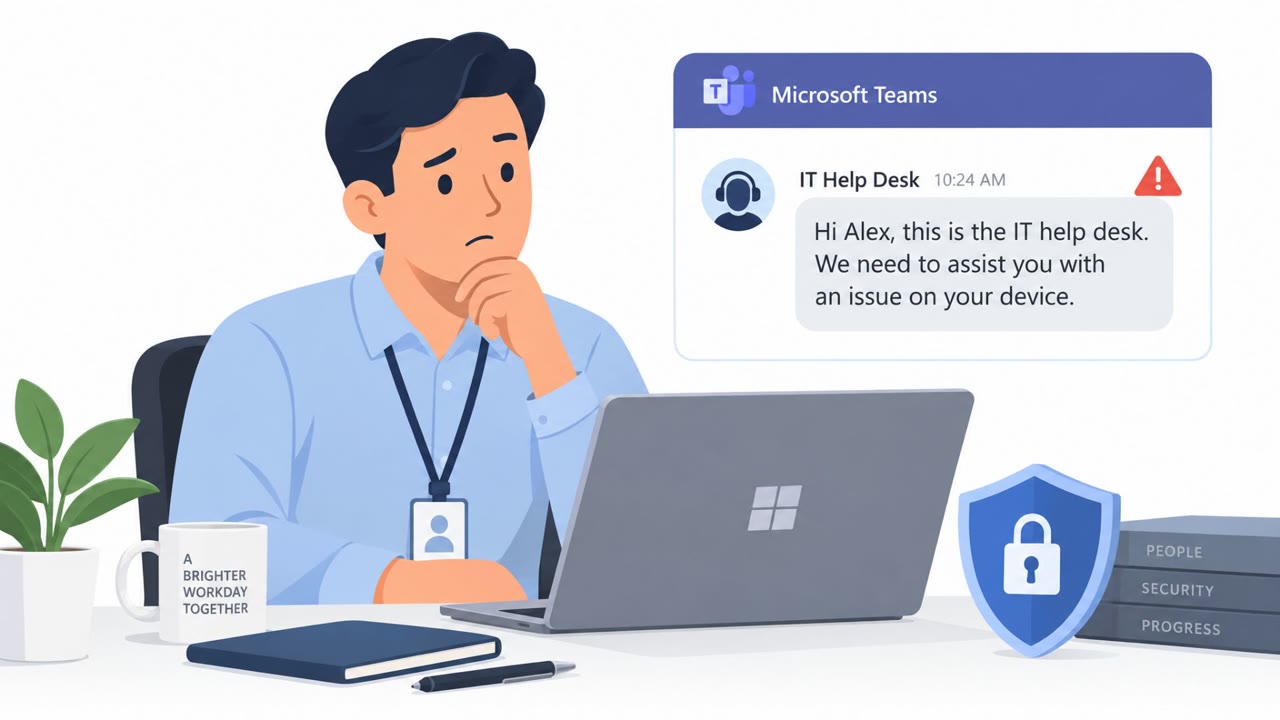
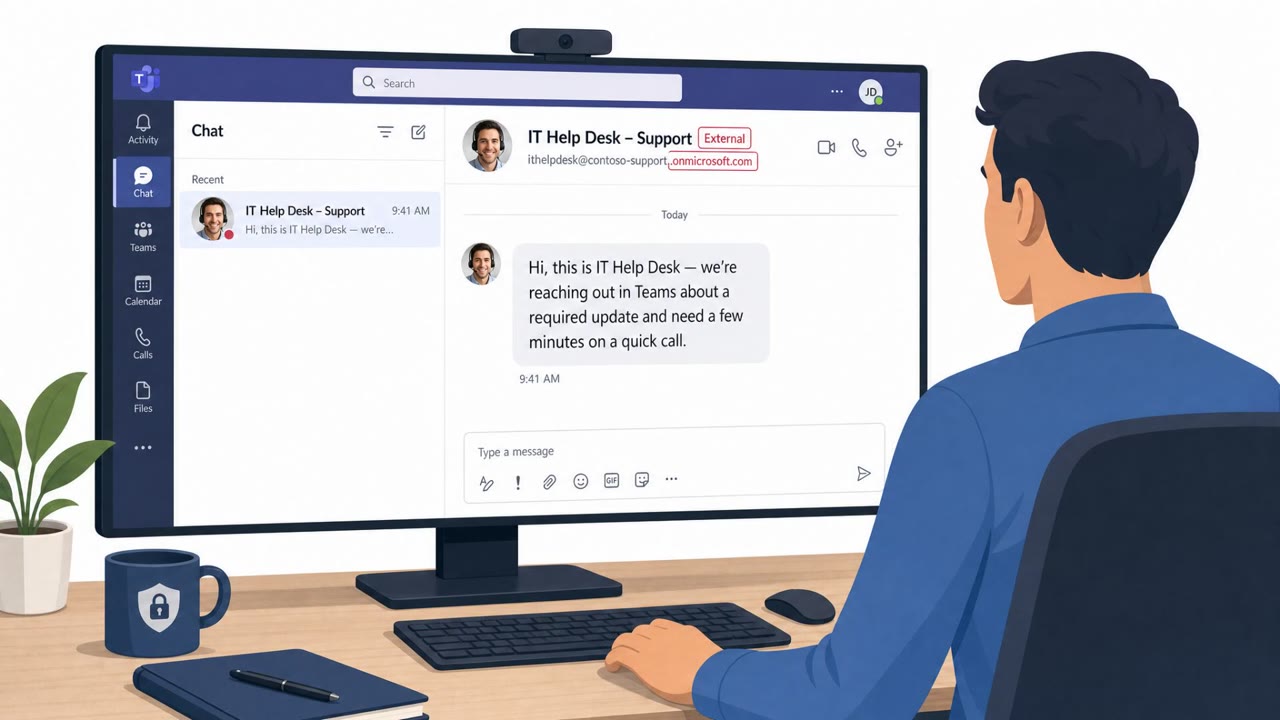
Researchers observed a coordinated social-engineering operation (“Spring Ring”) where attackers used external Microsoft Teams accounts to pose as internal IT help desk staff and start voice calls. Victims were pressured to install remote-control tools (like Quick Assist or other RMM software) or…

August 31, 2026
Fake Advisors, ClickFix, and Chrome Sync Spying

Fake Advisors, ClickFix, and Chrome Sync Spying

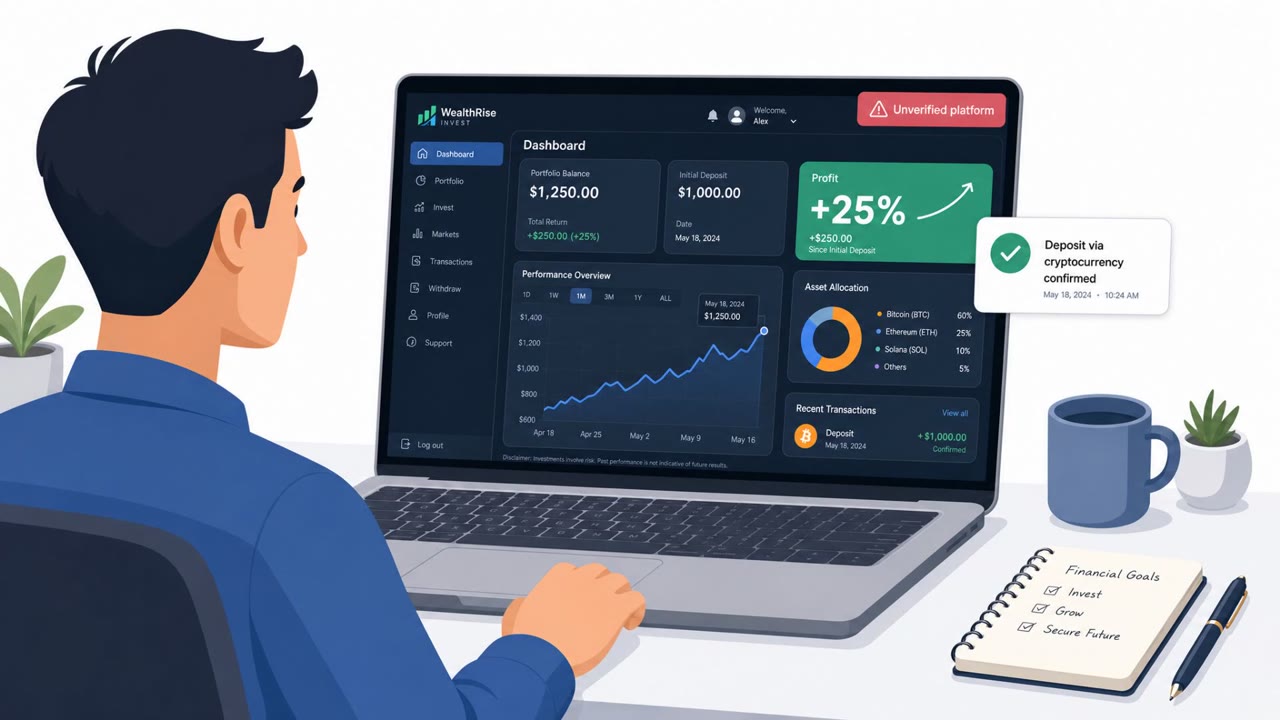
This roundup describes several real-world social-engineering and human-abuse techniques, including trojanized “installer” lures (ClickFix), large-scale phone-based investment fraud, and stalkers misusing Chrome Sync after brief physical access. The items include clear workflows that can be turned…

July 16, 2026
Fake IT Support Calls Opened the Door to Ransomware

Fake IT Support Calls Opened the Door to Ransomware

Attackers impersonated IT help desk staff through phone calls, email, and Microsoft Teams, using employees’ names and email addresses to appear legitimate. They persuaded users to open remote-access sessions, and one such session led to a ransomware incident. The campaigns did not focus only on…

October 30, 2026
AI Deepfakes Drive $129M CEO Fraud Scheme

AI Deepfakes Drive $129M CEO Fraud Scheme

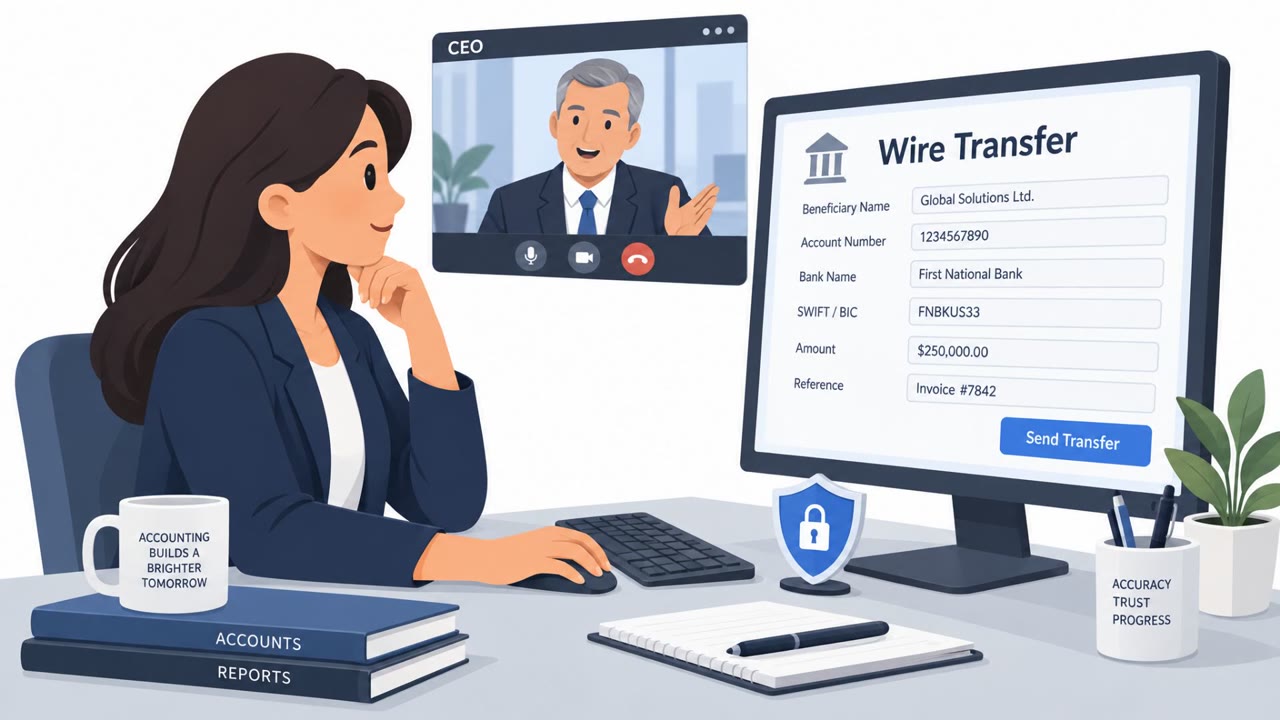
Three men were indicted for allegedly using AI-generated video and voice impersonations of CEOs and law-firm attorneys to steal $129 million. They targeted employees authorized to make wire transfers, framed payments as confidential acquisitions, and pressured staff to keep the transactions secret.…

November 9, 2026
North Korea Scales AI-Powered Job Scams

North Korea Scales AI-Powered Job Scams

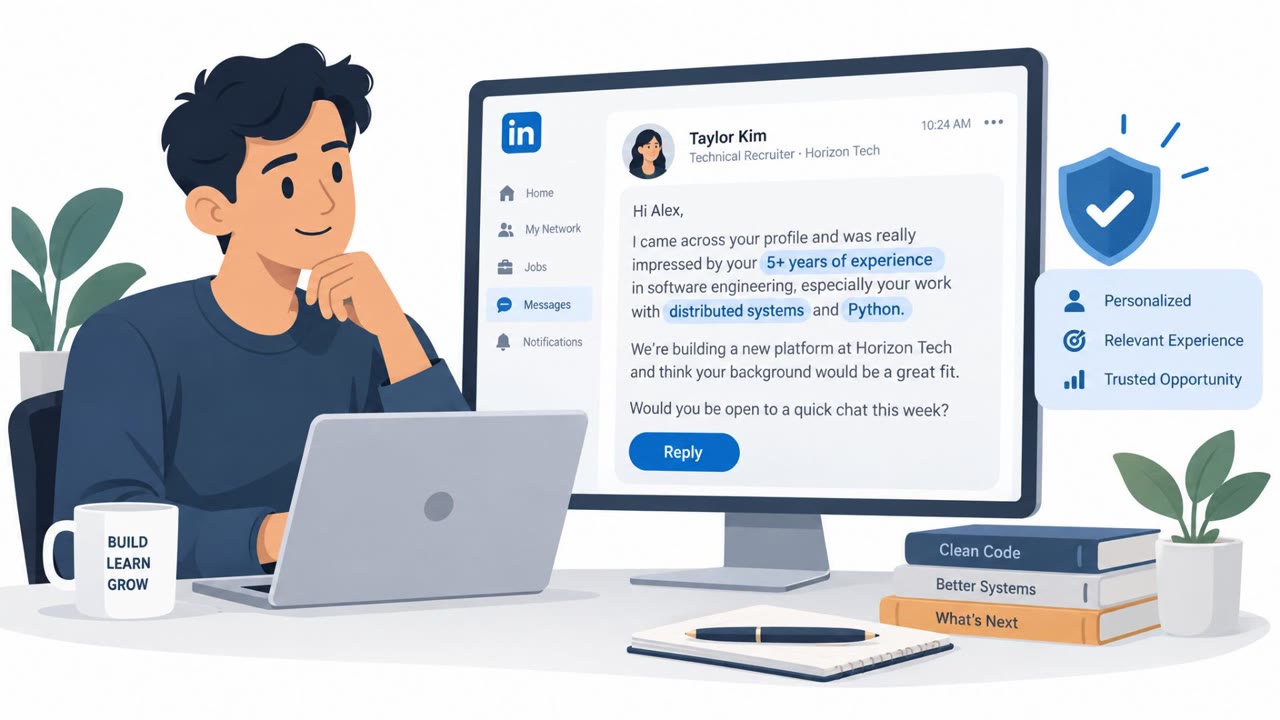
Microsoft reports that North Korean threat actors are using AI to make job scams, fake recruiter outreach, fraudulent worker identities, and targeted phishing campaigns faster and more convincing. One group posed as recruiters for a spoofed AI blockchain company and scheduled software-engineer…

October 29, 2026