4,400 Malicious Domains Target Holiday Shoppers

Help Net Security · Medium sophistication
Last updated November 26, 2026

Researchers found more than 4,400 malicious holiday-shopping domains, including fake delivery sites and a fraudulent Walmart-themed Black Friday storefront. These scams use familiar brands, missed-delivery claims, and attractive discounts to pressure shoppers into giving up login or payment details or buying products that never arrive.

Key findings

  • Researchers identified more than 24,000 newly registered holiday-shopping-related domains in 90 days; more than 4,400 were classified as malicious.
  • Delivery, parcel, and shipping themes made up 34.88% of the newly registered holiday-related domains.
  • A fraudulent website impersonated Walmart and promoted Black Friday deals using the retailer's branding, colors, and product listings.
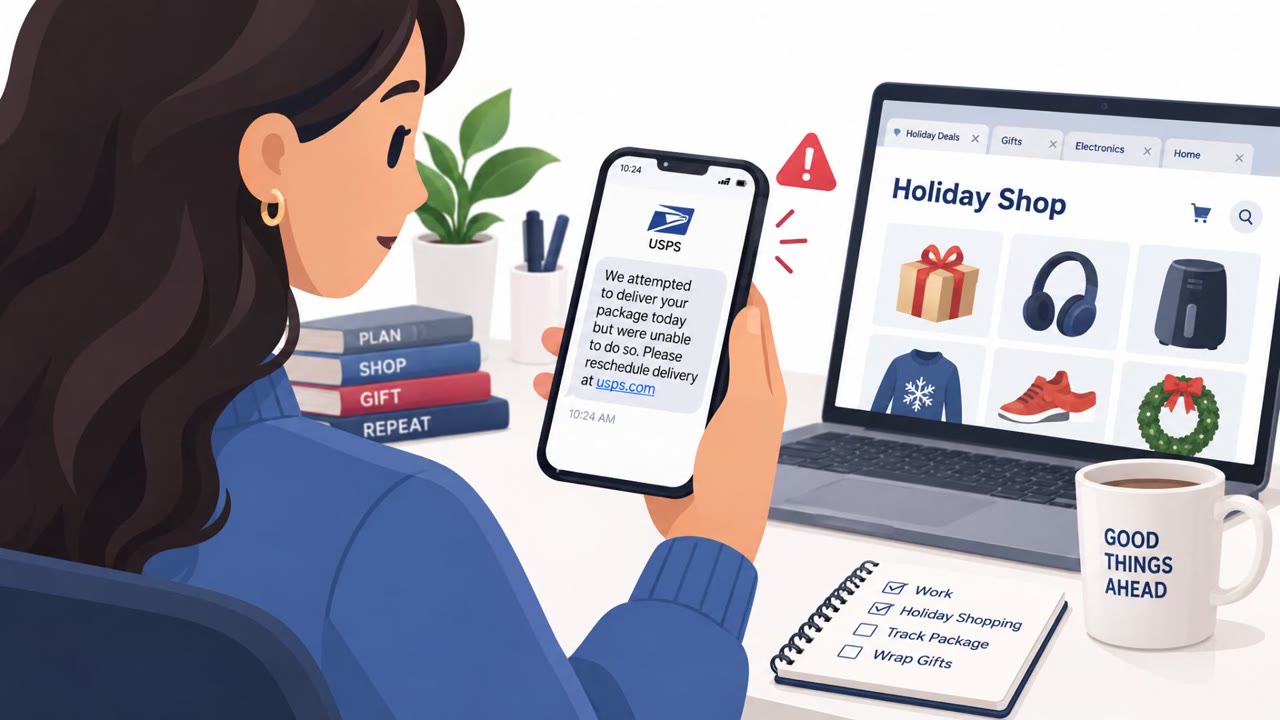
  • Fake delivery sites can use missed-delivery, customs-fee, or rescheduling claims to collect payment information.
  • Consumers may reach fraudulent stores through advertisements, search results, or promotional emails and may be asked for credentials or payment details.
  • Most confirmed Black Friday fake pages in separate research used web addresses unlike the brands they impersonated; some were hosted on legitimate platforms.

Who’s being targeted

  • Commonly targeted roles: All employees, Online shoppers, Procurement and purchasing teams, Accounts payable teams, Customer service teams, Retail and e-commerce staff.
  • Affected industries: Retail and e-commerce, Parcel delivery and logistics, Financial services and payment processing, Food delivery, Travel platforms.
  • Attack channels: website.
  • Impersonated: Walmart, DHL, UPS, FedEx, or USPS.

Awareness takeaways

  • Do not use an unexpected delivery link to pay a fee or change a delivery. Check the shipment through the carrier's official website or app instead.
  • Treat unusually attractive holiday deals with caution, even when a website uses familiar retailer branding and product images.
  • Check the actual web address before entering credentials or payment details; a convincing page may be hosted on a domain unrelated to the brand.
  • Avoid entering retailer credentials or card details after arriving from an ad, search result, or promotional email. Navigate independently to the retailer's known site.

Red flags to watch for

  • The site uses retailer branding but may not use the retailer's legitimate web address.
  • Deals may be used to create urgency and encourage an immediate purchase.
  • A purchase may lead to products that never arrive.
  • An unexpected payment request is tied to a delivery problem.
  • The delivery site may imitate a trusted carrier.
  • Verify delivery notices through the carrier's official app or known website rather than using an unsolicited link.
Try Mirage

Mirage safely runs attacks like this one against your own team, so you find out what happens before a real adversary does.

Get a demo
Read the video transcript

That Walmart Black Friday deal? Check the address. A fake storefront copies Walmart’s colors and product listings. An ad, search result, or email leads you there; checkout asks for your login or card. A convincing logo isn’t a trustworthy address. The same trick hits deliveries: 'Your delivery needs to be rescheduled' can lead to a fake carrier page demanding a fee. Before you pay or sign in, open the retailer’s or carrier’s known website yourself.

Similar attacks

AI Supercharges Holiday Shopping Scams

AI Supercharges Holiday Shopping Scams

Holiday scammers are using AI to build convincing fake stores, product images, reviews, and personalized messages that imitate trusted retailers and delivery services. The article documents shoppers who paid fake sellers, received products unlike the advertised images, or encountered personalized…

November 17, 2026
Fake Install Guides and Helpdesk Calls Drive Attacks

Fake Install Guides and Helpdesk Calls Drive Attacks

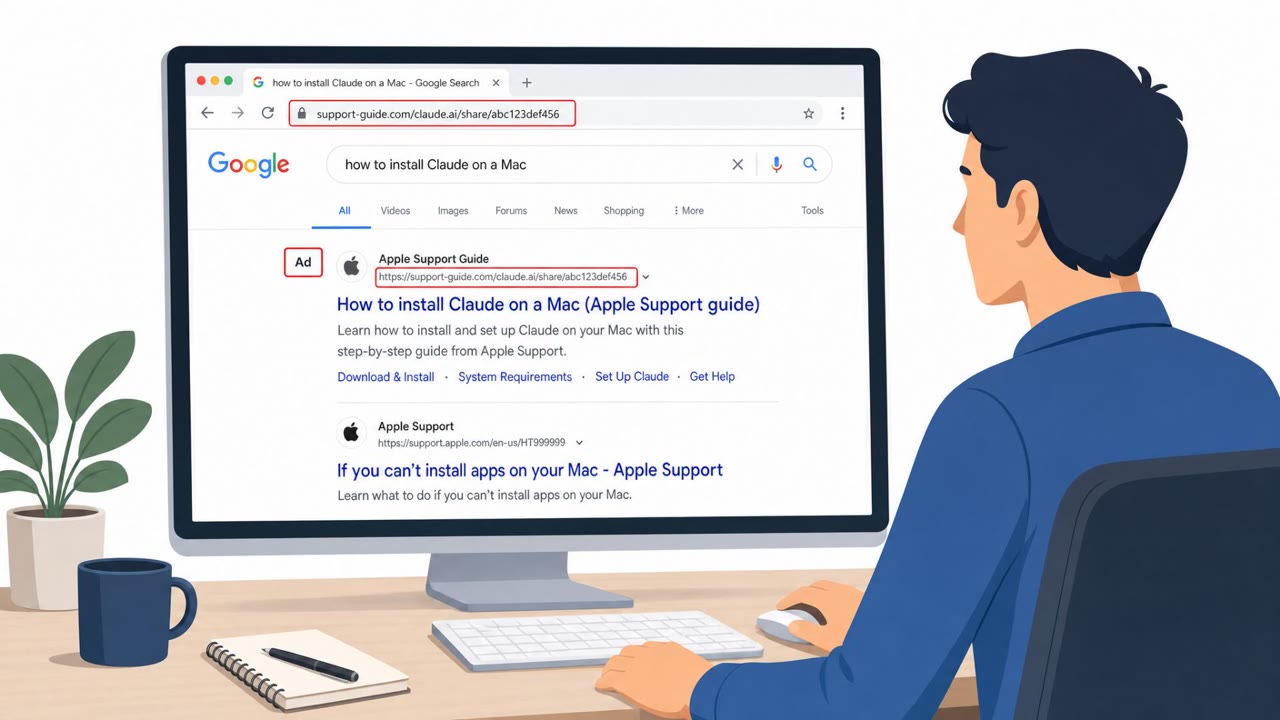
This bulletin describes multiple real-world social engineering campaigns where attackers trick people into trusting a familiar screen, like a search result “install guide,” a recruiter outreach, or a helpdesk phone call. The lures push victims to paste commands, install fake software, or reset MFA,…

July 30, 2026
GhostAction Phishes Developers With Fake GitHub Alert

GhostAction Phishes Developers With Fake GitHub Alert

GhostAction attackers sent a fake GitHub security alert to an open-source maintainer, claiming a login from Moscow and directing the victim to secure their account. The fake site stole the victim’s password and two-factor code, then silently approved a powerful GitHub OAuth connection that let the…

October 19, 2026
Microsoft Busts Phishing Kits Behind 1B Scams

Microsoft Busts Phishing Kits Behind 1B Scams

Microsoft and partners disrupted three "phishing-as-a-service" kits that enabled criminals to send more than a billion phishing emails and SMS messages worldwide. The kits provided ready-made fake brand pages (government, finance, logistics, consumer brands) designed to steal login credentials and…

October 15, 2026
Phishing-as-a-Service Network Pushed 1B Lures

Phishing-as-a-Service Network Pushed 1B Lures

Microsoft reports disrupting a Chinese-language “phishing-as-a-service” ecosystem that sold phishing kits and “legitimate-looking” cloud infrastructure to criminals worldwide. The operation enabled large-scale email and SMS phishing that impersonated trusted brands (government, delivery,…

October 14, 2026
Fake Brand Deals Steal YouTubers’ Google Logins

Fake Brand Deals Steal YouTubers’ Google Logins

A recent scam targets YouTube creators with personalized “paid collaboration” emails that impersonate well-known brands and push victims to a fake collaboration platform. The site then routes victims to a Google sign-in step that can capture credentials or trick users into granting dangerous…

October 8, 2026