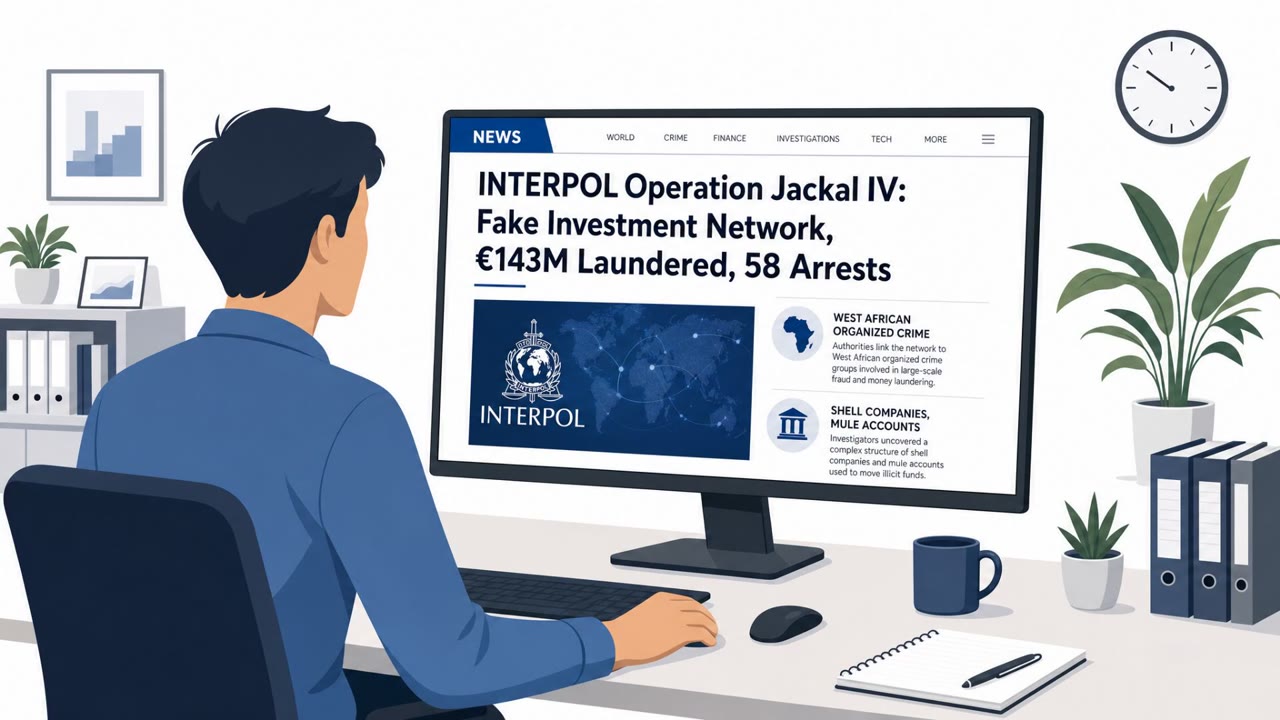
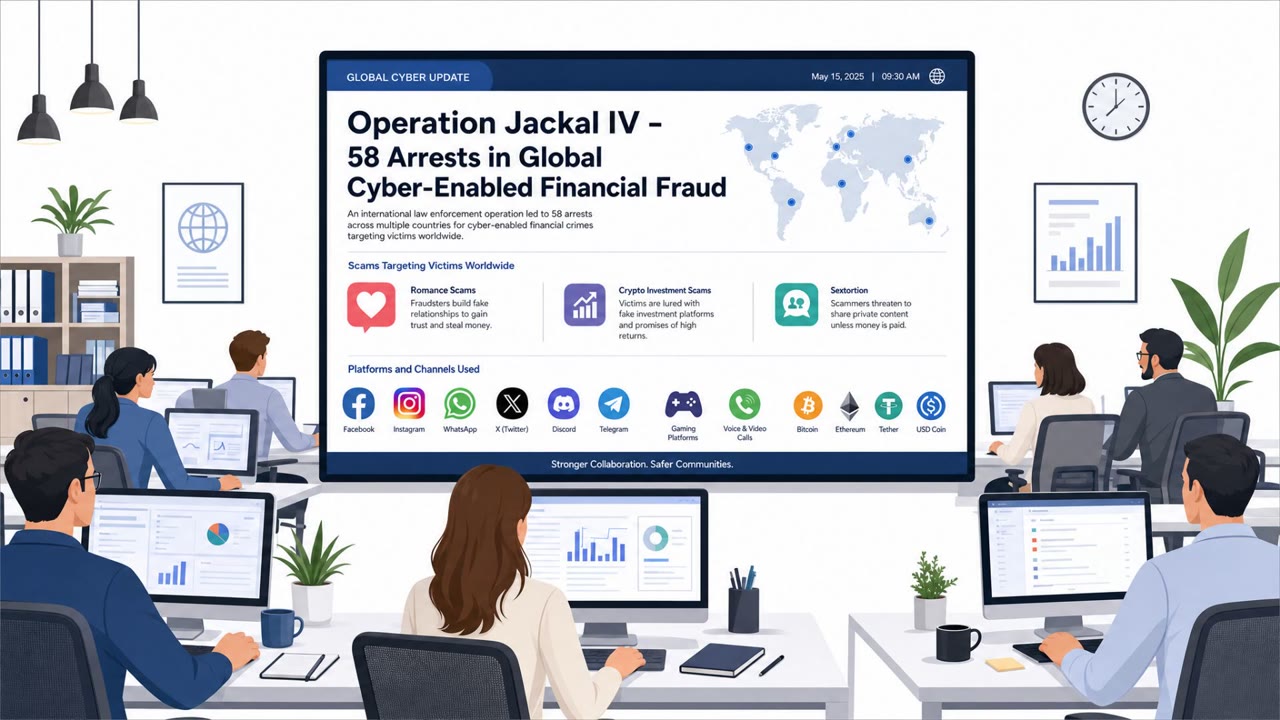
Interpol said Operation Jackal IV arrested dozens and disrupted West Africa–linked criminal networks tied to scams and money laundering, including Black Axe. The cases described include a call-center “investment” scam, romance/investment scams targeting retirees, and sextortion of teenagers on social media, each with clear, repeatable lures for awareness training.
How the Scams Worked
Interpol's Operation Jackal IV disrupted a range of Africa-based organized crime networks, including groups linked to Black Axe. The cases described span three distinct lure types: a call-center investment scam, romance and investment fraud targeting retirees, and sextortion of teenagers on social media. In the investment scam, callers posed as advisors offering high returns in stocks or cryptocurrencies, then directed victims to route payments to electronic wallets controlled by the operators. Separately, a South African syndicate ran romance and investment scams aimed at retirees in English-speaking countries. A Crime-as-a-Service network identified in Argentina is suspected of supplying website domains and laundering support that helped other groups operate.
Why These Lures Succeed
Each scenario relies on a believable authority figure or relationship paired with urgency. The investment pitch uses promises of high returns and time pressure to short-circuit careful evaluation. Romance and investment scams targeting retirees exploit trust built over time before introducing a financial ask. Sextortion escalates quickly from a seemingly innocent online contact to a request for explicit images, then leverages shame and fear to demand payment. In all cases, the request to move money or share sensitive material is framed as private, urgent, and outside normal verification channels.
Red Flags to Watch For
- Unsolicited calls from unknown "advisors" promising high, guaranteed returns
- Pressure to send funds quickly via electronic wallets or cryptocurrency
- Online contacts who escalate rapidly toward secrecy or explicit content
- Threats to release private material unless payment is made
- Vague service offers (such as domain setup or payment routing) that obscure the real purpose of a transaction
Building Resistance
Awareness training should reinforce that unsolicited high-return investment pitches, especially by phone, warrant independent verification before any money moves. Employees and their families should understand sextortion warning signs and know that reporting the attempt, rather than paying, is the recommended response. Because these networks span multiple channels, financial staff, executives, and general employees should all receive scenario-based training covering vishing, romance-style pretexts, and social media grooming. Organizations can also reinforce policies discouraging payments to unfamiliar electronic wallets and encourage staff to flag pressure tactics tied to urgency or secrecy, since those elements recur across each scam type described in this operation.
Key findings
- Interpol reported Operation Jackal IV resulted in 58 arrests and identified 263 suspects connected to Africa-based organized crime groups including Black Axe.
- Romanian authorities broke up a call-center investment scam promising high returns in stocks or cryptocurrencies; police estimated victim losses at 143 million euros.
- South African raids targeted a syndicate running romance and investment scams aimed at retirees in English-speaking countries, seizing millions and blocking hundreds of bank accounts.
- Argentina identified a Crime-as-a-Service network suspected of supplying website domains and laundering support to West African groups.
- Interpol warned of a growing focus on sextortion targeting teenagers on social media, coercing explicit images and demanding payment.
Who’s being targeted
- Commonly targeted roles: Finance, Executives, All employees (general scam awareness), IT, Procurement, Employees with teenagers/families (sextortion awareness).
- Affected industries: Consumer/retail banking (victim accounts), Personal finance and investments, Cryptocurrency / digital wallets, General public (social-media users), Retirees (target demographic).
- Attack channels: vishing, website, linkedin.
- Impersonated: Investment advisor / brokerage representative, Service provider / “web domain” or “payment support” vendor, Peer/romantic interest met online (social media contact).
Red flags to watch for
- Promises of “high returns” with urgency
- Pressure to pay via electronic wallets/crypto
- Unsolicited call from an unknown “advisor”
- Vague service descriptions that hide the real business purpose
- Emphasis on anonymity or laundering/payment routing
- Unusual domain/website setup requests not tied to a legitimate project
- Rapid escalation to sexual content and secrecy
- Threats to share images unless paid
- Contact originates from an unknown or newly created account
Frequently asked questions
What was Operation Jackal IV?
Operation Jackal IV was an Interpol-led effort that resulted in 58 arrests and identified 263 suspects connected to Africa-based organized crime groups, including Black Axe.
How did the investment scam call center operate?
A Romanian call center posed as investment advisors offering high returns in stocks or cryptocurrencies, then directed victims to send funds to electronic wallets controlled by the operators.
What is sextortion and how did it appear in this case?
Sextortion involves coercing victims, in this case teenagers as young as 14, into sharing explicit images on social media and then demanding payment to keep the material private.
What is a Crime-as-a-Service network in this context?
Argentine authorities identified a network suspected of supplying website domains and laundering support to West African groups, enabling other scam operations to function.
Read the video transcript
Interpol just took down Black Axe–linked scam networks, including a call-center “investment team” that stole over 140 million euros. Their script sounds like this: “Hello, I’m calling from an investment team with a time-sensitive opportunity promising high returns in stocks or cryptocurrencies.” Then they push you to send money to an electronic wallet to “start the investment.” Here’s the trap: it’s an unsolicited call, they promise unusually high returns, and they want you to move money fast via crypto or an e-wallet. That exact pattern is what Interpol saw in the busted call center in Romania. If anyone calls you with a “high-return” investment and wants crypto or an e-wallet, hang up and call your own trusted bank or advisor using a number you already know.