Scammers Relaunch Fake Stores in Hours

Help Net Security · High sophistication
Last updated October 30, 2026

Akamai documented scam operations that use large numbers of look-alike shopping and ticketing websites to steal payment and identity information. The operators can quickly replace a removed site with another domain connected to the same payment-data collection system. Other campaigns used social-media adverts and fake recruitment content to send victims to malicious app downloads or phishing forms.

Key findings

  • One retail scam used more than 1,200 look-alike .shop domains on a shared IP address and reused payment-page designs to harvest card data.
  • Fake ticketing and hospitality portals for a major sporting event requested payment details and, in some cases, passport or identity-document information.
  • A documented paid social-media campaign sent consumers to a counterfeit app marketplace where they downloaded a malicious app.
  • Recruitment scams used fake hiring content on major social platforms to direct applicants to phishing forms.
  • Operators can use dormant domains, compromised websites, reused phishing kits, and shared infrastructure to replace removed scam sites within hours.
  • Stolen credentials can be tested across services to access accounts with saved payment methods, rewards points, and personal information.

Who’s being targeted

  • Commonly targeted roles: All employees, Employees who purchase tickets, travel, or hospitality services, Finance and procurement staff, Human resources and recruiting teams, Employees seeking jobs or using personal mobile devices.
  • Affected industries: Retail and e-commerce, Ticketing and hospitality, Sports and entertainment events, Recruitment and hiring, Financial services and payment processing.
  • Attack channels: website.
  • Impersonated: An official ticketing or hospitality portal for a major sporting event, An app marketplace, A recruiter or hiring organization.

Awareness takeaways

  • Use only official, independently verified ticketing and event websites, and treat requests for identity documents during checkout as a warning sign.
  • Do not install apps from links in social-media adverts; obtain mobile apps only through the organization’s approved or official app stores.
  • Verify job opportunities through the employer’s official careers page before submitting personal information.
  • Use unique passwords for every service and enable stronger account protections, because criminals test passwords exposed in other breaches.

Red flags to watch for

  • The site requests passport or identity-document details during a ticket checkout flow.
  • The website may be a look-alike of an official ticketing or hospitality portal.
  • A payment page can be moved to a new domain quickly after the previous site is removed.
  • The advert sends the user to a marketplace that is not an official app store.
  • The downloaded app requests sensitive information or unnecessary device permissions.
  • A paid social-media advert is not proof that an app or marketplace is legitimate.
  • The hiring content directs applicants away from an official careers site to a form.
  • The application asks for sensitive information that is not needed at the initial stage.
  • Recruitment content on social platforms may lead to a phishing form rather than a legitimate application process.
Try Mirage

Mirage safely runs attacks like this one against your own team, so you find out what happens before a real adversary does.

Get a demo
Read the video transcript

That ticket site got taken down? It could be back in hours. Fake sporting-event ticket portals say, ‘Complete your ticket delivery or event access details.’ Then checkout asks for your card and passport. Different sites can feed the same collection system. Here’s the tell: passport details during ticket checkout. Akamai found over 1,200 look-alike .shop stores sharing one IP and reusing payment pages. A new address doesn’t mean a new operation. Need event tickets? Open the organizer’s independently verified official site yourself before entering any details.

MITRE ATT&CK techniques

T1566.002 - Phishing: Spearphishing Link · PhishingT1204.001 - User Execution: Malicious Link · User ExecutionT1204.002 - User Execution: Malicious File · User ExecutionT1583.001 - Acquire Infrastructure: Domains · Acquire InfrastructureT1110.004 - Brute Force: Credential Stuffing

Similar attacks

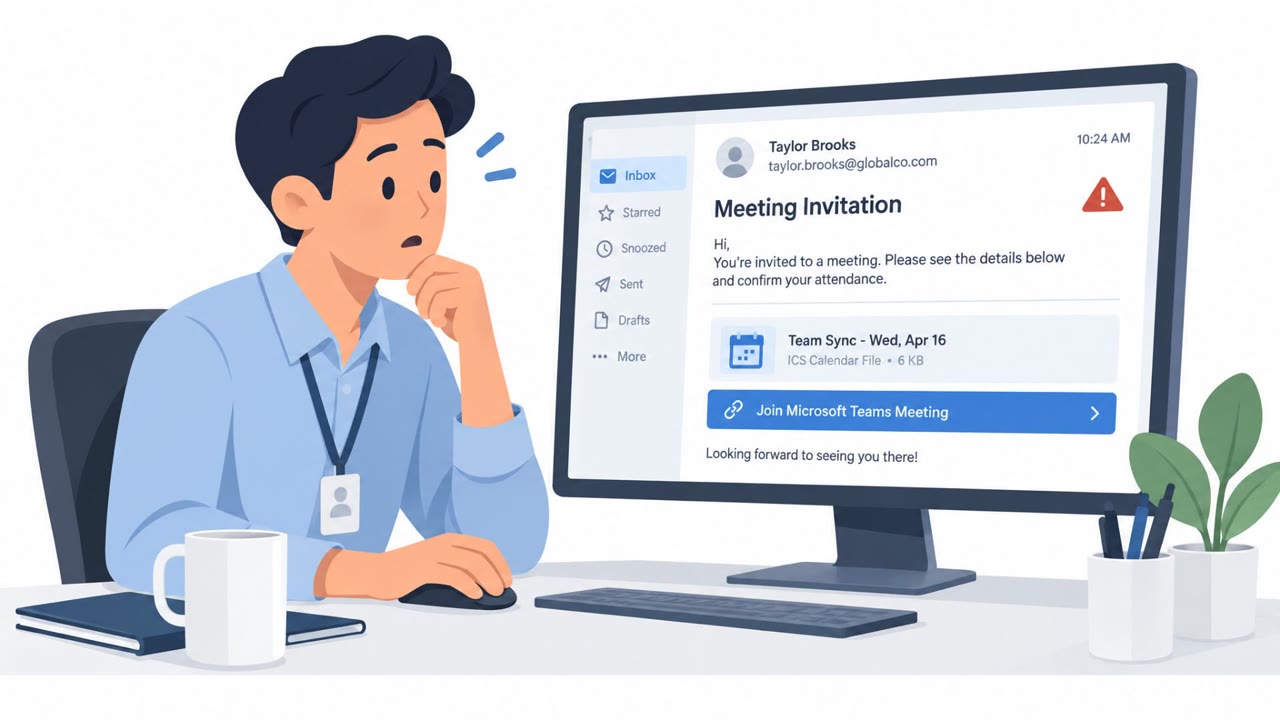
Fake Calendar Invites Steal Microsoft Logins

Fake Calendar Invites Steal Microsoft Logins

Check Point researchers identified a large credential-phishing campaign that used counterfeit calendar invitations to send people to fake Microsoft sign-in pages. The campaign used calendar attachments and deceptive meeting links, and targeted more than 40,000 organizations with over 302,000…

October 19, 2026
OAuth Phishing Turns MFA Into a Bypass

OAuth Phishing Turns MFA Into a Bypass

Attackers are using real OAuth sign-in and consent flows to steal access tokens or trick users into authorizing malicious apps. Because the victim signs in through a legitimate identity provider and completes MFA, attackers can gain durable access that may survive password resets. The article…

October 22, 2026
Attackers Hide Malware in Trusted Email Threads

Attackers Hide Malware in Trusted Email Threads

Threat actors are hijacking existing email conversations, or patiently starting new ones, to build trust before sending a malicious reply. The final message commonly poses as a meeting invitation, secure message, shared file, or important document and leads to credential theft or remote-access…

October 21, 2026
AI-Crafted Emails Hide the Usual Warning Signs

AI-Crafted Emails Hide the Usual Warning Signs

Proofpoint described real campaigns where attackers used highly tailored, AI-style messages to make phishing and payment fraud requests appear routine. Examples included property enquiries that led to malicious meeting invitations, device-code phishing pages disguised as business services, and fake…

October 21, 2026
Fake Bid Emails Abuse Microsoft Device Codes

Fake Bid Emails Abuse Microsoft Device Codes

Cofense analyzed real phishing emails disguised as bidding invitations. The emails send recipients to fake, branded login and device-enrollment pages, then trick them into entering a device code in a genuine Microsoft prompt. Doing so can authorize an attacker’s session without giving them the…

October 20, 2026
Hijacked CDU Mailbox Sends 6,500 Phishing Emails

Hijacked CDU Mailbox Sends 6,500 Phishing Emails

Attackers broke into the email account of a CDU Heilbronn district executive and used the trusted mailbox to send roughly 6,500 fake messages. The emails used an event invitation as a lure and directed recipients to a link for a supposed document, making this a credible internal-email phishing…

October 17, 2026