Scattered Spider Used Smishing and SIM Swaps

Malwarebytes · High sophistication
Last updated November 19, 2026

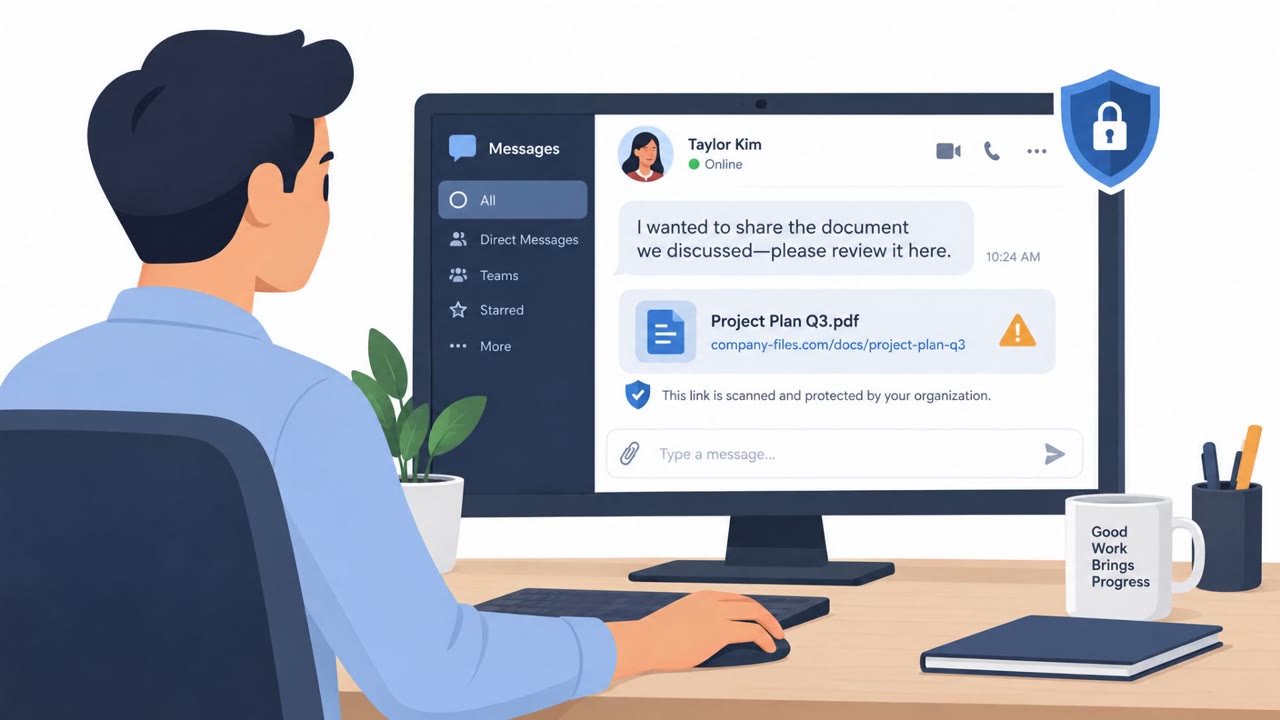
A Scattered Spider member received a six-year prison sentence for a campaign that used fake work-related text messages and SIM swaps to steal credentials and more than $11.6 million in cryptocurrency. The group impersonated employers or IT-support contractors, directing employees to fake company websites that captured usernames and passwords. The same operation used stolen phone numbers to intercept SMS authentication codes and take over cryptocurrency accounts.

Key findings

  • Scattered Spider sent hundreds of SMS phishing messages to employees at at least a dozen companies.
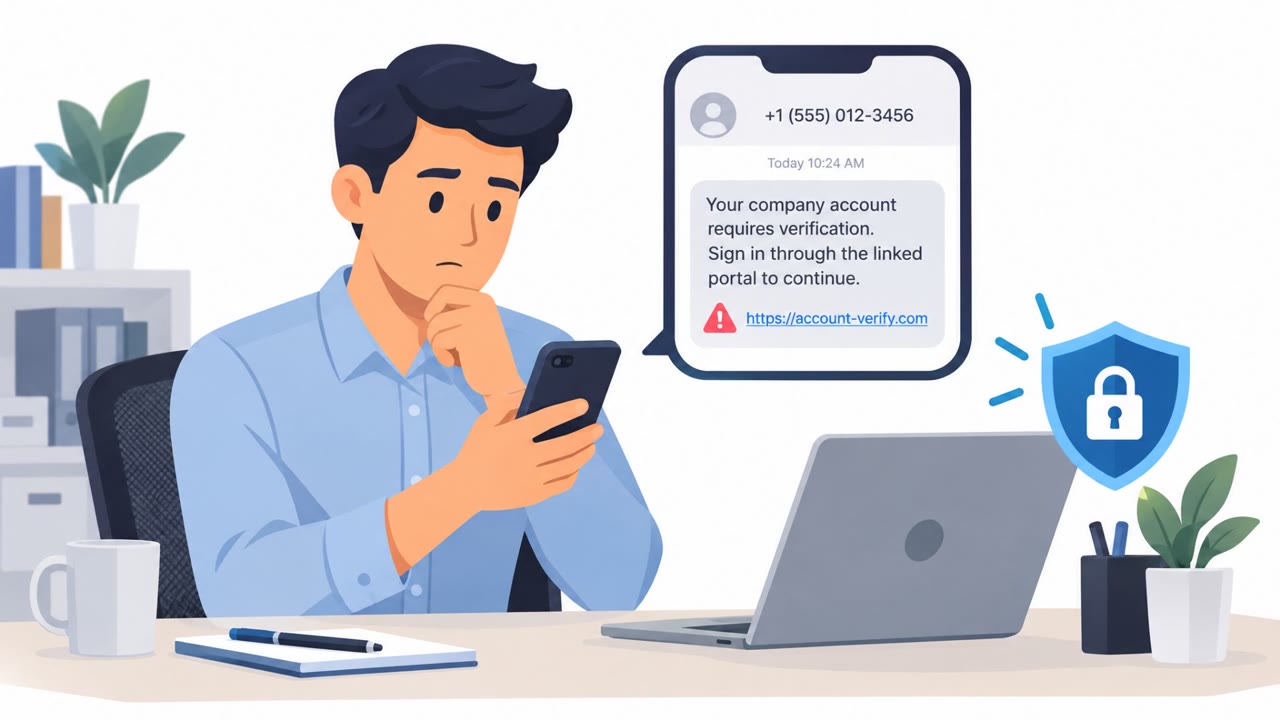
  • The messages impersonated an employer or a contractor such as an IT-support provider and linked to fake company websites.
  • The phishing websites were designed to steal usernames and passwords, which the group used to access company systems.
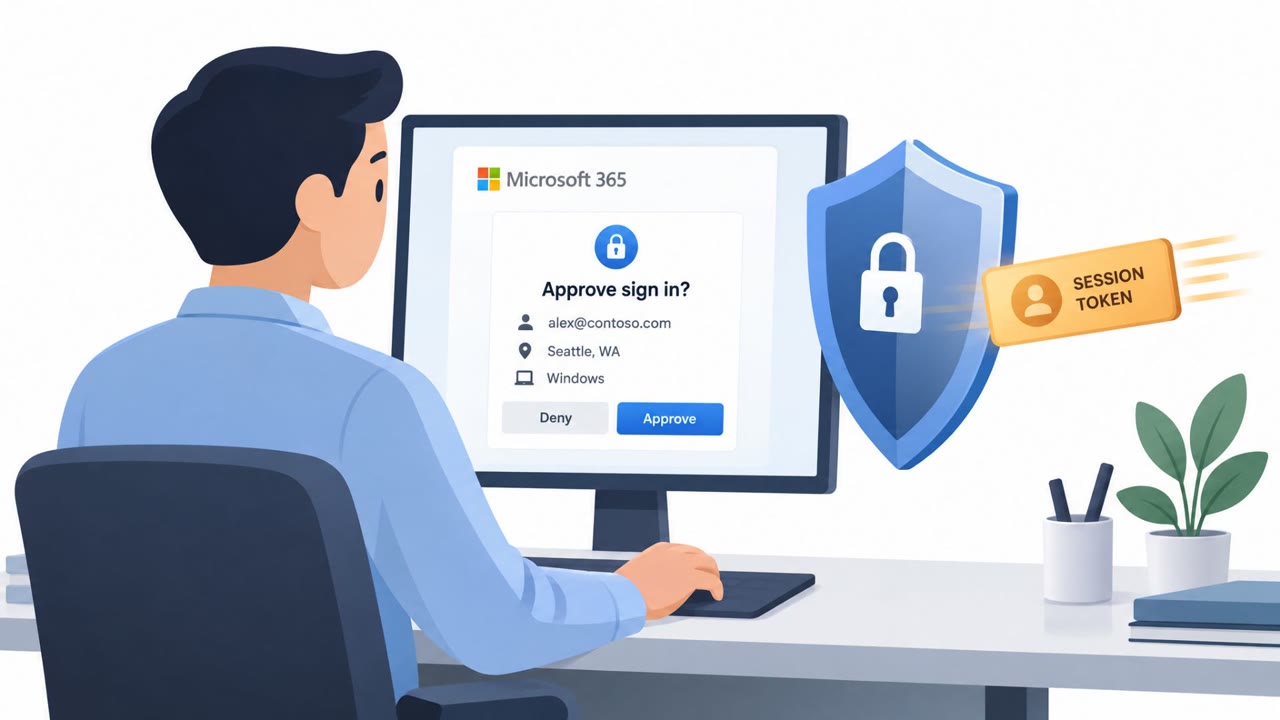
  • SIM swaps enabled the criminals to receive victims' calls and SMS messages, including authentication codes.
  • The group used SIM-swapped phone numbers to take over cryptocurrency accounts and wallets, stealing more than $11.6 million.

Who’s being targeted

  • Commonly targeted roles: All employees, IT support and service desk teams, Mobile carrier customer-service teams, Finance and cryptocurrency account holders, Employees with access to sensitive company systems.
  • Affected industries: Information and communications technology services, Financial services, Cryptocurrency services, Transportation, Insurance.
  • Attack channels: smishing, website, vishing.
  • Impersonated: The employee's employer or its IT support provider, The victim requesting mobile-number transfer service.

Awareness takeaways

  • Treat unexpected work-related text messages with links as suspicious, especially messages claiming to come from IT support or a company contractor. Access work services through known bookmarks or official apps rather than the texted link.
  • Protect mobile numbers with a carrier account PIN, port-out lock, or number-transfer protection.
  • Use an authenticator app, passkey, or security key instead of SMS-based authentication when possible.
  • Do not approve sign-in prompts that you did not initiate; report them to the security team or service provider.

Red flags to watch for

  • An unsolicited text asks the recipient to use a link to access a work system.
  • The message arrives by SMS while impersonating an employer or IT-support provider.
  • The linked site is an imitation of the company website and requests credentials.
  • An unexpected request seeks to transfer or port a phone number.
  • The caller cannot be reliably verified as the account holder.
  • A phone-number change can allow the requester to receive authentication codes.
Try Mirage

Mirage safely runs attacks like this one against your own team, so you find out what happens before a real adversary does.

Get a demo
Read the video transcript

A text from IT says, “Sign in to your work account.” That’s smishing. Scattered Spider posed as employers and IT contractors, texting links to look-alike company sites that collected usernames and passwords. Here’s the twist: they also SIM-swapped phone numbers, so SMS login codes went to them. That helped them take over crypto accounts and steal over eleven million dollars. The giveaway? IT sent a login link by text. Skip the link; open your work app directly.

Similar attacks

Scattered Spider Phishing Ring Gets Prison Term

Scattered Spider Phishing Ring Gets Prison Term

A Scattered Spider member was sentenced to six years in prison for a campaign that used SMS phishing sites impersonating victim companies and their IT or business-process suppliers. Employees who entered credentials on the fake sites gave the group access to company systems; the stolen information…

November 18, 2026
Revolut Users Hit With SMS Phish After Breach

Revolut Users Hit With SMS Phish After Breach

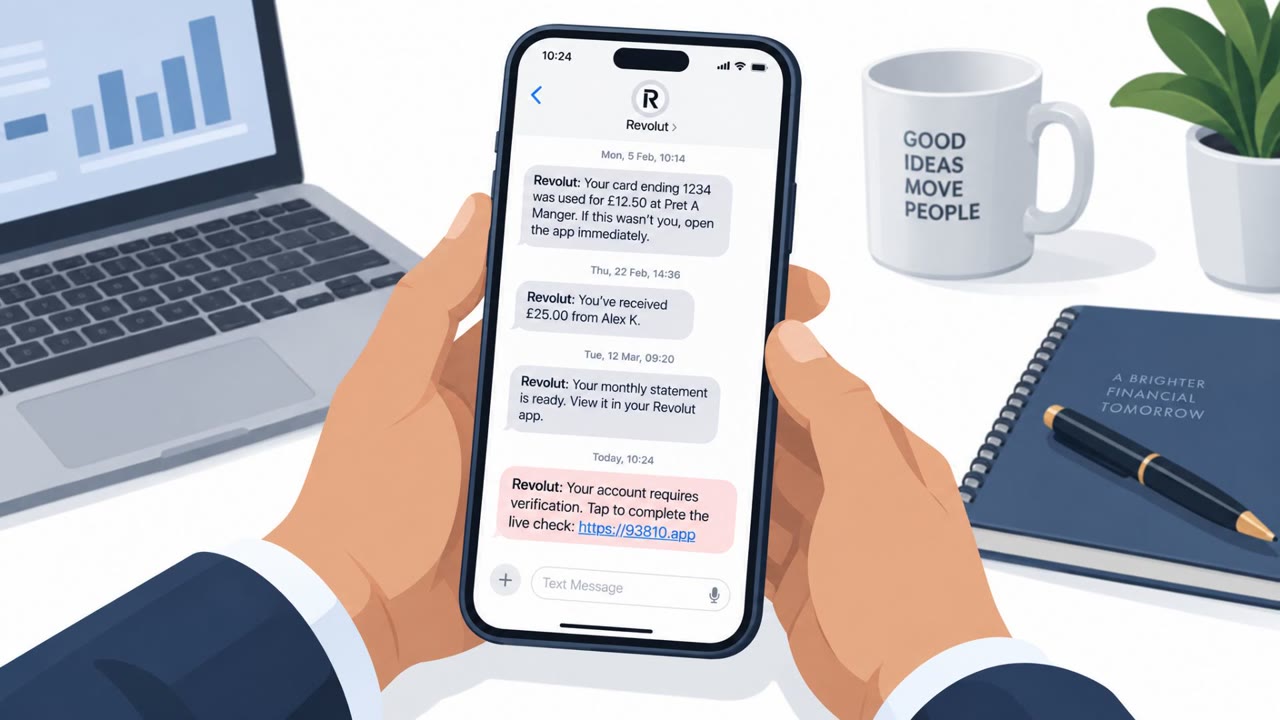
Days after Revolut disclosed that customer records were shared with an unauthorized party, some customers reported receiving phishing texts that appeared in the same SMS thread as real Revolut messages. The link led to a fake site that asked for camera access to mimic Revolut’s identity “liveness”…

September 17, 2026
COLD RELIC Turns Stolen Trust Into Phishing

COLD RELIC Turns Stolen Trust Into Phishing

Russian espionage group COLD RELIC used stolen employee identities, contact lists, and business context from one cloud breach to convincingly target people at other organizations. It impersonated known professional contacts over a secure messaging app, then sent phishing links that led to relevant…

November 17, 2026
ClickFix Lures Lead to Stolen Logins in Minutes

ClickFix Lures Lead to Stolen Logins in Minutes

Elastic researchers documented real intrusions in which attackers used deceptive verification pages, fake invitations, and phishing sign-in workflows to gain access. In confirmed infostealer cases, attackers used stolen credentials an average of eight minutes after infection, and one healthcare…

November 9, 2026
Stolen Microsoft Sessions Fuel Email Takeovers

Stolen Microsoft Sessions Fuel Email Takeovers

Attackers used fake Microsoft sign-in pages to capture already-authenticated Microsoft 365 sessions, then replayed those sessions to enter business accounts without passwords or new MFA prompts. The campaign affected 79 organizations and expanded access by registering rogue devices, changing MFA…

October 27, 2026
Fake Amazon Music Deal Steals Creator Logins

Fake Amazon Music Deal Steals Creator Logins

A phishing campaign targets YouTube creators with a fake, invite-only Amazon Music advertising deal. The fraudulent site uses each creator’s real public channel statistics to appear legitimate, then places a fake Google sign-in screen over the page to capture Google passwords and multi-factor…

October 21, 2026