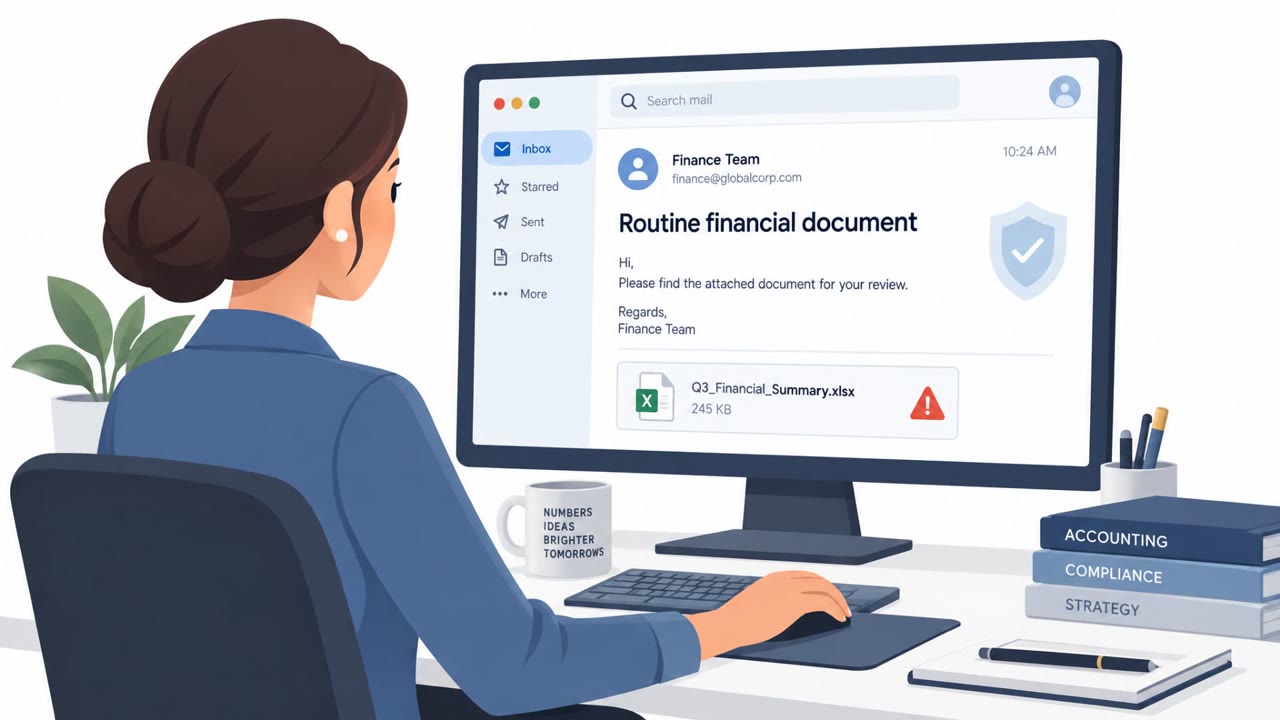
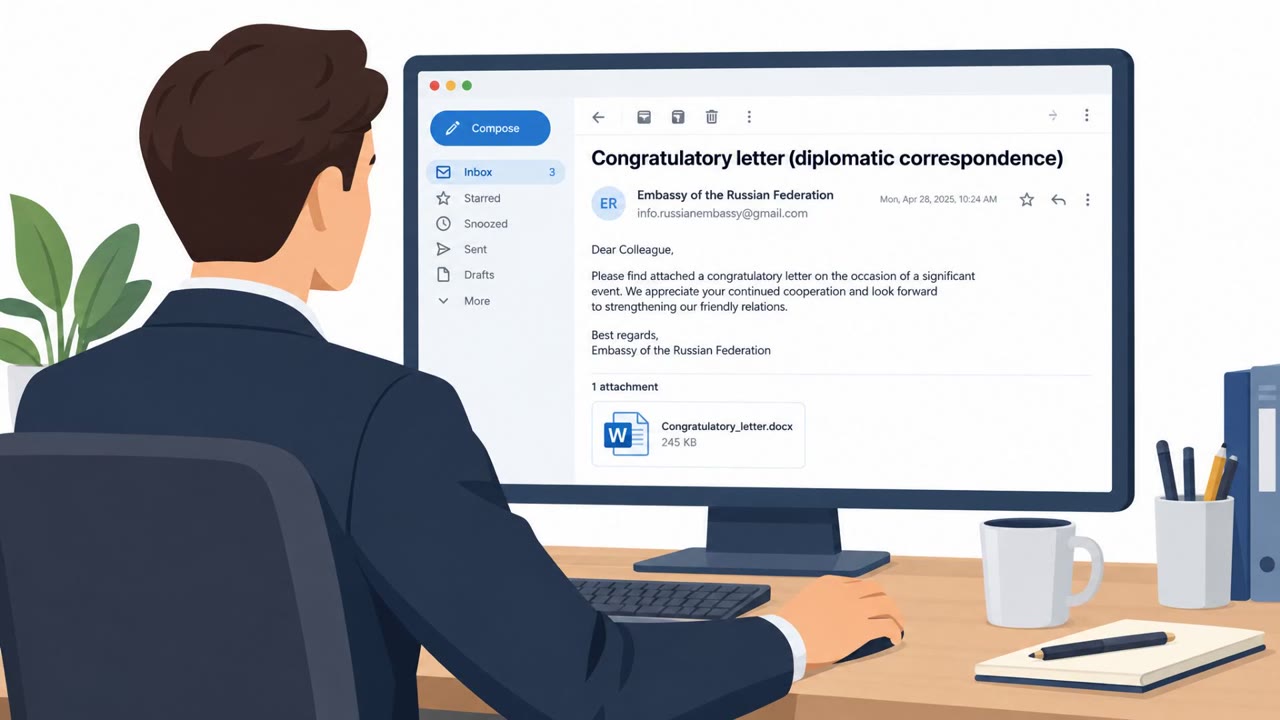
Russian police arrested three suspected VasyGrek members after the group allegedly stole money from an organization through a phishing email. The attackers disguised the message as routine business correspondence and asked recipients to open a reconciliation report, which ran malware and enabled a bank-account theft. The group has reportedly targeted industrial, government, healthcare, energy, finance, and agriculture organizations across Russia, Belarus, and Kazakhstan.
Key findings
- VasyGrek, also known as Fluffy Wolf, allegedly sent a phishing email disguised as business correspondence in September 2025.
- The email instructed recipients to open a reconciliation report, triggering malware execution.
- The reported incident led to the theft of 660,000 rubles, approximately $8,000, from an organization's bank account.
- The group used phishing domains impersonating financial and accounting service websites and used remote-administration tools.
- Kaspersky recorded more than 100 attempted VasyGrek attacks against organizations in Russia, Belarus, and Kazakhstan between January and September 2026.
- Frequently targeted sectors included metallurgy, wholesale industrial supply, government, healthcare, oil and gas, energy, finance, and agriculture.
Who’s being targeted
- Commonly targeted roles: Finance, Accounting, Accounts Payable, Procurement, Operations, Government employees, Manufacturing and industrial staff, Healthcare administration, Energy and oil-and-gas staff.
- Affected industries: Metallurgy and manufacturing, Wholesale suppliers of raw materials and industrial supplies, Government, Healthcare, Oil and gas, Energy, Finance, Agriculture.
- Attack channels: email.
- Impersonated: A business contact or financial/accounting service.
Awareness takeaways
- Treat unexpected reconciliation reports and other financial attachments as suspicious, particularly if you were not expecting them. Confirm the request with the known sender through a trusted contact method before opening the file.
- Verify the real web address and sender identity for finance and accounting communications. Attackers can use lookalike domains to appear to be legitimate services.
- Finance teams should report suspected phishing immediately, because a single opened attachment can lead to fraudulent payments or theft from company accounts.
- Do not assume a familiar-looking business document is safe. Criminals may use legitimate online services and multi-step delivery methods to conceal malicious content.
Red flags to watch for
- An unexpected financial document arrives without a prior request or expected business context.
- The sender appears to be a financial or accounting service but the email or linked domain may be an imitation.
- Opening an attachment is requested urgently or with little explanation.
Read the video transcript
“Please open the attached reconciliation report.” Sound routine? That was VasyGrek’s pitch. In one reported case, opening the file ran malware. The organization lost 660,000 rubles, about eight thousand dollars, from its bank account. The giveaway isn’t a typo. It’s a financial report you never requested, with barely any explanation. Even the sender’s accounting-service domain can be a lookalike. Unexpected reconciliation report? Before opening it, call your known contact using a number you already have.