Researchers uncovered a commercial phishing-kit-as-a-service called “Iron Man System” that lets criminals quickly deploy fake brand pages (postal/courier, toll fines, tax, banks, telecoms, loyalty programs) to steal victim data. The operation appears active and professionally maintained, with thousands of ready-made templates and a vendor-controlled licensing backend that buyers’ deployments must contact to work. Microsoft and partners reportedly disrupted parts of the supporting infrastructure.
How the Attack Worked
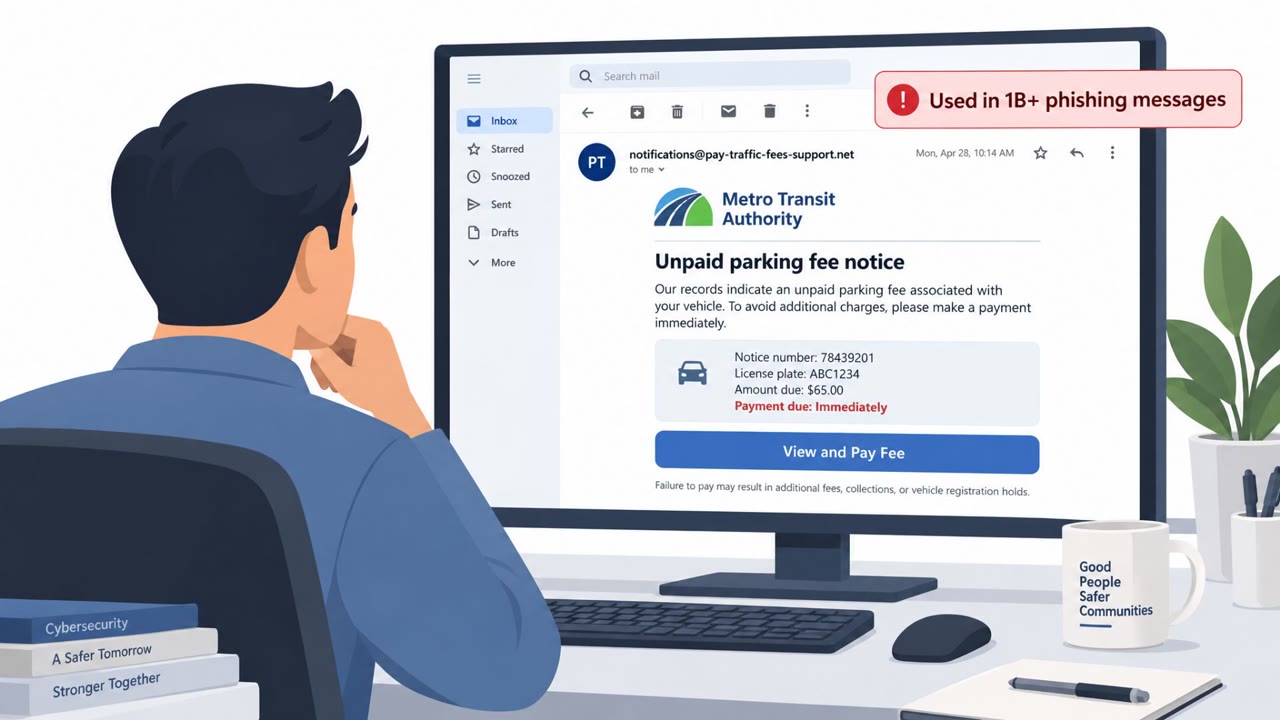
The Iron Man System is a phishing-kit-as-a-service sold to criminals rather than a single targeted campaign. Buyers receive a self-hosted package containing thousands of pre-built lure pages impersonating postal and courier services, toll and traffic-fine authorities, tax agencies, banks, telecoms, and loyalty programs. These pages are designed to look like legitimate portals and to capture whatever data a victim submits, including payment details and personal information.
Resecurity found 2,360 phishing templates spread across 130 countries, suggesting the kit is used broadly rather than against a narrow set of targets. A lab deployment showed a management panel, version 6.3.1, with a license countdown and a list of active lure instances impersonating organizations such as a European parking-fine operator and a Japanese payment service.
Why It Succeeded
The kit's effectiveness comes from its scale and professionalism rather than technical novelty. Because templates mimic trusted entities like government agencies, banks, and courier services, victims are primed to respond quickly to urgent-sounding notices such as fine payments or account verification requests. The operation also appears to be actively maintained, with new catalog additions indicating ongoing sales and updates, meaning lure pages can stay current and convincing over time.
A notable structural detail is that deployments rely on vendor-operated infrastructure for licensing and authorization. This centralized dependency is what allowed researchers and partners to identify and disrupt supporting infrastructure, even though the kit itself is distributed to many independent buyers.
What to Watch For
- Unexpected fines, tolls, or
Key findings
- A commercially sold phishing-kit-as-a-service (“Iron Man System”) is marketed to criminals as a self-hosted package with pre-built lure pages that impersonate many types of trusted organizations.
- Resecurity reports finding “2,360 phishing templates… across 130 countries” and describes the operation as active and frequently updated.
- The kit appears to depend on vendor-operated infrastructure for licensing/authorization, meaning defenders can potentially disrupt many buyer deployments by taking down or sinkholing those backend services.
- Resecurity identified specific infrastructure supporting licensing, telemetry/logging, a build registry (container images), and object storage used by the ecosystem.
Who’s being targeted
- Commonly targeted roles: All employees, Finance, Customer Support, HR (general awareness), Executive assistants.
- Affected industries: Government agencies (tax, police, traffic/parking authorities), Financial services (banks, payment services), Transportation and logistics (postal/courier services), Telecommunications, Retail and loyalty programs, Healthcare.
- Attack channels: website.
- Impersonated: Traffic/parking-fine authority (European parking-fine operator), Japanese payment service.
Red flags to watch for
- Unexpected fine/payment demand designed to create urgency
- Payment page URL/domain does not match the real authority
- Request for excessive personal or payment data on a generic-looking page
- Unsolicited account verification prompt
- Lookalike login page hosted outside the real payment provider’s domain
- Requests for additional details beyond normal login
Frequently asked questions
What is the Iron Man System phishing kit?
It is a commercially sold phishing-kit-as-a-service that lets buyers deploy pre-built lure pages impersonating postal services, tax agencies, banks, telecoms, and other trusted organizations to steal victim data.
How widespread was this phishing operation?
Resecurity reported finding 2,360 phishing templates across 130 countries, describing the operation as active and frequently updated.
Can defenders disrupt this kind of phishing-as-a-service?
Yes. Because the kit depends on vendor-operated licensing infrastructure, taking down or sinkholing those backend services can potentially disable many buyer deployments at once.
What kinds of lures did this kit use?
Simulated lures included fake parking/traffic-fine payment portals and lookalike payment-service login pages, both designed to capture payment details and personal information.
Read the video transcript
You get a popup: “Parking fine payment required, pay online to avoid penalty.” Looks like your local traffic authority… but it isn’t. Behind that page could be the “Iron Man System”, a phishing kit with 2,360 templates across 130 countries, churning out fake portals for parking fines, tax, banks, and telecoms to grab whatever you type. One click takes you to a lookalike payment page: maybe a Japanese payment service, maybe your bank. The layout looks right, but the URL is off and it asks for way too much personal and payment data. If you get an unexpected fine or “verify your account to pay” message, don’t click. Close it, then go to the official site yourself by typing the address in the browser.