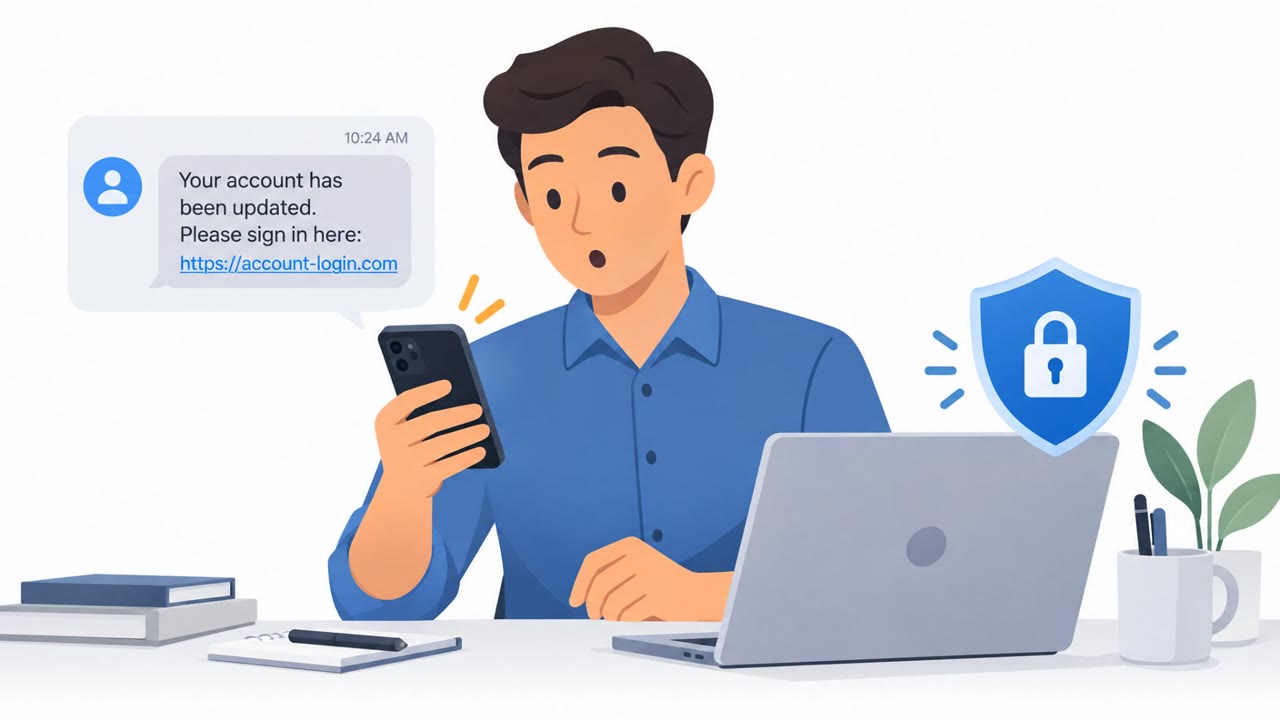
Okta and ReversingLabs link the O-UNC-053 crew to voice-phishing campaigns that steal single sign-on credentials, take over accounts, and support data theft and extortion. The group uses legal-themed domains and target-specific fake sign-in pages, often imitating the victim’s Okta login page, before calling employees rather than sending traditional phishing emails.
Key findings
- Okta tracks O-UNC-053 as a cluster conducting social-engineering and credential-harvesting campaigns since March 2026.
- The crew uses voice phishing to obtain single sign-on credentials, leading to account takeovers, data theft, and extortion.
- Its campaigns use legal-themed lure domains, but the domains lack email-related DNS records, supporting the assessment that victims are contacted by phone rather than email.
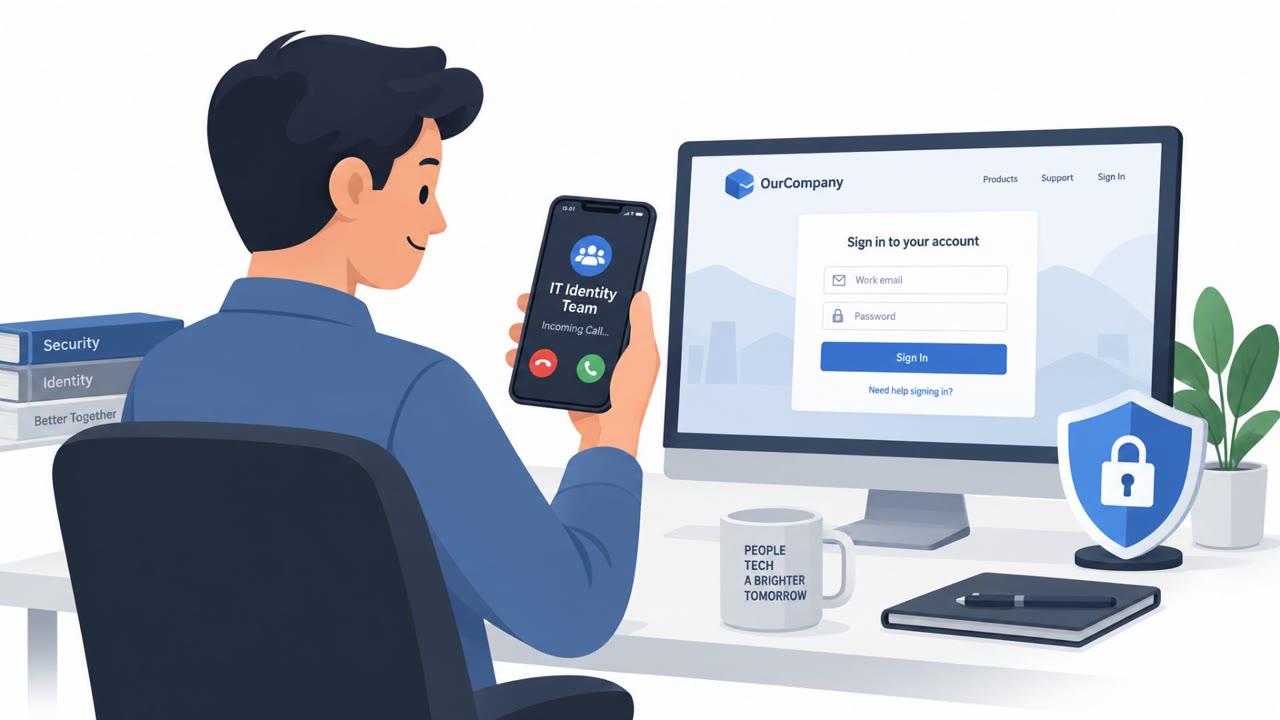
- Fake login pages are tailored to each target’s identity provider; most imitate Okta, while a Lucid Motors kit imitated NetIQ/OpenText Access Manager.
- The group’s infrastructure filters unwanted visitors and redirects them to the real victim authentication service.
Who’s being targeted
- Commonly targeted roles: All employees with SSO access, IT and identity teams, Help desk and service desk staff, Legal and compliance teams, Finance and executive assistants.
- Affected industries: Technology, Healthcare, Biotechnology, Financial services, Insurance, Entertainment, Gaming, Retail, Transportation, Hospitality, Legal services.
- Attack channels: vishing, website.
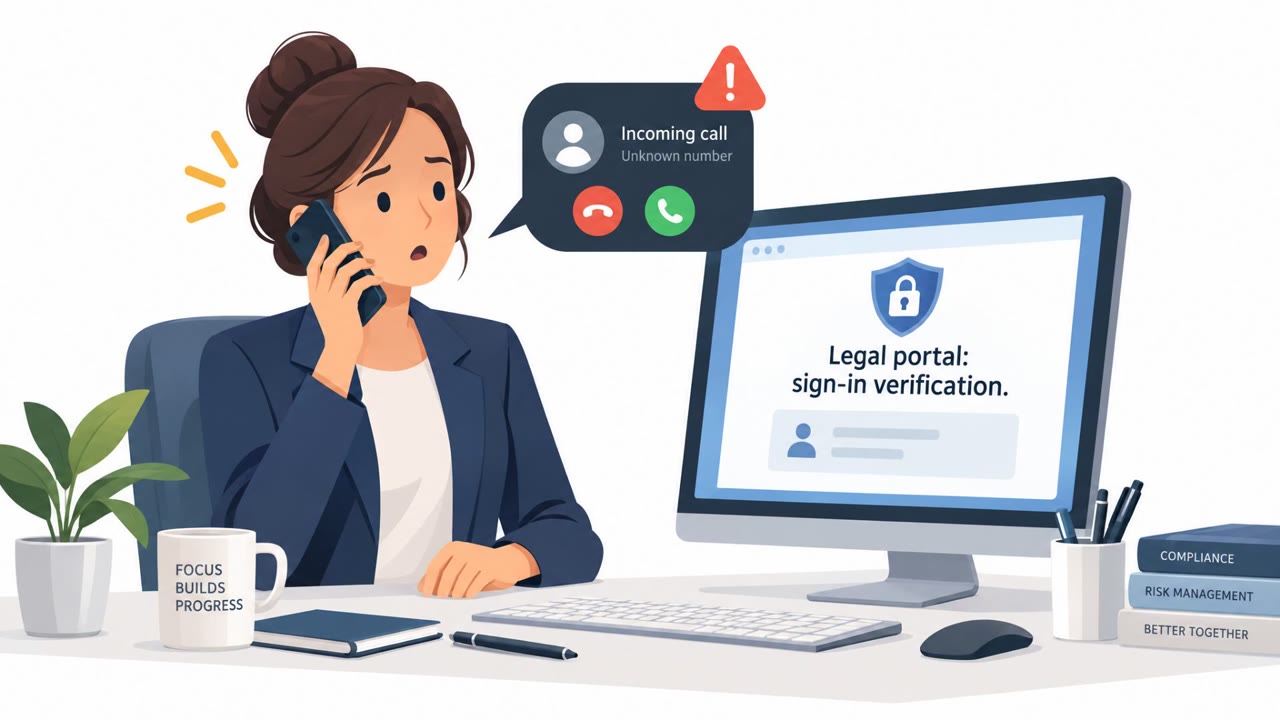
- Impersonated: Legal or compliance-related contact using a legal-themed campaign, The target organization’s identity or sign-in service.
Awareness takeaways
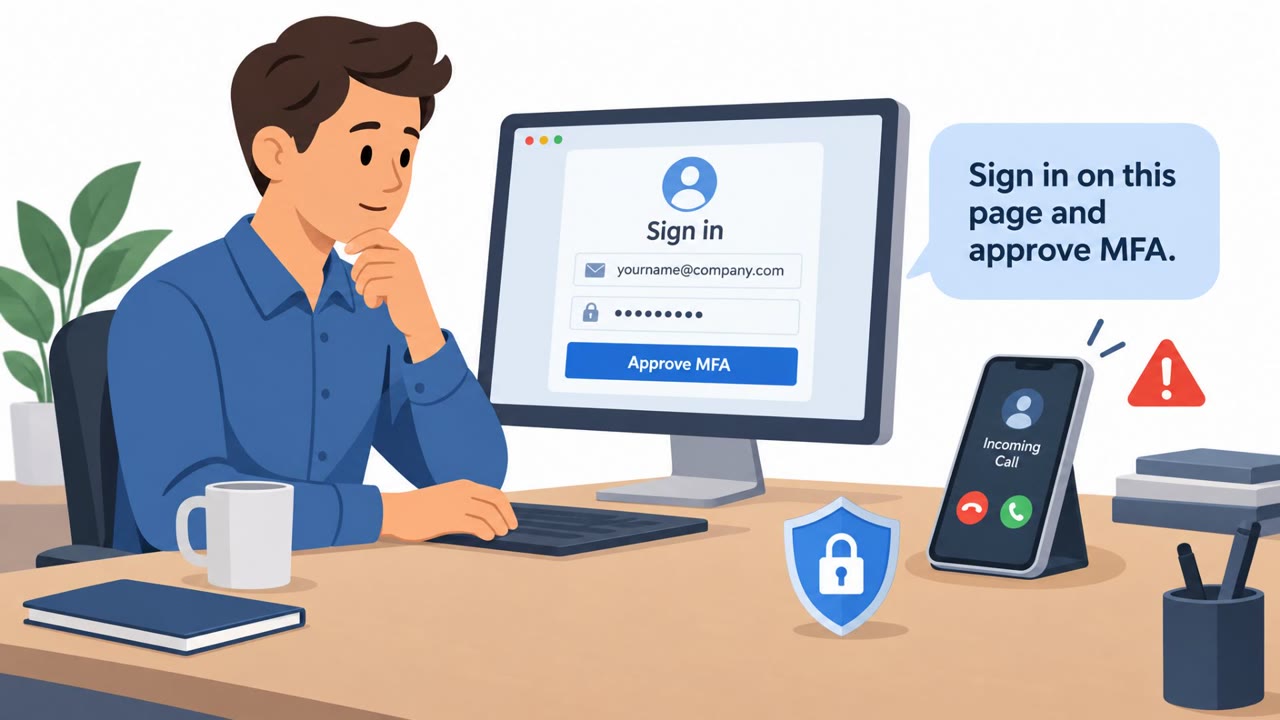
- Treat unsolicited calls asking you to sign in to a site as suspicious, even when the page resembles your normal company login.
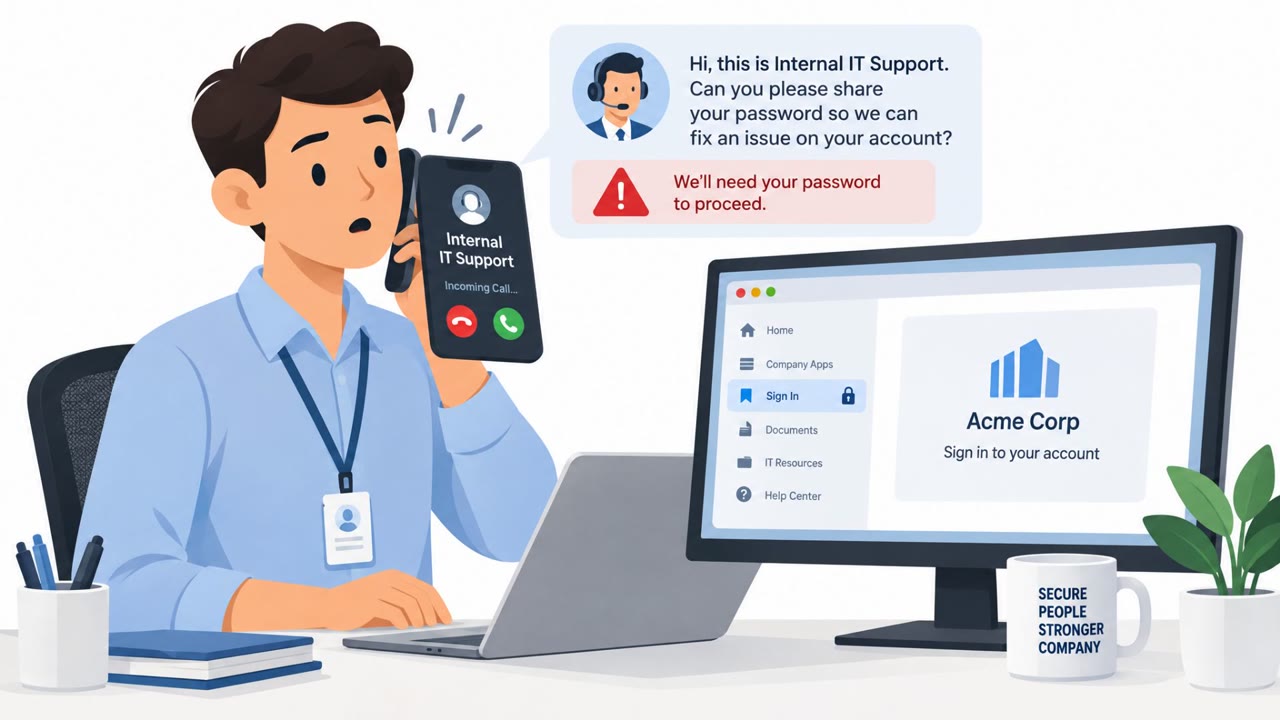
- Independently verify legal, compliance, or account-related requests using a known company contact method rather than following a caller’s instructions.
- Use phishing-resistant sign-in methods such as passkeys or FIDO2 security keys, especially for single sign-on accounts.
- Report unexpected MFA changes or unusual sign-in prompts immediately, as they may signal an account takeover attempt.
Red flags to watch for
- An unexpected caller creates urgency around a legal matter.
- The caller asks the employee to sign in through a link or site supplied during the call.
- The sign-in page may look familiar but was reached through an unsolicited phone interaction.
- A phone caller, rather than a normal company workflow, asks for sign-in activity.
- The page may imitate Okta or another familiar identity provider.
- The campaign is designed to capture credentials even though the page looks tailored to the company.
Read the video transcript
“Legal matter. Please sign in.” That’s the phone pitch. O-UNC-053 uses vishing, not email, to send you to a legal-themed site. It shows a company-specific sign-in page, often copied from Okta, to capture your work credentials. Here’s the tell: the login looks normal, but the caller chose the site. They’ve even built a Lucid Motors page copying NetIQ/OpenText Access Manager. Don’t use the caller’s site. Hang up and call your legal team using your company directory.