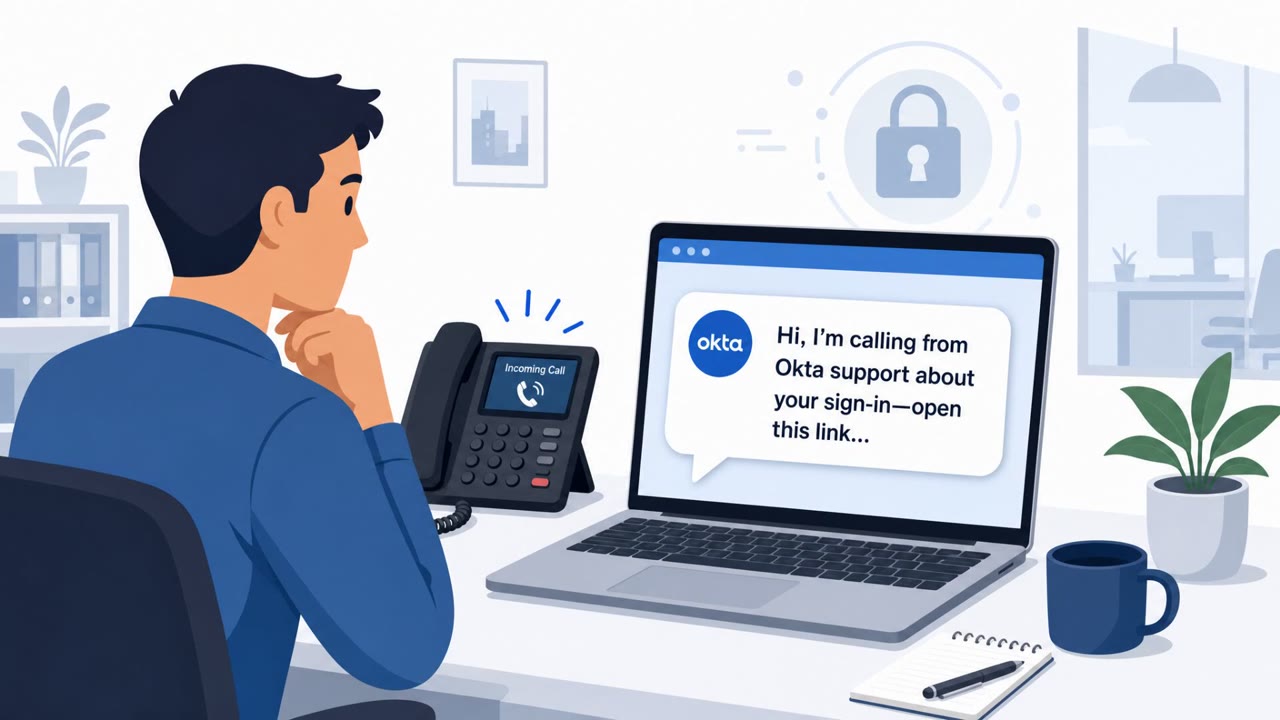
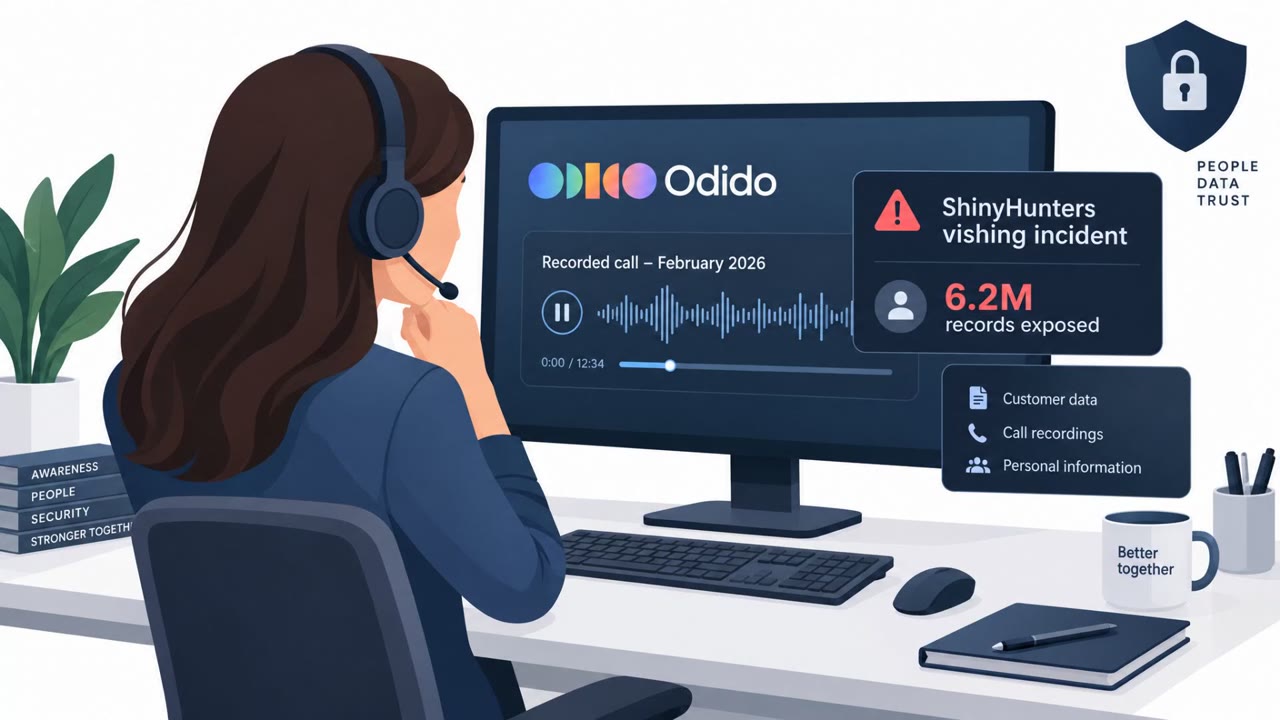
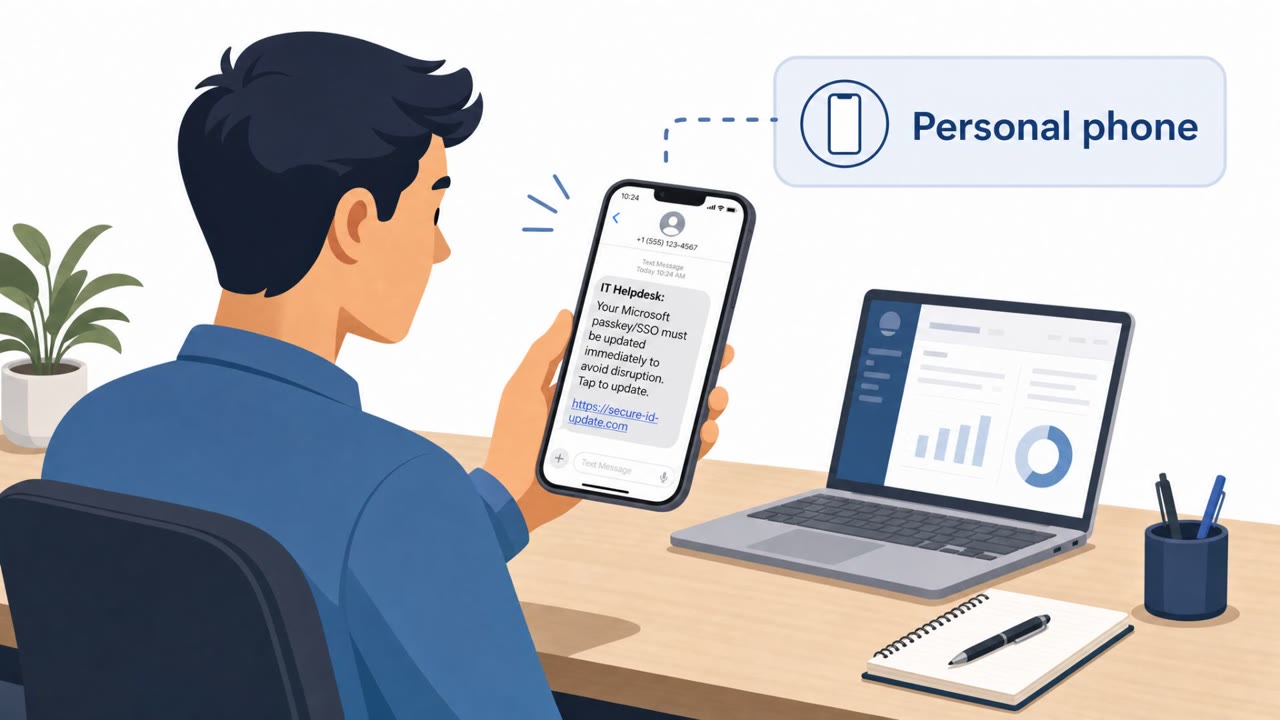
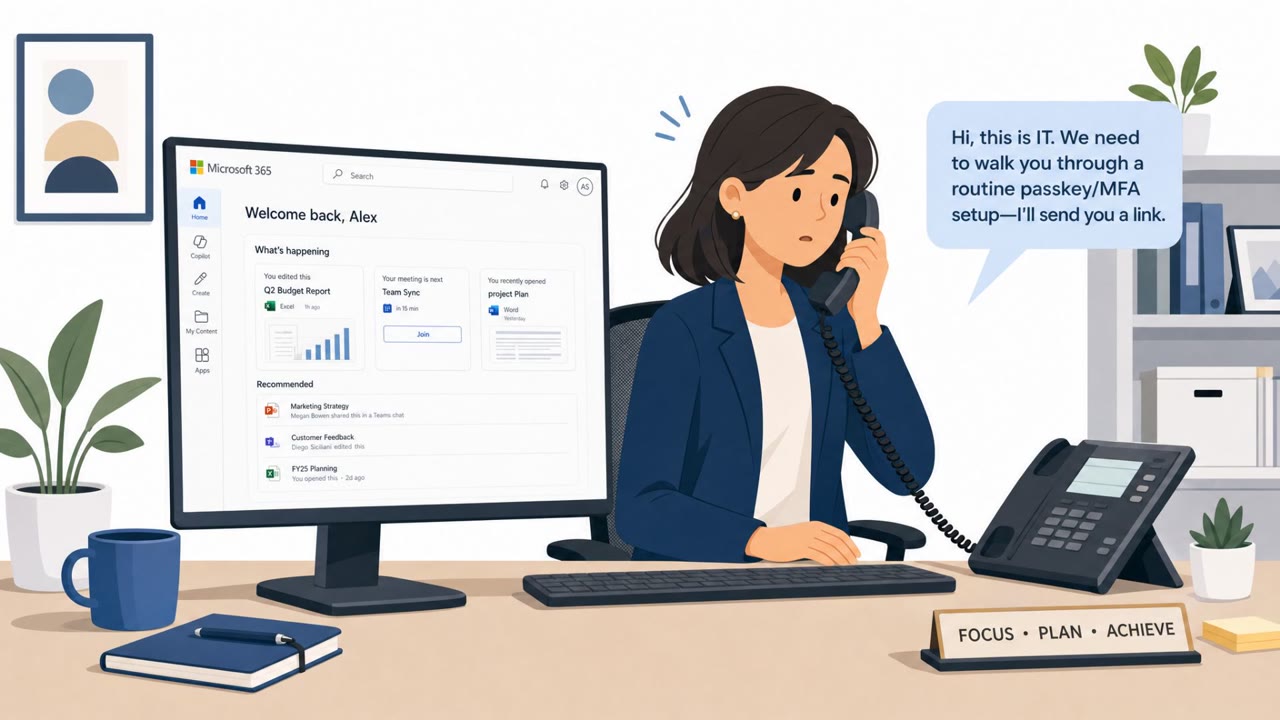
Okta links the active O-UNC-053 vishing cluster, previously associated with ShinyHunters leaks, to the INCEPTION extortion brand. The group calls employees and persuades them to enter credentials, share one-time codes, or approve MFA prompts on phishing pages tailored to the target’s identity provider. Its recent campaigns use target-specific legal-themed domains such as legal-<target>.com.
Key findings
- O-UNC-053 uses phone-based social engineering to convince targets to submit credentials and approve MFA prompts on phishing pages.
- The group’s phishing kit captures credentials and MFA codes but is not designed to bypass phishing-resistant authentication such as passkeys and Okta FastPass.
- Since October 2026, the group has used target-specific legal-themed domains, including patterns such as legal-<target>.com and <target>-legal.com.
- Earlier campaign waves used help desk, support, and claims themes.
- Landing pages are tailored to each target’s identity provider; the infrastructure filters visitors and redirects non-targeted visitors to legitimate sign-in pages.
- Okta says successful attacks lead to SaaS account access, sensitive-data theft, and extortion through leak sites.
Who’s being targeted
- Commonly targeted roles: All employees, SaaS application users, Finance and insurance staff, Healthcare staff, IT service desk and support teams, Legal department staff, Executives, Identity and access management administrators.
- Affected industries: Technology, Healthcare, Biotechnology, Financial services, Insurance, Entertainment, Gaming, Retail, Transportation, Hospitality, Legal services, Cryptocurrency.
- Attack channels: vishing, website.
- Impersonated: An unspecified legal department or legal representative using the target organization's name, An unspecified help desk, support, or claims representative.
Awareness takeaways
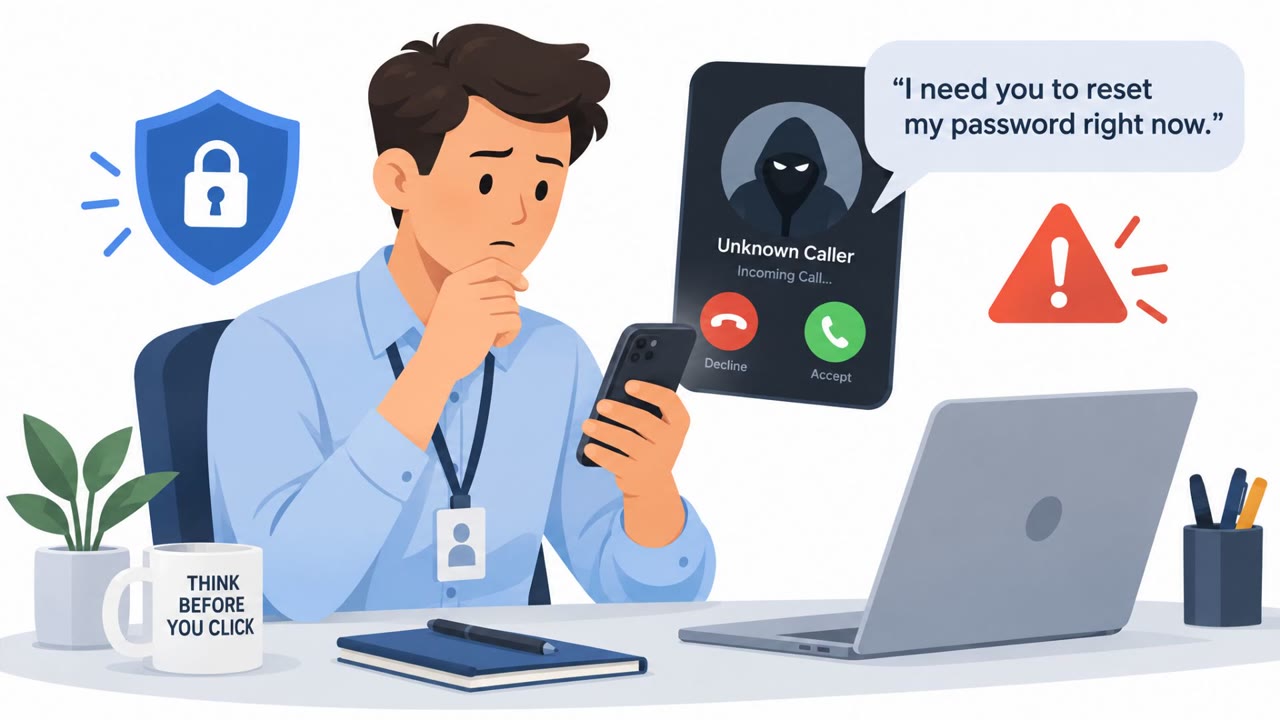
- Never share one-time passcodes or approve an MFA prompt that you did not initiate, even if the caller claims to be from legal or support.
- Treat legal-, help-desk-, support-, and claims-themed sign-in requests as suspicious when they arrive unexpectedly; independently contact the claimed department using a known internal channel.
- Check the complete sign-in address before entering credentials, especially where a domain combines your company name with words such as 'legal.'
- Use phishing-resistant sign-in methods where available, because this observed kit was not designed to defeat passkeys or Okta FastPass.
Red flags to watch for
- The caller asks for a one-time passcode or asks the employee to approve an unexpected MFA prompt.
- The sign-in site uses a lookalike legal-themed domain rather than the organization’s normal sign-in address.
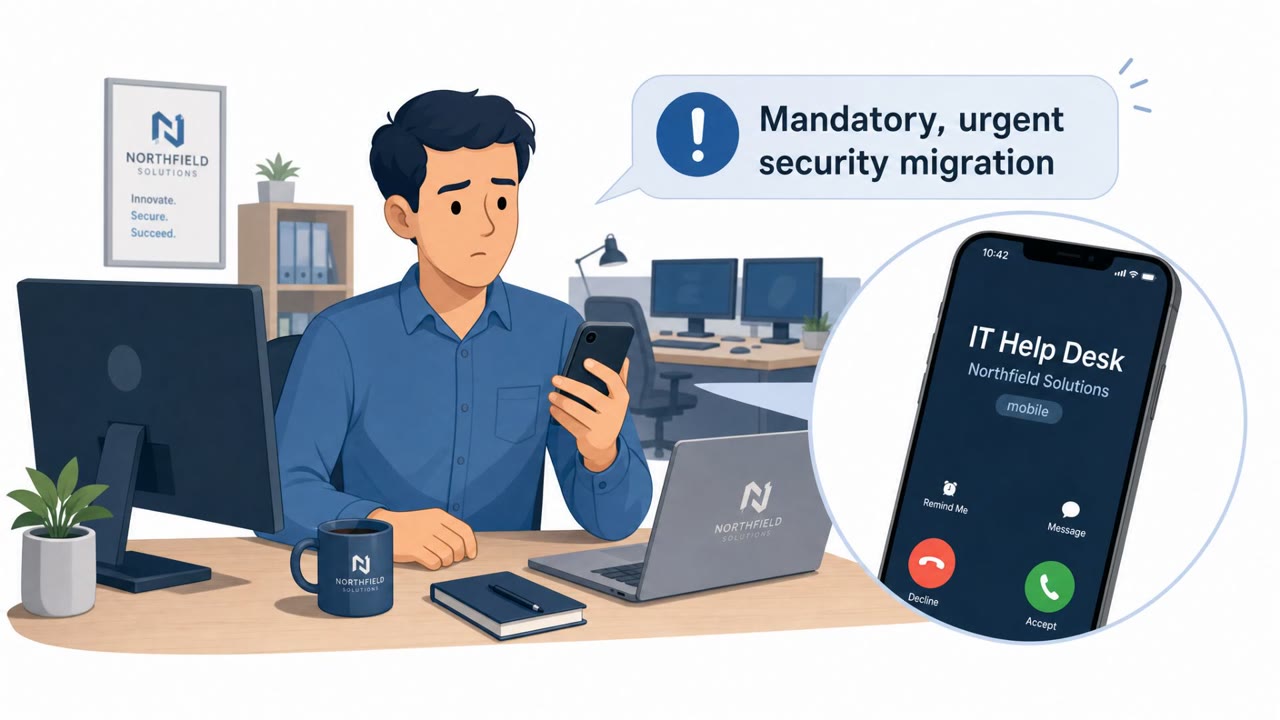
- The request is urgent and comes through an unsolicited phone call.
- An unexpected support, help-desk, or claims call asks the recipient to authenticate immediately.
- The caller requests MFA codes or push approval, which legitimate support staff should not need.
- The domain may use a recently created target-branded theme rather than an established company address.
Read the video transcript
“We need you to access the legal portal and complete sign-in verification.” That’s the INCEPTION vishing play: a caller sends you to legal-yourcompany.com, then asks for your password and a one-time code, or tells you to approve an MFA push. Aha: the page can look like your usual Okta sign-in, but the address isn’t your usual sign-in address. The phone call is how they get your MFA approval. Got that call? Hang up and contact Legal through your known internal channel.