Recent Hospitality Cyber Attacks

Page 2 of 3
Hijacked Hotel Wi‑Fi Tricks Travelers Into Logins

Hijacked Hotel Wi‑Fi Tricks Travelers Into Logins

Microsoft says a Russian-linked group is abusing hotel and conference Wi‑Fi “captive portals” to trick travelers into entering corporate credentials or installing malware. Victims see what looks like a normal Wi‑Fi login flow, but attackers manipulate DNS/website traffic to redirect them to fake…

August 4, 2026
Hotel Wi‑Fi Lures Steal M365 Logins, Drop Malware

Hotel Wi‑Fi Lures Steal M365 Logins, Drop Malware

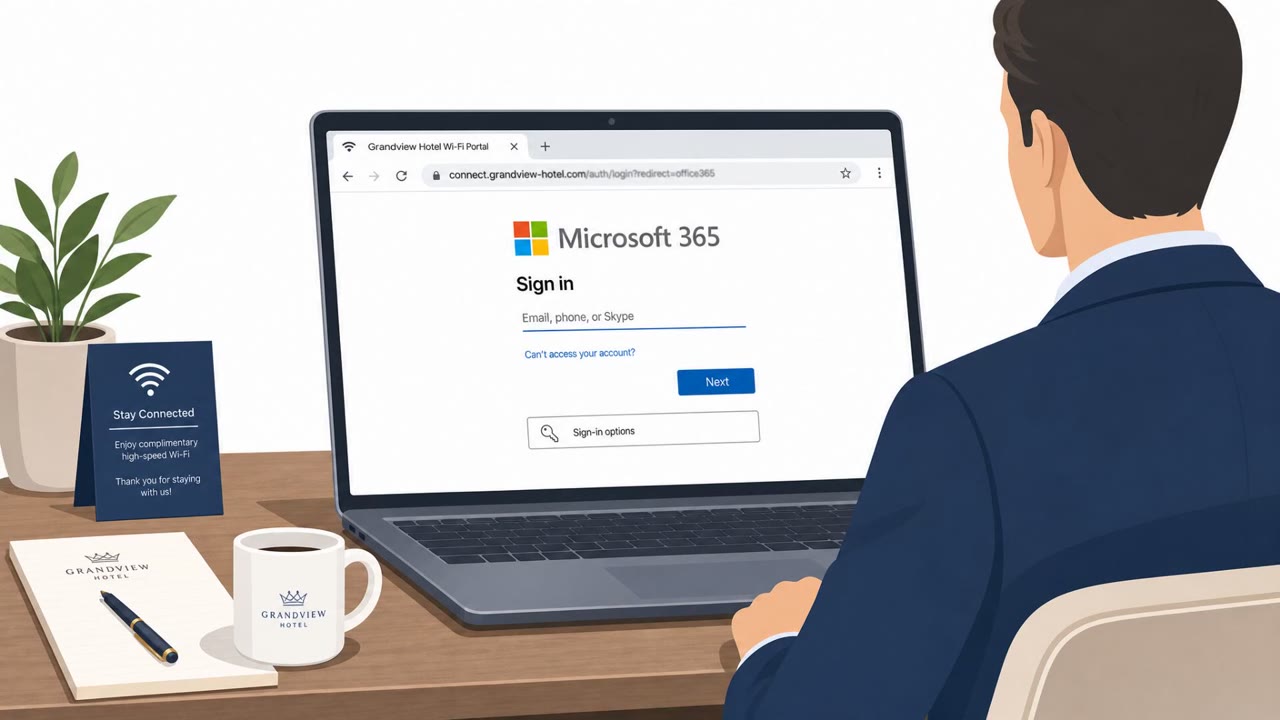
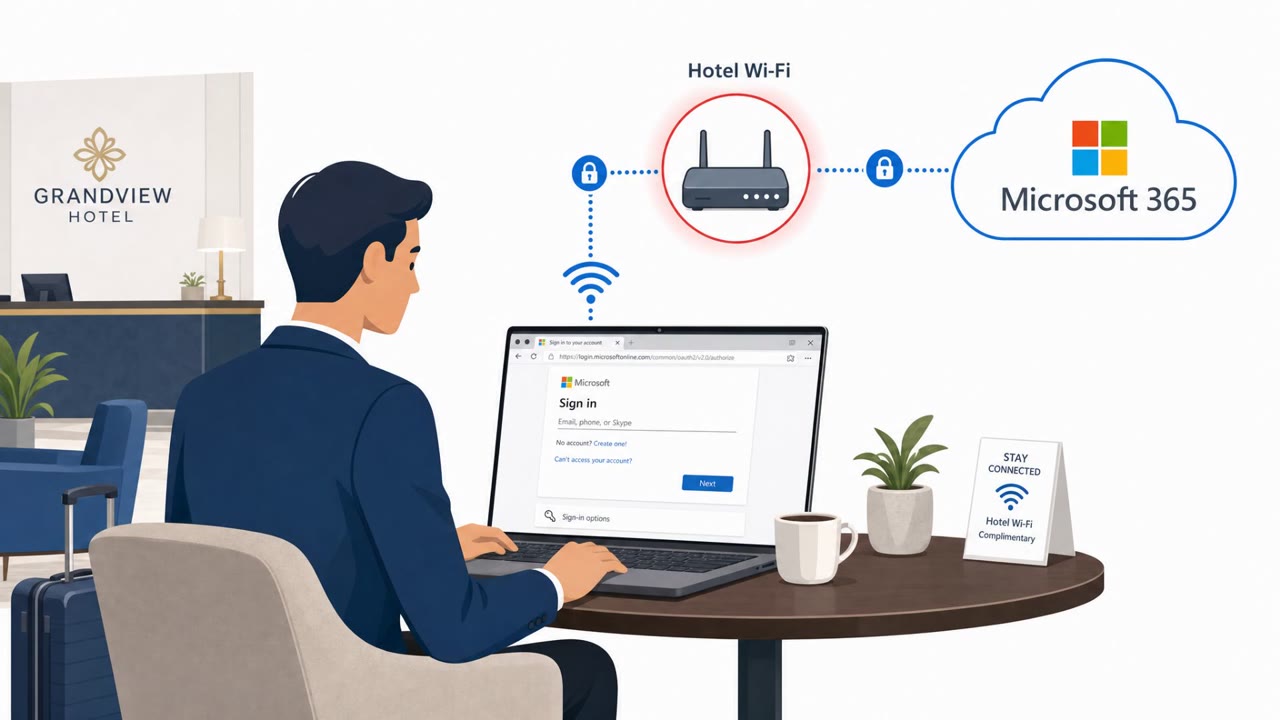
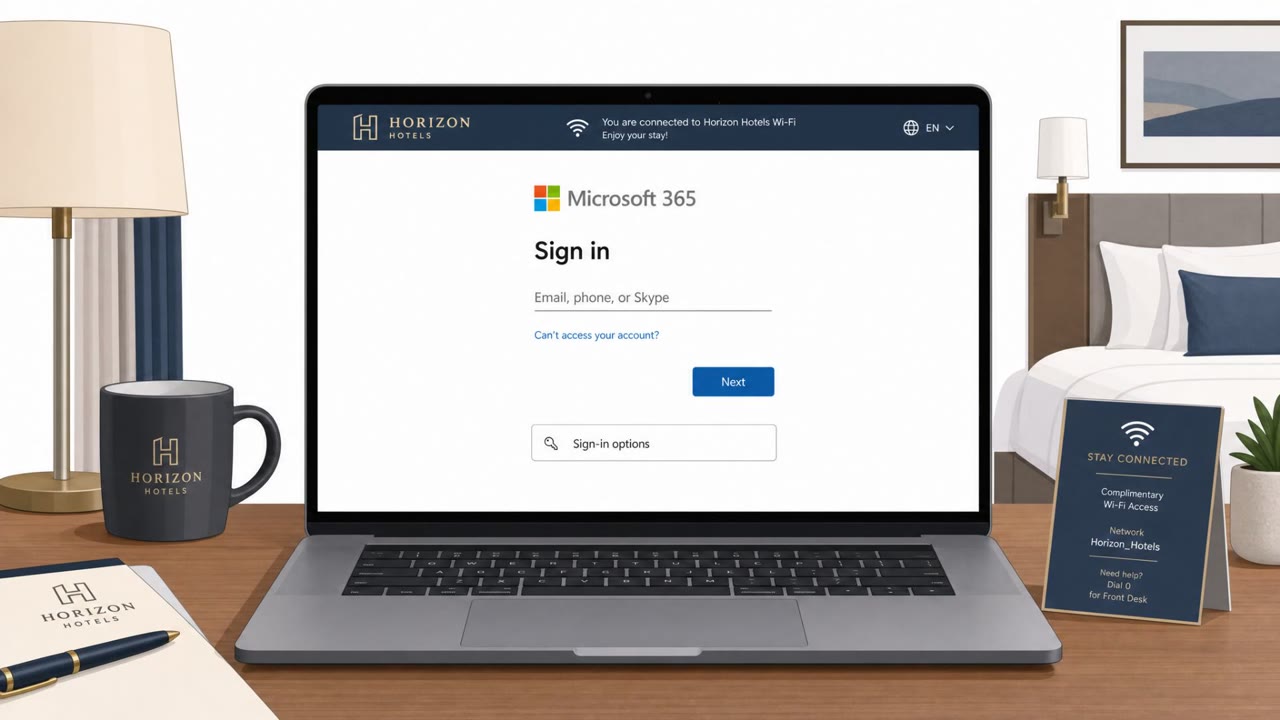
Microsoft says Russian-linked threat actors compromised hotel and conference guest Wi‑Fi “captive portal” networks to redirect travelers to fake Microsoft 365 sign-in pages, device-code phishing, or fake update pages. The goal was to steal cloud credentials (including Entra ID device codes) and…

August 4, 2026
Midnight Blizzard Hijacks Hotel Wi‑Fi to Phish Guests

Midnight Blizzard Hijacks Hotel Wi‑Fi to Phish Guests

Microsoft says a Russia-linked group compromised hotel and conference guest Wi‑Fi sign-in systems to redirect travelers to phishing pages and fake “update” prompts. The goal was to steal credentials (including Microsoft 365) and push malware when devices automatically check connectivity after…

August 4, 2026
SVR Hijacks Hotel Wi‑Fi to Push Malware

SVR Hijacks Hotel Wi‑Fi to Push Malware

Microsoft says Russian SVR operators (Storm-2945/Midnight Blizzard) are compromising public Wi‑Fi captive portals in hotels and conference venues to redirect users to attacker-controlled pages. Those pages use fake “fix/verification/update” prompts to trick travelers into installing malware or…

August 3, 2026
Hackers Hijack Hotel Wi‑Fi to Push Fake Updates

Hackers Hijack Hotel Wi‑Fi to Push Fake Updates

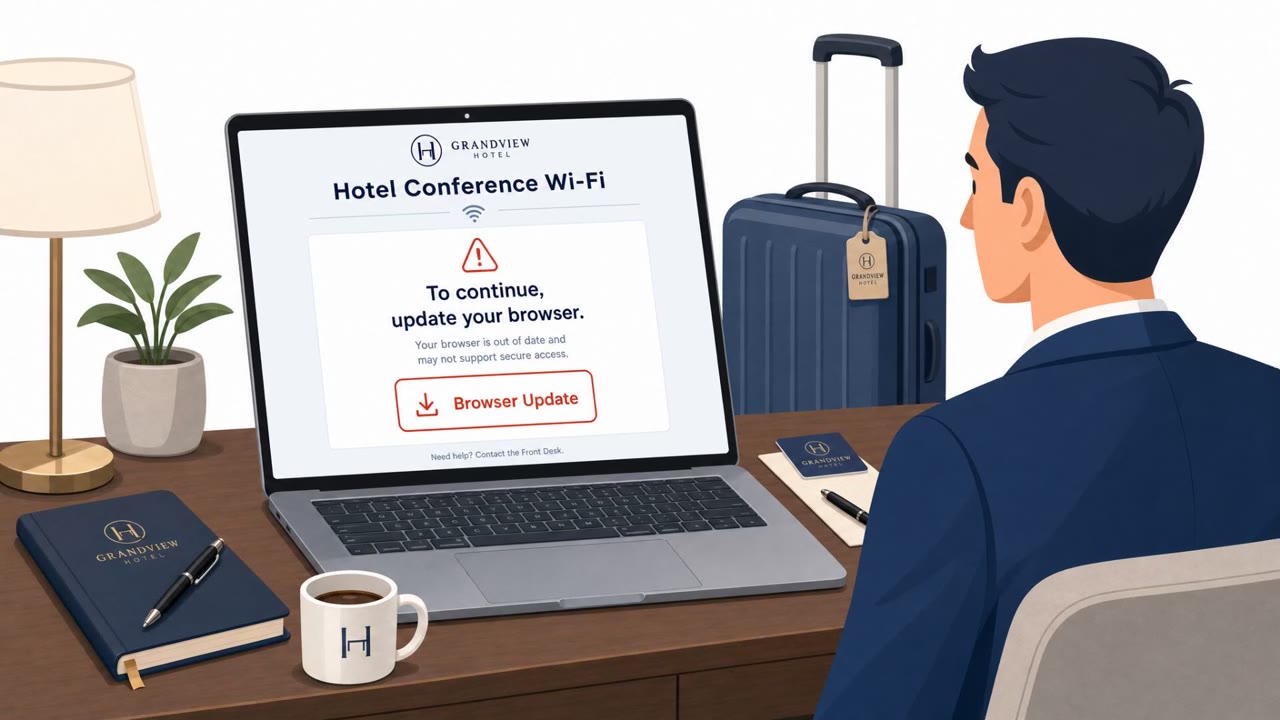
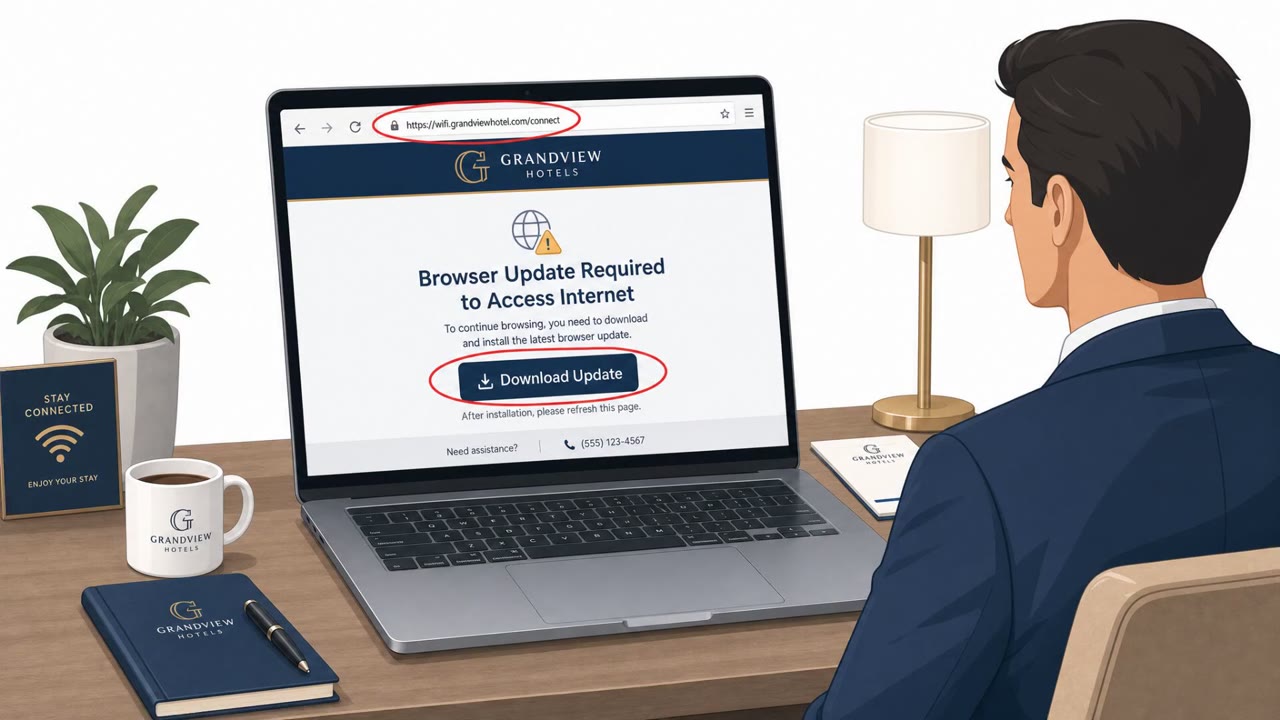
Microsoft says attackers hijacked captive portals on hotel and conference Wi‑Fi to redirect travelers through attacker infrastructure. Victims were shown fake browser/OS update prompts (and sometimes “paste-and-run” instructions) to install malware, and later were pushed into Microsoft device-code…

August 3, 2026
Hotel Wi‑Fi Hijack Pushes Fake Updates & Phishing

Hotel Wi‑Fi Hijack Pushes Fake Updates & Phishing

Microsoft reported a campaign where attackers abused hotel Wi‑Fi captive portals to manipulate DNS/HTTP traffic and redirect people to attacker-controlled phishing pages. Victims were tricked into installing malware disguised as browser/operating system updates, and some pages redirected users into…

August 3, 2026
Hackers Hijack Hotel Wi‑Fi to Steal M365 Logins

Hackers Hijack Hotel Wi‑Fi to Steal M365 Logins

Microsoft and ReliaQuest report a real campaign where Russian-linked hackers compromised hotel Wi‑Fi networks and redirected travelers to fake Microsoft login pages or fake update screens. The goal was to steal Microsoft 365 credentials and/or trick victims into installing espionage malware,…

August 3, 2026
Hacked Wi‑Fi Portals Steal M365 Logins

Hacked Wi‑Fi Portals Steal M365 Logins

Microsoft and ReliaQuest report a real campaign where attackers tampered with public Wi‑Fi captive portal networks (hotels/conference venues) to redirect users to attacker-controlled pages. The goal was to steal Microsoft 365 credentials (and sometimes deliver malware) by using…

August 3, 2026
Hotel Wi‑Fi Captive Portals Used to Steal M365

Hotel Wi‑Fi Captive Portals Used to Steal M365

Microsoft reported a real campaign where Russian-linked attackers tampered with hotel and conference Wi‑Fi “captive portals” to redirect travelers to attacker-controlled pages. Victims were tricked into installing malware or completing a Microsoft “device code” sign-in that granted the attacker…

August 1, 2026
Hijacked Hotel Wi‑Fi Serves Fake Updates

Hijacked Hotel Wi‑Fi Serves Fake Updates

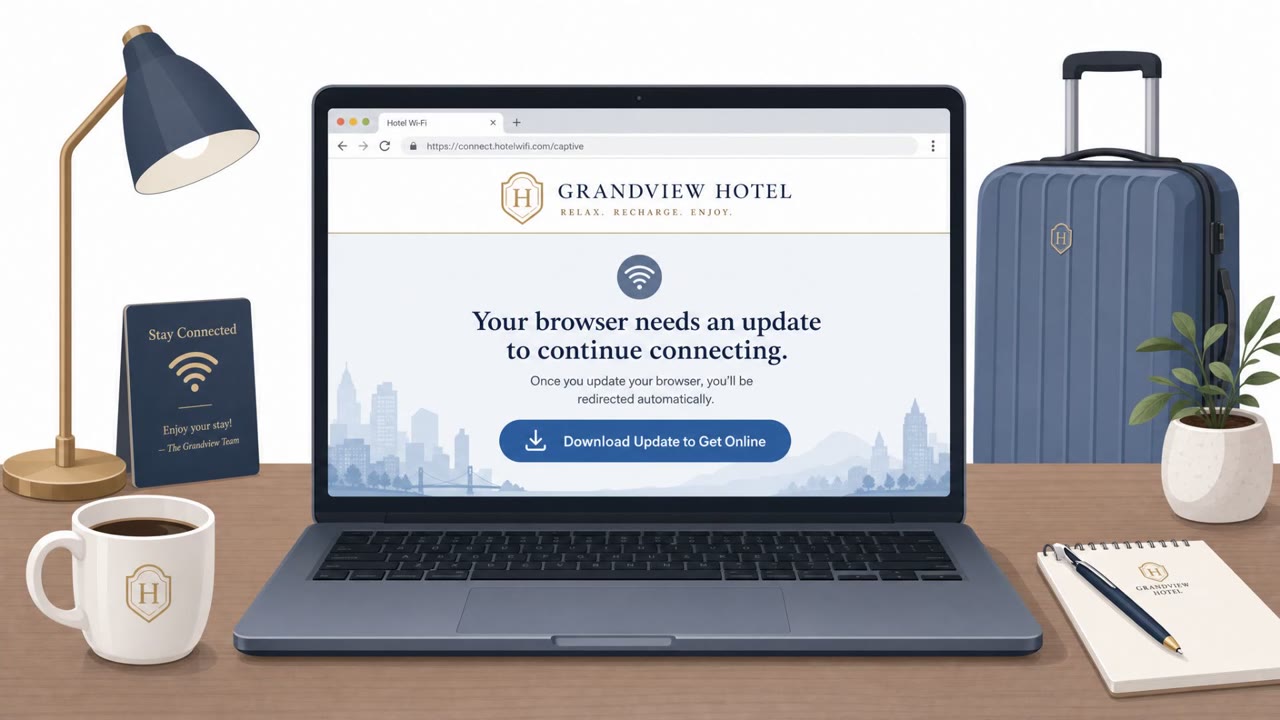
Attackers hijacked hotel/captive-portal Wi‑Fi infrastructure to redirect travelers to fake browser or operating system update pages and trick them into installing spyware. The operation (tracked as CaptiveCrunch) used DNS manipulation and user prompts (including “ClickFix” instructions) to get…

August 1, 2026
Captive Portal Trick Hits Travelers With Fake Updates

Captive Portal Trick Hits Travelers With Fake Updates

Microsoft reports a real-world campaign where attackers tamper with Wi‑Fi captive portal traffic at hotels and similar venues to redirect travelers to attacker-controlled pages. Victims are pushed into fake Microsoft sign-ins (device code/OAuth phishing) or tricked into installing “browser/OS…

July 31, 2026
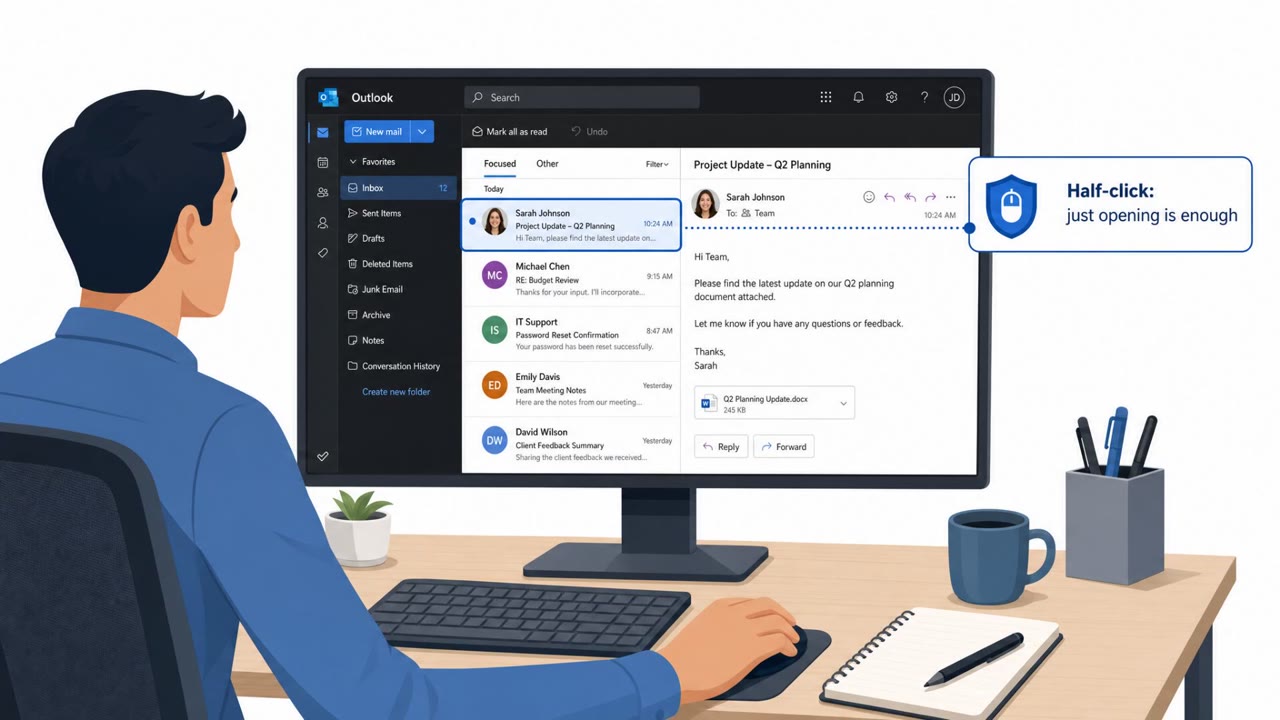
“Half-Click” OWA Email Trap Spreads

“Half-Click” OWA Email Trap Spreads

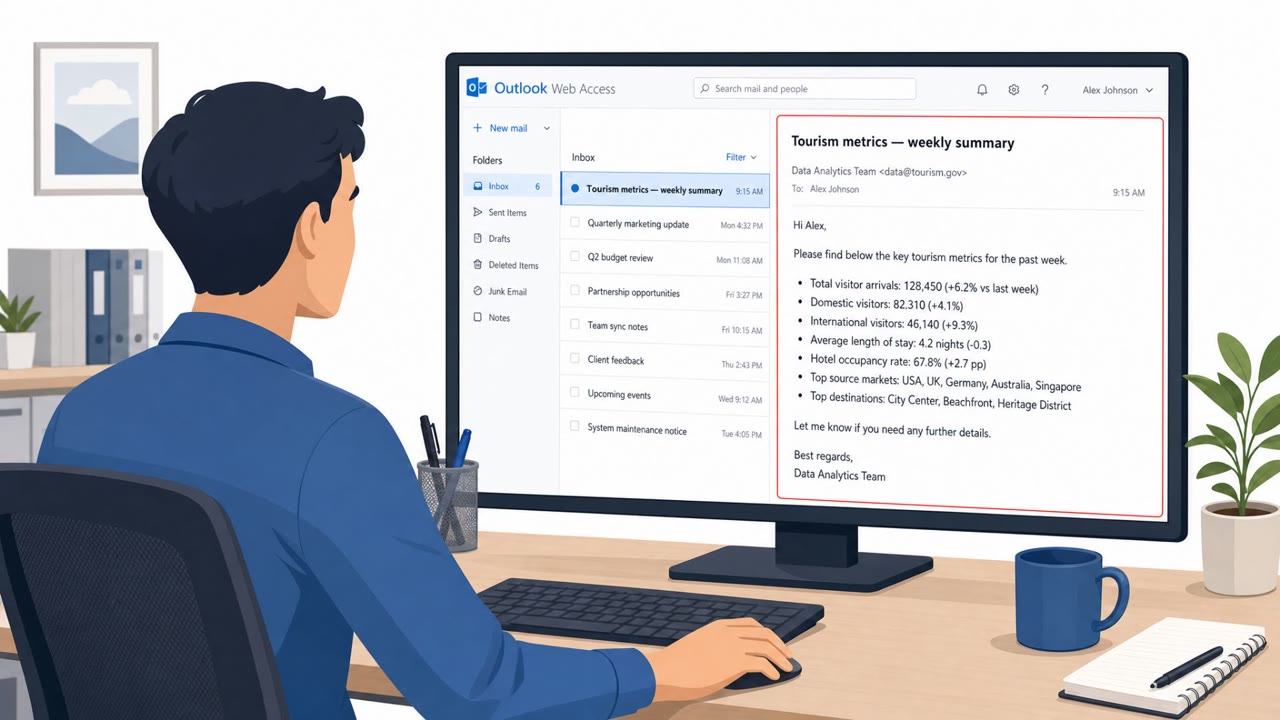
Proofpoint reports a Russian-linked espionage group is using booby-trapped emails that infect users simply when they open the message in Outlook Web Access (OWA) on on‑premises Exchange. The attack runs malicious JavaScript inside the victim’s logged-in mail session and installs a stealthy…

July 30, 2026
Half-Click OWA Emails Trigger Stealth Mailbox Takeover

Half-Click OWA Emails Trigger Stealth Mailbox Takeover

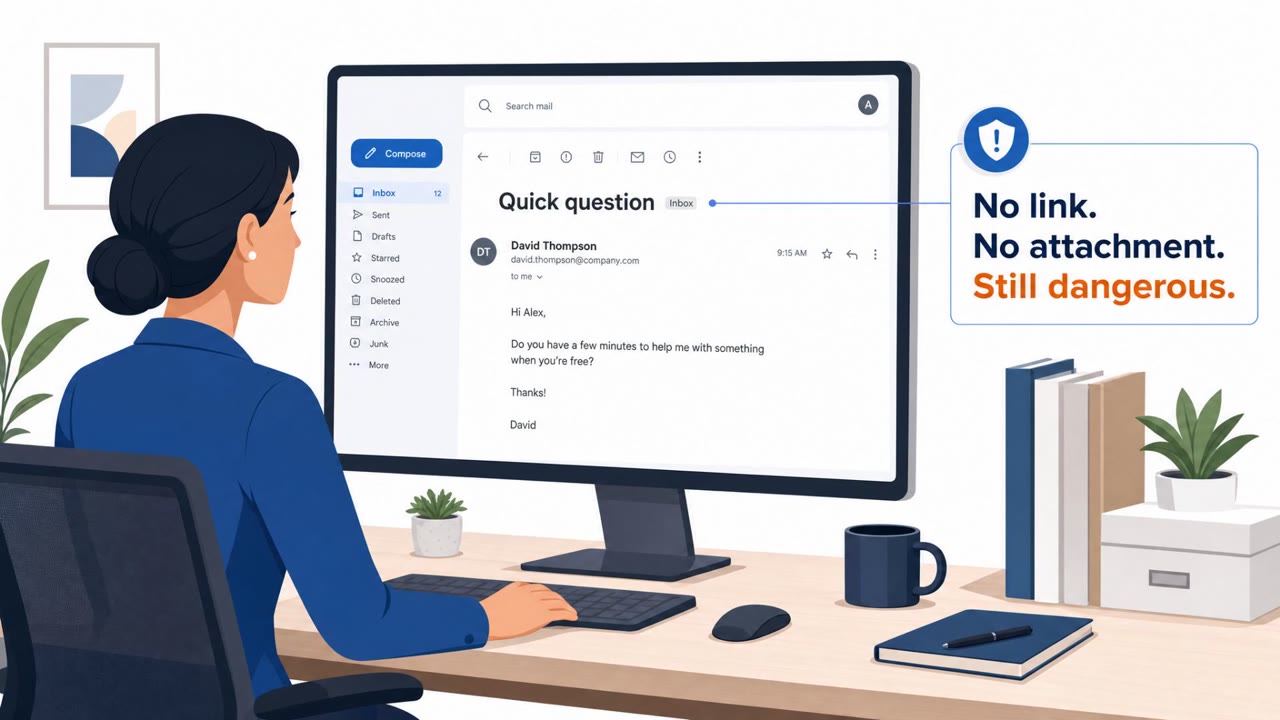
A Russia-aligned group (TA488) sent specially crafted emails that triggered malicious JavaScript simply by being viewed in Outlook Web Access (no link click or attachment needed). The implant (“OWAReaper”) can quietly change server-side mailbox permissions and abuse OAuth tokens, so attackers can…

July 30, 2026
“No-Action” Emails Trigger OWA Mailbox Takeover

“No-Action” Emails Trigger OWA Mailbox Takeover

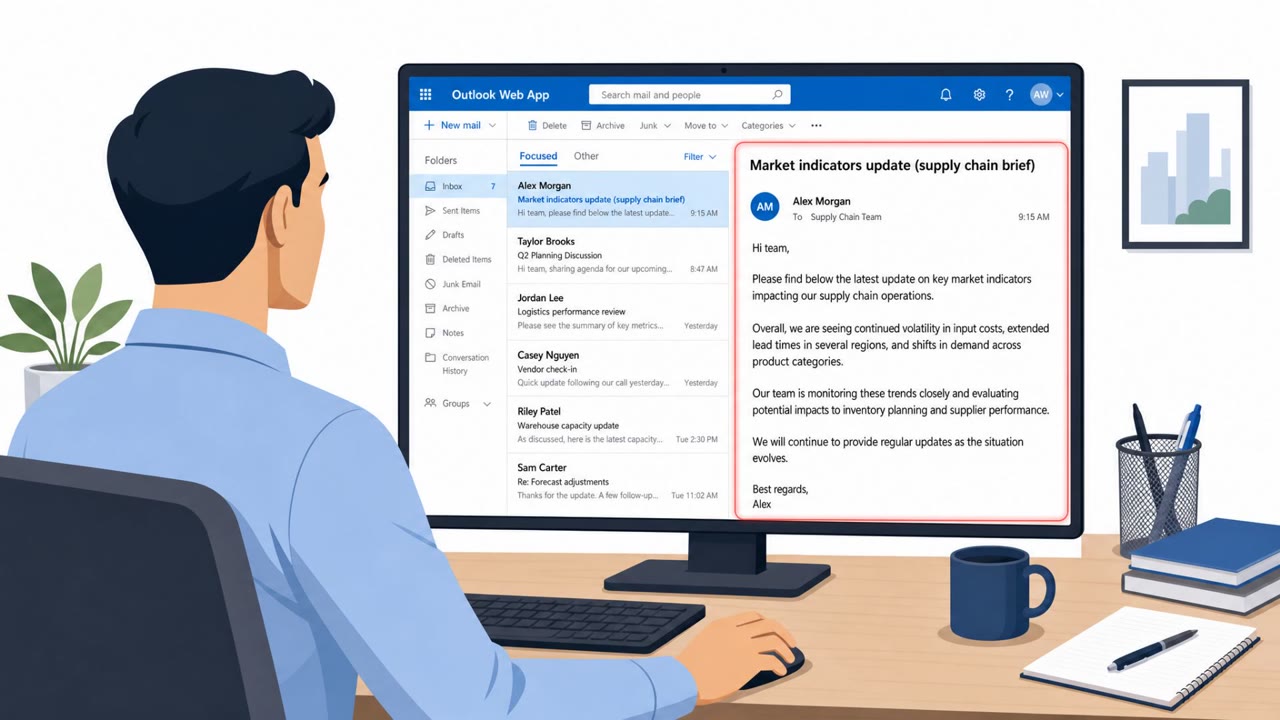
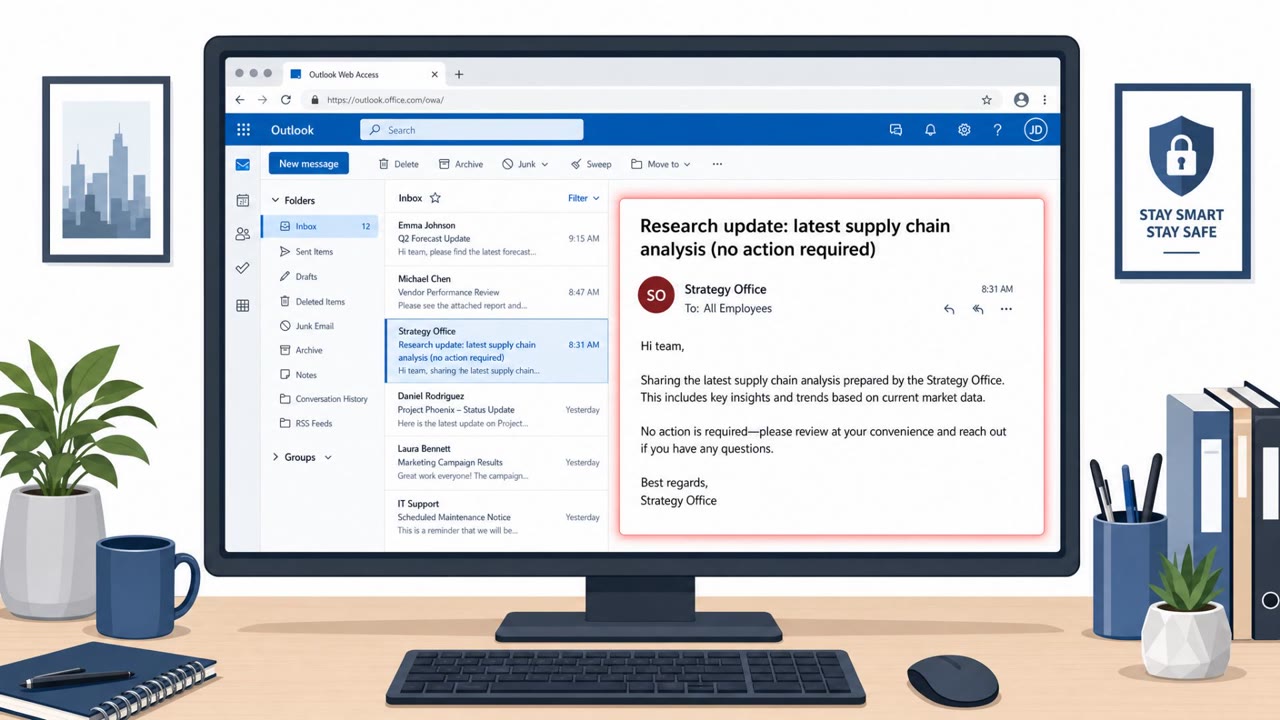
Russian-linked threat actors sent generic-looking informational emails that required no clicking, but simply opening them in vulnerable Outlook Web Access (OWA) could trigger a hidden exploit. The campaign targeted government and multiple industries, then installed a stealthy browser-based implant…

July 30, 2026
35,000+ World Cup Fake Sites Trap Fans

35,000+ World Cup Fake Sites Trap Fans

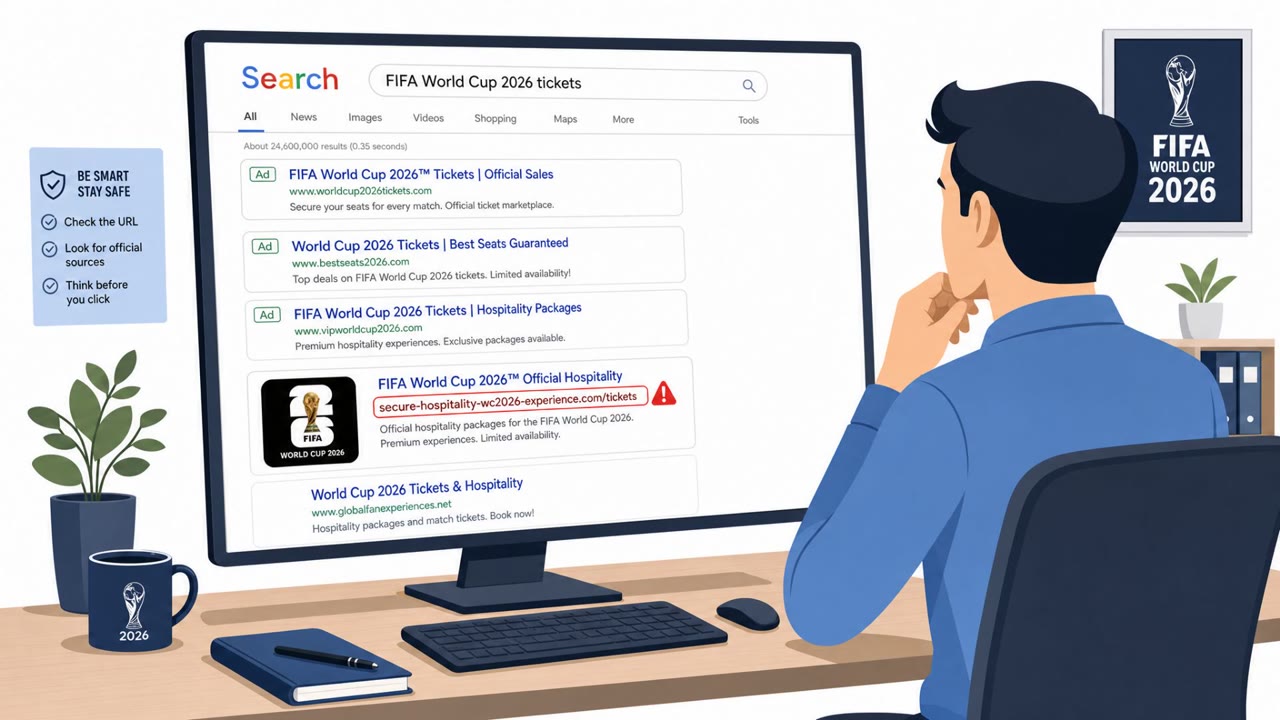
Researchers tracked a large scam wave abusing interest in the 2026 FIFA World Cup, including fake merchandise stores, cloned ticket sites, and bogus “free streaming” pages. The most harmful scams used near-perfect ticket-site clones to steal login details, credit card data, and one-time passwords…

July 29, 2026
Laundry Bear Uses “Half-Click” OWA Email Exploit

Laundry Bear Uses “Half-Click” OWA Email Exploit

UK and US cyber authorities and Proofpoint reported a real campaign where the Russian-linked group “Laundry Bear” (TA488) sent emails that could infect victims simply by being opened in Outlook Web Access. The email’s HTML triggers the server to run attacker code, installing a mailbox-stealing…

July 29, 2026
TA488 Uses “Half-Click” OWA Emails to Persist

TA488 Uses “Half-Click” OWA Emails to Persist

Proofpoint reports a Russia-aligned espionage group (TA488) returned with a campaign that compromises on‑premises Outlook Web Access simply when a user opens an email in the reading pane. The attack uses a cross-site scripting flaw to run hidden JavaScript, install a browser-resident implant, and…

July 29, 2026
Tax and SSA Lures Push Stealth Malware via Cruciferra

Tax and SSA Lures Push Stealth Malware via Cruciferra

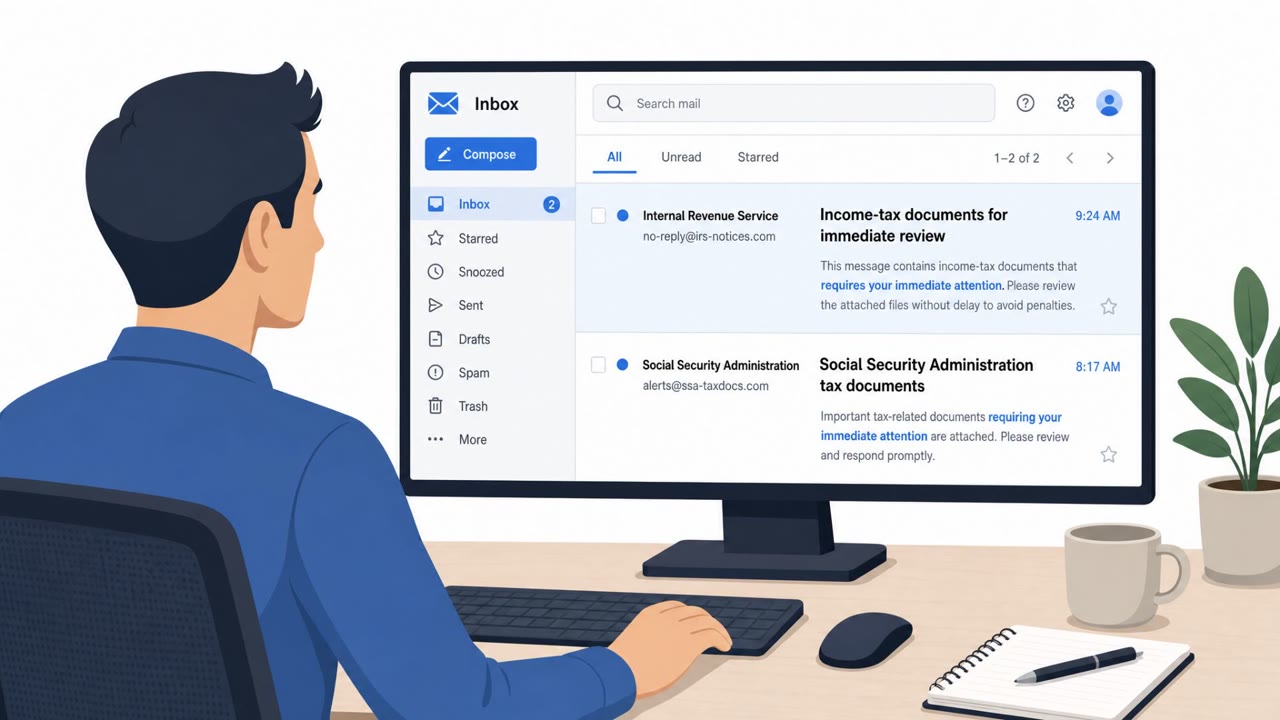
Proofpoint linked multiple real-world email campaigns to “Cruciferra,” a commercial crypter service that helps criminals hide malware from security tools. The campaigns used familiar social-engineering themes, tax documents, U.S. Social Security Administration messages, and even bed-bug complaints,…

July 28, 2026
Hotel Wi‑Fi DNS Hijack Steals M365 Logins

Hotel Wi‑Fi DNS Hijack Steals M365 Logins

Researchers report attackers compromising hotel and venue Wi‑Fi “captive portal” gateways to redirect Microsoft 365 sign-ins to attacker-controlled lookalike domains. Victims can have their Microsoft 365 credentials stolen without clicking a phishing link or installing malware, because the…

July 28, 2026
Hotel Wi‑Fi Redirect Scam Steals Microsoft 365 Logins

Hotel Wi‑Fi Redirect Scam Steals Microsoft 365 Logins

Attackers are compromising hotel and conference center Wi‑Fi gateways and changing DNS settings so business travelers are silently redirected to fake Microsoft 365 login pages. When victims sign in, attackers steal passwords and potentially session tokens, allowing account takeover even when…

July 27, 2026
Try Mirage

Mirage simulates attacks like these against your own team, live and safely, so you can measure how your people actually respond.

Get a demo